Choosing the right air conditioner for a food trailer can be challenging due to compact spaces, varying weather, and energy constraints. This article highlights five reliable options that balance cooling power, efficiency, and ease of installation for mobile kitchens. Each product is evaluated for performance, noise, and suitability for trailer use, helping you maintain a comfortable work environment without sacrificing space or power efficiency.
| Product | Brand | BTU / Capacity | Type | Notes |
|---|---|---|---|---|
| COSTWAY 12,000 BTU Mini Split | COSTWAY | 12,000 BTU | Mini Split with Heat Pump | Suitable for up to 750 sq ft; inverter; energy efficient |
| FOGATTI InstaCool 13,500 BTU | FOGATTI | 13,500 BTU | RV Rooftop AC | All-in-one design; quiet operation |
| RecPro 15K Ducted/Non-Ducted | RecPro | 15,000 BTU | RV Rooftop AC | Low amp draw; durable; versatile installation |
| RecPro 15K Non-Ducted | RecPro | 15,000 BTU | RV Rooftop AC | Ultra-quiet; energy efficient design |
| TOSOT 16,000 BTU Go Cool | TOSOT | 16,000 BTU | Non-Ducted Camper AC | WiFi control; large space coverage |
Overview: The selected units span ducted and non-ducted RV-style setups, offering high efficiency, reduced noise, and adaptable installation for food trailers. They provide cooling for hot service days and can support kitchen staff comfort during peak hours. This guide emphasizes performance in compact spaces, energy use, and ease of use in a mobile business environment.
COSTWAY 12,000 BTU Mini Split Air Conditioner

The COSTWAY unit delivers 12,000 BTU cooling with a 12,300 BTU heating capacity, making it suitable for year-round trailer use. It features a 4-in-1 design: cooling, heating, dehumidification, and fan modes, plus a 24-hour timer and a turbo option. An inverter-driven compressor aids energy efficiency, supporting steady temperatures and reduced cycling. The unit covers up to 750 sq ft in optimal conditions and is designed for 208-230V supply, assisting larger mobile kitchens that need robust climate control. The GWP value of the refrigerant is documented at 675.
Key considerations for trailer use include compact installation flexibility and external unit robustness. The COSTWAY unit offers ETL approval and AHRI certification for reliability, while its adjustable 60℉-90℉ range helps accommodate diverse restaurant workflows. For food trucks operating in warm climates, its 353 CFM 4D airflow supports rapid air distribution in compact interiors.
RV Air Conditioner, 12V 10000 BTU Rooftop AC

This 12V-equipped rooftop option provides 10,000 BTU of cooling with a 4,500 BTU heater for mild warmth. It’s designed for rapid cooling—claiming quick response in about 15 minutes—useful for rapid post-lunch shifts. The unit emphasizes durability with UV-stable ABS materials and a zinc-coated condenser, ensuring resilience against outdoor trailer conditions. It’s best suited to moderate heat loads and RV-style installations where 12V battery support or generator power is available. Its balance of cooling power and heater helps extend usability across seasons in mobile kitchens.
FOGATTI InstaCool 13,500 BTU RV Air Conditioner
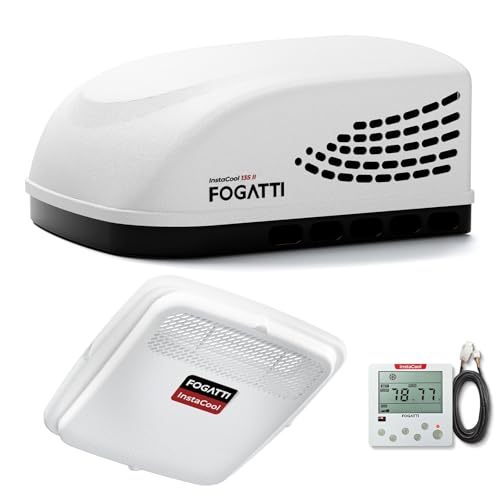
FOGATTI InstaCool combines 13,500 BTU of cooling with an all-in-one rooftop design for campers and trailers. It requires simultaneous connection to 115V AC and 12V DC power, enabling flexible installation in mobile kitchens with diverse power setups. The unit uses dual high-efficiency compressors and eco-friendly R32 refrigerant, delivering rapid cooling and improved energy efficiency. A key advantage is fast response during busy service windows, complemented by a smart energy-saving profile that balances cooling power with fan controls. This makes it a solid option for mid-sized trailers requiring quiet operation and robust performance.
RecPro RV Air Conditioner 15K Ducted / Non-Ducted

RecPro’s 15,000 BTU line offers both ducted and non-ducted configurations, ideal for trailers converting to mobile kitchens. It emphasizes low amp draw, supporting off-grid or solar setups essential for long shifts. The unit uses UV-resistant plastics and aerodynamic styling to resist road exposure while maintaining efficient airflow. Quiet operation at approximately 55.4 dB allows staff to focus on cooking and service. The kit’s all-in-one design simplifies installation, making it practical for food trailers with limited maintenance capacity.
Countrymod 12V DC 10,000 BTU RV AC

Countrymod offers a 10,000 BTU unit designed for non-ducted rooftop use, running on 12V DC with inverter design. It focuses on energy efficiency, claiming 0.3 kWh per hour, and a long battery life suitable for off-grid trailer operations. The design emphasizes low noise at 45-55 decibels, producing a comfortable airflow without significant disruption to work in a busy kitchen. It provides rapid cooling with on-demand compressor speed control, making it a good option for smaller food trailers with limited electrical capacity.
TOSOT 16,000 BTU Go Cool RV AC

TOSOT Go Cool offers a large 16,000 BTU cooling capacity with 12,500 BTU heating, suitable for medium-to-large trailers or kitchens that demand extended service hours. It includes WiFi control via the Gree+ app, enabling remote monitoring and adjustments from staff or management. The unit is designed for outdoor temperature ranges from 23°F to 115°F, with an indoor range of 61°F to 86°F, ensuring flexible performance in varying climates. It targets quiet operation and reliable performance in mobile trailer environments and larger workspaces.
Buying Guide: Key Purchase Considerations
- Space and configuration: Non-ducted rooftop units save space and simplify installation in compact food trailers, while ducted options may spread cooling more evenly in larger interiors.
- Power and energy: Look for units with inverter technology and low amp draw for off-grid or generator-based power, especially for trailers with solar setups.
- Climate range and heating: If your trailer operates year-round, choose models with both cooling and heating capabilities and a wide operating temperature range.
- Noise levels: Quiet operation is crucial in a work environment. Check dB ratings and design features aimed at reducing fan and compressor noise.
- Maintenance and durability: Durable exterior, corrosion resistance, and easy-access maintenance help reduce downtime in mobile setups.
- Installation flexibility: Consider the availability of venting options, electrical requirements, and whether a professional installation is needed.
- Electrical compatibility: Ensure the system matches your trailer’s power supply (voltage, phase, and available amps) and does not overtax your electrical system.
- Energy efficiency and refrigerant: Units with energy-efficient ratings (SEER/HSPF) and eco-friendly refrigerants support long-term operating costs and regulatory considerations.
- Warranty and service: Favor brands with robust warranties and readily available service networks for mobile setups.
- Budget and return: Compare total cost of ownership including installation, maintenance, and potential energy savings to estimate return on investment.