The right acoustic liner for ductwork can reduce airborne noise and thermal transfer without hindering airflow. This guide highlights five top options, spanning duct liners, closed-cell foams, and foil-backed wraps. Each product is evaluated for noise reduction, moisture resistance, and ease of installation, helping facility managers and DIY enthusiasts choose the best solution for HVAC pathways and plenums.
| Product | Brand | Type | Key Benefit |
|---|---|---|---|
| Sound Seal Duct Liner | Sound Seal | Duct Liner | High NRC for duct interiors |
| BXI Double Noise Blocker | BXI | Double-layer Foam | Two-layer absorption and thermal insulation |
| Siless Liner 157 mil | Siless | Closed-Cell Foam | Excellent heat and moisture resistance |
| Frost King CF55 Duct Wrap | Frost King | Duct Wrap | Foil-backed insulation and vibration reduction |
| SOOMJ 20mm Thick Sound Proof Padding | SOOMJ | Foam Deadener | Heavy-duty, oil and heat resistant |
Note: All products listed are suitable for improving duct acoustics and thermal performance, with varying installation requirements and environmental tolerances. Review your duct size, humidity exposure, and installation surface before purchasing.
Sound Seal Duct Liner: Noise-Absorbing 1 Inch Thick

Sound Seal Duct Liner is designed for lining HVAC ducts, plenums, and cabinets not exposed to wet environments. It features a 1-inch bonded glass fiber blanket that provides solid noise reduction with a Noise Reduction Coefficient (NRC) of 0.60. The liner supports temperatures from -45 to 250 degrees Fahrenheit, making it suitable for many indoor duct applications. It comes in a 25-foot length and 48-inch width roll, with a coverage of about 100 square feet per unit. The material resists mild dust, dirt, and humidity, helping maintain performance in typical building environments.
Considerations: When installing, ensure a clean, dry surface and proper sealing to avoid moisture ingress. The liner’s rigidity aids handling during installation but may require mechanical fasteners or adhesive suitable for bonded glass fiber insulation. For retrofits, verify duct dimensions to match the 25-foot segment length and 48-inch width.
Kaqiluo 2 Pack High Density Self-Adhesive Foam

Kaqiluo provides high-density closed-cell acoustic foam with self-adhesive backing. The 0.4-inch thickness and 71-inch length (2 pieces) cover about 11.6 square feet per pack. This material reduces flutter echoes and reverberations, contributing to a quieter duct environment and improved room acoustics in adjacent spaces. The foam boasts flame resistance and water resistance, with B1 class fire rating and water-proofing properties to minimize moisture concerns in less wet areas.
Considerations: While ideal for interior duct surfaces or adjacent enclosures, verify compatibility with duct surface temperatures and humidity levels. Adhesive performance can vary on dusty or oily surfaces, so surface prep is important for lasting adhesion.
BXI Soundproofing Closed Cell Foam (Two Pack)
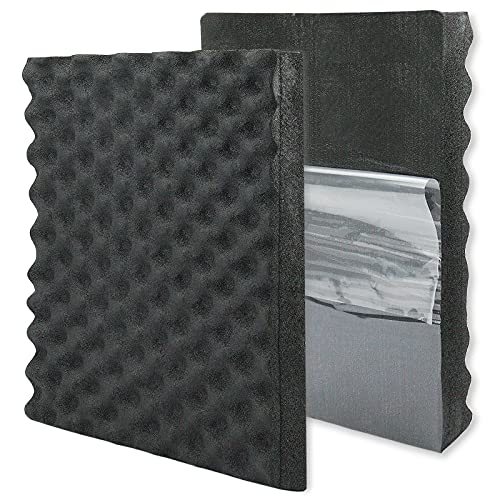
BXI’s double-layer foam panels feature a 1.8-inch thickness and an egg crate surface with a second rubber backing. Each panel measures 16 by 12 inches, with a combined 2.6 square feet of coverage. The design yields a high NRC around 0.75 and about 24 dB average transmission loss, making it effective for reducing duct and surrounding room noise. The panels also act as thermal insulation, thanks to the closed-cell composition that enhances vapor resistance and moisture protection.
Considerations: The dual-layer structure provides robust noise and vibrational damping but may require additional surface area for installation in tight ducts. Self-adhesive backing simplifies mounting on clean surfaces but ensure proper curing and adhesion in dusty environments.
Siless Liner 157 Mil: Car Sound Deadening Foam
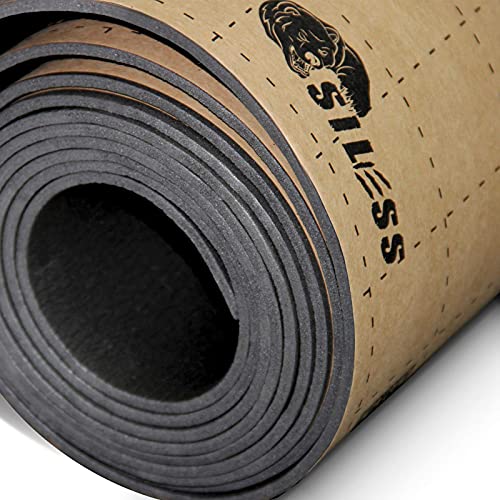
Siless Liner 157 mil is a closed-cell polyethylene foam designed as a heat- and water-resistant car liner. It includes an adhesive backing for easy installation and claims to block up to 98% of radiant heat transfer, acting as both an acoustic deadener and a thermal barrier. While marketed for automotive use, its closed-cell construction and moisture resistance can be advantageous for duct applications where space and moisture exposure are limited. This product is lightweight and flexible, enabling straightforward trimming and application on curved duct surfaces.
Considerations: While effective for heat and vibration control, verify suitability for HVAC duct materials and long-term humidity exposure. Adhesive strength and fire safety should be aligned with local building codes for duct installations.
Frost King CF55 Foil-Backed Duct Wrap

Frost King CF55 is a foil-backed duct wrap designed to insulate, cushion, and reduce vibrations on heating and AC ducts. It features a fire-rated material and is positioned as a safer alternative requiring no gloves, masks, or goggles for handling. The foil facing helps reflect radiant heat, contributing to greater thermal efficiency within duct runs. The wrap is suitable for follow-up installations and retrofits in duct systems that benefit from additional insulation without heavy remodeling.
Considerations: Foil-backed wraps should be installed with attention to sealing seams and avoiding gaps that could compromise insulation performance. Check compatibility with existing duct materials and ensure that the wrap maintains adequate airflow clearance around the duct exterior.
SOOMJ 20mm Thick Sound Proof Padding

SOOMJ offers a 20mm (about 0.79 inch) thick self-adhesive foam padding with an egg crate surface. It’s designed as a versatile sound deadener suitable for duct interiors, HVAC components, and vehicle applications. The material is oil- and petrol-resistant, helping maintain performance in areas subject to heat and minor chemical exposure. Its low weight and adhesive backing support straightforward installation on larger surfaces or curved ducts, providing effective vibration dampening and noise reduction.
Considerations: For best results, pair SOOMJ padding with a compatible interior liner to maximize sound absorption. Ensure adhesives remain effective in the system’s temperature range and that the material does not impede airflow or immune to the duct’s moisture levels.
Buying Guide: Key Purchase Considerations And Comparisons
- Application environment: Choose duct liners or foams rated for the humidity and temperature range of your space. For damp conditions, moisture-resistant closed-cell foams or foil-backed wraps are preferable.
- Noise reduction targets: Look for NRC values and transmission loss ratings. Higher NRC and greater dB losses indicate stronger sound attenuation for duct runs near living areas or workspaces.
- Thermal performance: If energy efficiency is a goal, select products with solid thermal insulation properties and low thermal conductivity. Foil-backed wraps and closed-cell foams excel at minimizing radiant heat transfer.
- Installation considerations: Self-adhesive foams simplify retrofits, while thicker, two-layer systems may require more surface preparation. Ensure compatible adhesives, fasteners, and sealants for your duct material.
- Fire and safety: Confirm fire ratings and code compliance for building or industrial facilities. Some products offer NFPA-aligned performance characteristics that align with safety standards.
- Durability and maintenance: Materials should resist dust, dirt, and humidity over time. Some products are designed to avoid odor development or water absorption, which can impact duct cleanliness.
- Cost versus coverage: Compare square footage coverage and weight per panel to determine overall cost-effectiveness for your project. Heavier, thicker foams may deliver better performance but require more handling.
- Compatibility with duct type: Rigid metal ducts vs. flexible ducts may mandate different attachment methods and thicknesses for optimal performance.
- Environmental considerations: For retrofit projects, consider the ease of removal and potential impact on duct cleaning schedules and maintenance routines.