Answering the question for buyers seeking portable, gas-powered air compressors: these models deliver strong air flow, longer runtimes, and mobility on worksites without relying on electricity. They’re ideal for contractors, auto shops, landscaping crews, and DIY enthusiasts who need reliable air power away from outlets. The top five selections below balance power, tank size, and ease of use, with practical notes on who should choose each one and why.
| Product | Best For | Why It Stands Out |
|---|---|---|
| Albott 13HP Gas Air Compressor 30 Gallon | Pro workloads, all-day use | High horsepower, large 30 gal tank, steady 18 CFM at 90 PSI |
| Albott 6.5HP Gas Powered 8 Gallon | Lightweight projects, dual tools | 8 gal tank, dual outlets, solid cast-iron pump |
| Metabo HPT Gas Powered 8 Gallon | Professional carpentry and roofing | Honda GX engine, 8 gal tank, durable cylinder |
| VEVOR 13.2 Gallon, 7HP | Outdoor site work, two tools | Large tank, 2 outlets, wheels for mobility |
| RIUOPN 6.5HP 200cc Horizontal Shaft | Compact, versatile engines | OHV design, strong power, long-running cooling system |
Albott 13HP Gas Air Compressor 30 Gallon Portable Horizontal Tank
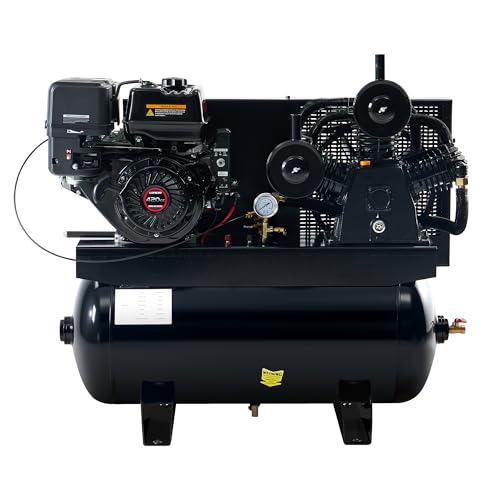
The Albott 13HP model features a 30-gallon ASME-certified tank and a 180 PSI maximum. With an air delivery of 18 CFM at 90 PSI, this unit is designed for continuous operation and steady air supply. It uses a durable 3-cylinder cast iron pump for wear resistance and easier maintenance. Best for heavy-duty shop use or contractors who need reliable, long-running air power. Caution: ensure proper oil checks and routine pump maintenance to protect the pump assembly during long sessions.
Albott 6.5HP Gas Powered Air Compressor 8 Gallon
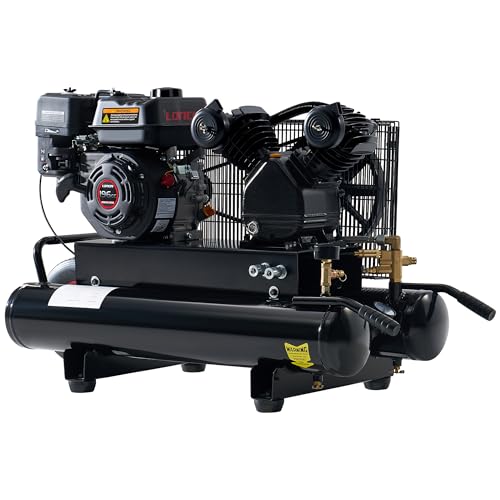
This model uses a gas piston compressor with an 8-gallon tank and two outlets for simultaneous tool use. It delivers strong performance with a maximum 115 PSI. It’s best for projects that require mobility and the ability to run two tools at once, such as pneumatic nailing and light sanding. Limitation: smaller tank means more frequent cycling for heavy-duty or continuous use compared with larger tanks.
212cc Gas Engine, 7.5HP Go Kart Motor Engine

This 7.5HP, 212cc engine supports a range of go-kart, compressor, and outdoor equipment applications. Its overhead valve design helps with fuel efficiency and reduced maintenance needs. Best for DIY enthusiasts who need a versatile engine for multiple devices. Caution: data shows general engine specs; ensure compatibility with intended compressor systems and mounting requirements before purchase.
Metabo HPT Gas Powered Wheeled Air Compressor, 8 Gallon

Powered by a professional-grade Honda GX engine, this 8-gallon unit provides reliable operation for siding, finish, framing, and roofing nailers. Its cast iron cylinder contributes to durability and long tool life. Best for professional installers who need consistent power and a durable build. Limitation: engine style may require routine maintenance aligned with Honda guidelines for optimal performance.
VEVOR 13.2 Gallon Gas Powered Air Compressor

The VEVOR model offers a 13.2-gallon tank and 9 CFM at 115 PSI, with two outlets for simultaneous tool operation. It’s mobile with four wheels and a push handle, making it suitable for outdoor sites or large indoor spaces where frequent relocation is needed. Best for contractors needing a balance of large air capacity and portability. Caution: heavier unit may require more effort to move on uneven terrain.
RIUOPN 6.5HP Gas Engine, 200cc

This 6.5HP OHV gas engine blends strong power with an efficient, air-cooled system. The 200cc displacement and overhead valve design help reduce fuel use while maintaining performance. Best for compact setups where engines serve multiple purposes, including pressure or drive applications. Limitation: ensure the engine’s mounting and exhaust setup aligns with your specific compressor or tool system.
Buying Guide: Gas-Powered Air Compressors
What size tank do you need? If your work involves long runtimes or continuous blasts, choose larger tanks (10–30 gallons) to reduce cycling and motor wear. For light-duty tasks and portability, smaller tanks (8 gallons or less) are easier to move.
How important is portability? Look for units with wheels and handles if you’ll move the compressor around a job site or between bays. Heavier, larger tanks deliver more air but require more effort to relocate.
Gas engine vs other power sources? Gas engines minimize reliance on electrical outlets and generators. They’re ideal for remote sites or outdoor jobs. However, they require more maintenance, fuel management, and quieter operation considerations.
Maintenance essentials? Regular oil checks, proper oil type, air filter maintenance, and cooling during use extend the life of gas-powered units. Cast iron cylinders and durable frames improve longevity in heavy-use scenarios.
Two-outlet versatility? Some models offer dual outlets, enabling two tools to run simultaneously. This feature can dramatically improve productivity on fast-paced tasks such as framing or spray finishing.
Frequently Asked Questions
- Do gas-powered air compressors need daily maintenance? Yes, routine checks on oil, filters, and air intake help avoid premature wear.
- Is a bigger tank always better? Not always. Bigger tanks provide longer run times but are heavier and less portable. Choose based on need and site accessibility.
- Can I run two tools at once? Some models include dual outlets; this is ideal for operating separate tools concurrently.
- What PSI range should I aim for? Most pneumatic tools operate well around 90–115 PSI; pick a unit that maintains consistent pressure near your tool’s requirement.
- Are gas-powered compressors louder than electric ones? Gas models generally produce more noise; consider hearing protection and location when planning use.
- How do I choose between the listed models? Compare tank size, PSI, number of outlets, engine type, and portability to match your typical projects.