Answer: If you need a space-saving, vertical-design air compressor that fits a home garage or small workshop, these models balance compact footprints with solid performance. They’re best for hobbyists, DIY enthusiasts, and light-to-medium pneumatic tasks. The top picks below emphasize vertical tanks, oil-free operation, and portability to minimize floor space while delivering reliable air.
| Product | Tank | Motor | Max PSI | Best For |
|---|---|---|---|---|
| RyanTek 15-Gallon Vertical | 15 gal | 2 HP | 125 | Home crafts, inflation, light nail work |
| Campbell Hausfeld 15 Gal Vertical | 15 gal | Oil-free | 225 | Frequent use, cold-weather starts |
| CRAFTSMAN 33 Gallon Vertical | 33 gal | Oil-free | 175 | Heavy-duty DIY, small workshops |
| HASIENDA 12 Gallon Vertical | 12 gal | Brushless motor | 150 | Quiet operation, moderate runs |
| California Air Tools 10020C | 10 gal | 2.0 HP | 125 | Ultra-quiet, noise-sensitive tasks |
RyanTek 15-Gallon Vertical Air Compressor
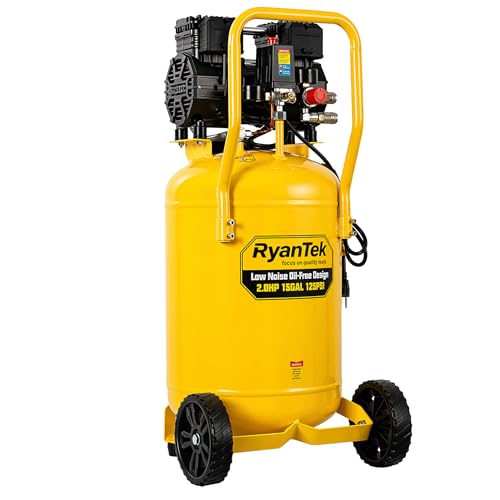
Best for small to mid-size home projects where space is at a premium. The two-cylinder pump delivers 4.5 CFM at 90 PSI, supporting nail guns, inflation, and painting with steady cycles. The vertical tank design saves floor space, and the integrated wheels and handle aid mobility.
Who it’s best for: DIY enthusiasts and light workshop users who need a quiet, oil-free system that won’t overshadow a small workspace.
Why selected: Combines a compact vertical footprint with ample 4.5 CFM performance at a practical 90 PSI, enough for common air tools in a home setting.
Caution: While quiet for an oil-free unit, the compressor may cycle more frequently under heavy continuous use. Plan for brief rest periods during prolonged tasks.
Klutch 29-Gallon Air Compressor

Better for users who need higher PSI for intermittent, heavier tasks and better recovery in a portable package. This model runs on 2.5 HP at 120 volts and reaches up to 175 PSI, supporting nailing, painting, and blow gun work with a quick recovery of 5.1 CFM at 90 PSI.
Who it’s best for: Shop owners or DIYers who occasionally run higher-demand tools and want a larger tank without sacrificing portability.
Why selected: High maximum pressure and fast recovery help maintain tool performance across longer runtimes.
Caution: Larger tank adds size and weight; ensure you have space for setup and moving around the work area.
Klutch 20-Gallon Air Compressor

Choose this for a practical balance of size and performance. The 2 HP motor and 20-gallon tank offer a reliable workflow with a 4.2 SCFM @ 90 PSI recovery, useful for a broad range of shop tasks and portable setups in a small garage or workshop.
Who it’s best for: Home garages needing consistent air for multiple tasks without stepping up to a massive compressor.
Caution: Oil-free designs reduce maintenance but may require more frequent air tool lubrication checks during heavy use periods.
CRAFTSMAN 33 Gallon Vertical

Best for larger home shops that still want a vertical footprint. The 33-gallon tank and 175 max PSI deliver robust performance for heavy-duty inflation, framing, and spray painting in a compact vertical design.
Who it’s best for: Diyers tackling more demanding projects that require longer run times and higher pressure per cycle.
Caution: The larger tank reduces portability; ensure you have a clear path for movement within your space.
Campbell Hausfeld 15 Gallon Vertical
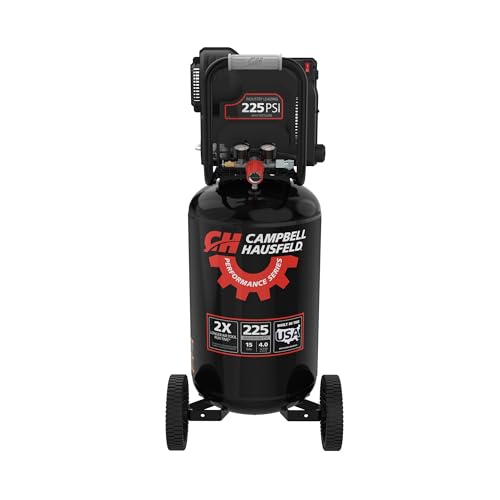
Best for cold-weather reliability and frequent use in a medium-duty setting. It provides 4.0 CFM at 90 PSI and 5.2 CFM at 40 PSI, with a high 225 PSI maximum, enabling longer run times between cycles and capable performance across inflation and light-to-medium pneumatic tasks.
Who it’s best for: Users who work in variable temps or need a compact vertical unit suitable for frequent bursts of tool use.
Caution: Oil-free design minimizes maintenance but can be sensitive to extreme temperature changes; store and operate within recommended ranges for best results.
California Air Tools 10020C Ultra Quiet

Best for noise-sensitive environments and quieter operation. This model runs at about 70 dBA, with a 2.0 HP motor and a 10-gallon tank. It delivers 6.40 CFM at 40 PSI and 5.30 CFM at 90 PSI, providing a stable air supply with lower noise impact.
Who it’s best for: Professionals or hobbyists in apartments, home studios, or garages where low noise is a priority.
Caution: The 10-gallon tank may require more frequent cycling for heavy-duty tasks compared to larger tanks; plan tool usage accordingly.
Buying Guide: Key Considerations For Small Vertical Compressors
- Tank size vs. space: Smaller tanks save space but may cycle more often. For frequent tool use, look for 15–33 gallon vertical tanks to balance duty cycle and footprint.
- Oil-free vs oil-lubed: Oil-free units have lower maintenance and cleaner air but may require more temperature-appropriate operation and lubrication checks at the tool level; oil-lubed units often require more upkeep but can handle heavy, continuous use longer.
- Maximum PSI: Higher PSI is beneficial for certain tools, like framing or heavy spray painting. Choose a model with a max PSI that matches your most demanding tool’s needs.
- Noise level: For indoor use, prioritize quiet models (70–75 dBA or lower) to reduce disruption and improve comfort during prolonged projects.
- Portability and footprint: Look for integrated wheels, a compact vertical tank, and a handle if you need to move the unit around a small shop or garage.
- Recovery rate (SCFM at PSI): Faster recovery (SCFM @ 90 PSI) reduces downtime between tool cycles; compare this spec to your most-used air tools.
- Maintenance considerations: Oil-free pumps minimize mess and maintenance, but verify oil-free components in the pump and tank for potential long-term durability.
- Temperature performance: Some compressors advertise cold-weather starting capabilities; consider if you operate in unheated spaces.
Frequently Asked Questions
- What is a vertical air compressor good for?
They maximize floor space while delivering adequate air for inflation, nail guns, painting, and light-to-medium pneumatic tasks in home shops. - What should I look for in terms of noise levels?
If you work indoors or in a shared space, target under 75 dBA for comfortable operation. - Is an oil-free pump better for beginners?
Yes, it reduces maintenance; however, inspect pump performance for your expected workload, especially in colder environments. - How does tank size affect performance?
A larger tank provides longer run times between cycles and can support heavier tools, but takes more floor space. - Do I need a high max PSI?
Only if your tools require it. For most home tasks, 100–175 PSI is sufficient; 225 PSI aids longer cycles for heavy-use workflows. - Can I move a vertical compressor easily?
Many models include wheels and a handle, but larger tanks will naturally be heavier and less maneuverable.