This guide answers which portable propane heaters with blowers are best suited for compact spaces, work sites, garages, patios, and camping. It highlights five reliable options and explains who each product is best for, along with practical buying considerations. If you need steady warmth without electricity, these units offer flexible heat output, safety features, and portability for various environments.
| Product | Best For | Heat Range | Area Covered |
|---|---|---|---|
| OKF Propane Heater | Medium to large spaces; garages | 6000–18000 BTU | Up to 450 sq ft |
| Mr. Heater Portable Buddy | Indoor/outdoor use; small to medium rooms | 4000–9000 BTU | Up to ~225 sq ft |
| Ruasveltan 18000 BTU Heater | Patios, garages, camping spaces | 6000–18000 BTU | Up to 450 sq ft |
| Flame King 60000 BTU Heater | Large, well-ventilated outdoor or work areas | Up to 60,000 BTU | Up to 1,500 sq ft |
| Gsmhoat 18000 BTU Patio Heater | Patio or garage setups; portable warmth | 6000–18000 BTU | Up to 450 sq ft |
OKF Propane Heater

Best for: medium to larger spaces like garages or workshops where persistent warmth is needed during power outages. This unit offers three heat modes for flexible temperature control and a safety system that shuts off with low oxygen or if tipped over. The pulse ignition provides quick starts and reliability in outdoor or semi-enclosed areas.’
- Three heating modes: 6000, 12000, and 18000 BTU for customizable warmth.
- Dual safety features: Oxygen Depletion Sensor (ODS) and tip-over protection.
- Runs up to 69 hours on low with a standard 20 lb propane tank when used at 6000 BTU.
- Includes gas regulator and hose for convenient setup.
Caution: This heater requires proper ventilation in enclosed spaces. Use outdoors or in well-ventilated areas only to minimize risk, and follow local regulations for propane equipment.
Mr. Heater Portable Buddy
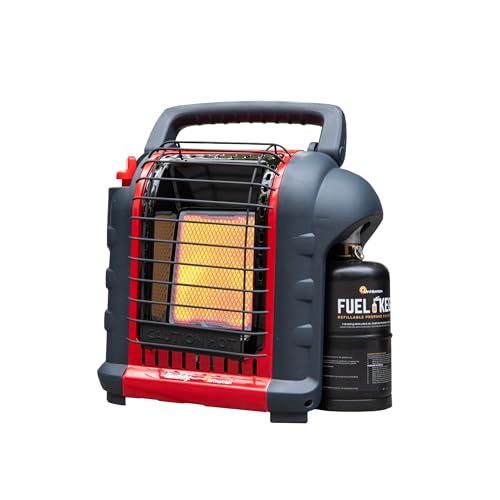
Best for: individuals seeking portable warmth for small rooms, tents, or tightly spaced garages. The lightweight design and radiant heat are ideal for quick spot heating, with compact form factor for travel.
- Radiant heat options at 4,000 or 9,000 BTU/hr.
- Approved for indoor and outdoor use; simple push-button operation.
- Suitable for spaces up to about 225 square feet when at higher output.
Limitations: Not a blower-style heater; it uses radiant heat, which heats objects and people directly rather than circulating air. Best used where a gentle, direct heat source is acceptable.
Ruasveltan 18,000 BTU Propane Patio Heater
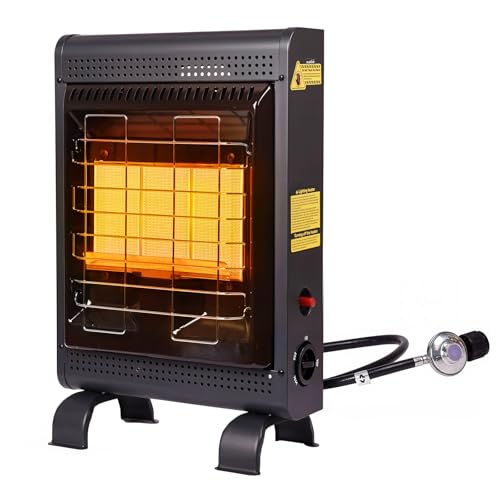
Best for: outdoor patios, garages, or camping setups needing strong warmth without relying on electricity. The three heat modes provide a scalable option for cool evenings.
- Three heating modes: 6,000/12,000/18,000 BTU with 69-hour runtime at low.
- Wireless, portable design with a wide stand for stability.
- Oxygen Depletion Sensor (ODS) and tip-over protection for safety.
Limitation: Primarily designed for outdoor use; for indoor use, ensure adequate ventilation and compliance with safety guidelines.
Flame King 60,000 BTU Propane Forced Air Heater

Best for: large outdoor spaces like unfinished garages or construction zones where strong, continuous heat is required and ample ventilation is available.
- Forced-air design with automatic safety shutoff and tilt protection.
- High heat output up to 60,000 BTU for rapid warming across large areas.
- Piezo ignition and simple gas control provide reliable operation.
Caution: Best used in ventilated areas due to high BTU output. Monitor ventilation to maintain safe oxygen levels and avoid CO buildup in confined spaces.
Gsmhoat Propane Patio Heater

Best for: portable warmth in garages or patios where you want a compact unit with multiple heat settings and a built-in regulator for safe operation.
- Three heat settings: 6,000/12,000/18,000 BTU for flexibility.
- CSA-approved regulator included for safe connection to a 20 lb propane cylinder.
- Oxygen Depletion Sensor and tip-over protection add safety layers for outdoor use.
Limitation: While portable, its maximum area coverage matches other 18,000 BTU options; choose this if you need a balance of size and heat in smaller outdoor spaces.
Buying Guide
Key considerations: space, ventilation, safety features, and fuel availability. Decide whether you need indoor use, outdoor use, or both, and verify ventilation requirements before operating any propane heater indoors.
- Heat output and space: Choose BTU ratings aligned with your space. Large areas benefit from higher BTU units, while smaller rooms can be effectively warmed with 6,000–9,000 BTU options.
- Ventilation and safety: Prioritize Oxygen Depletion Sensors (ODS), tip-over switches, and auto shutoff features. Forced-air heaters can move warm air quickly but require ample ventilation.
- Fuel and portability: A 20 lb propane cylinder is common; ensure regulator compatibility and hose length matches setup needs. Consider weight and handle design for portability.
- Noise and comfort: Some units are quieter than others. If you need a quieter environment, compare models with stated noise improvements or specific burner technologies.
- Durability and use case: Outdoor-rated units excel in patios and campsites. Indoor-rated models should have robust safety features for enclosed spaces.
- Maintenance and reliability: Look for simple ignition systems (piezo or pulse ignition) and accessible replacement parts or hoses/regulators.
Frequently Asked Questions
- Can I use a propane heater indoors?
Only in well-ventilated spaces or as directed by the manufacturer. Use only units with oxygen depletion sensors and safety shutoffs for enclosed areas. - What is BTU and why does it matter?
BTU measures heat output. Higher BTU heats larger areas more quickly, but requires more propane and more ventilation in enclosed spaces. - Do propane heaters require electricity?
Some models operate without electricity, while others use electric ignition or blowers. Check the product specs for ignition type and any blower features. - Which safety features are most important?
ODS, tip-over protection, and auto shutoff are essential for indoor or semi-enclosed use. A tilt switch helps prevent accidents. - How long does a 20 lb propane tank last?
Runtime varies by BTU setting; running 6,000 BTU on a 20 lb tank can last many hours, whereas higher BTU levels consume propane faster. - Is a blower necessary?
A blower helps distribute warmth quickly in larger spaces. If you need even heat distribution, choose a model with a built-in blower or consider pairing with a portable fan in some scenarios.