Propane block heaters offer portable, high-heat performance for garages, job sites, patios, and more. This guide highlights five top options, spanning large-room models to compact infrared units. Each product focuses on reliable ignition, safety features, and practical heat output. Compare capabilities, setup needs, and safety considerations to choose the right propane heater for your space.
| Product | Brand | BTU Range | Approximate Coverage | Notes |
|---|---|---|---|---|
| Habitio 125,000 BTU | Habitio | 75,000–125,000 | Up to 3,125 sq ft | CSA certified; pulse ignition; regulator included |
| Habitio 170,000 BTU | Habitio | 120,000–170,000 | Up to 4,250 sq ft | Powerful output; safety features; CSA certified |
| Avenger FBDTP30 | Avenger | 30,000 | Patios, small outdoor areas | Double burner; swivel heads; safety valve |
| Gasland MHA18BN | GASLAND | 18,000 | Up to 450 sq ft | Low electricity needs; portable and quiet |
| Original 540-Degree 45,000 BTU | Mr. Heater | 36,000–45,000 | Portable top radiant heater | Tank-top design; tip-over shut-off |
Note: This article selects propane and propane-compatible units suitable for larger spaces or outdoor use. Each product’s details reflect listed features and safety notes from manufacturers or sellers.
Habitio 125,000 BTU Forced Air Propane Heater
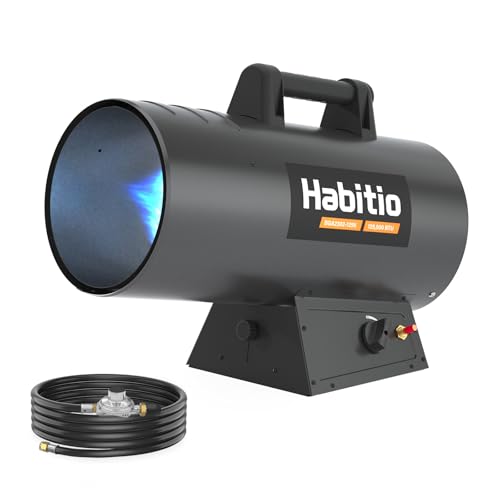
The Habitio 125,000 BTU model delivers scalable heat for large spaces up to roughly 3,125 square feet. It uses forced air to distribute warmth quickly and consistently, making it suitable for job sites, garages, and construction environments. A 10-foot hose with regulator is included for convenient setup. Safety and reliability are emphasized through CSA certification, a pulse ignition system to reduce flame-out risk, and protections that respond to overheating or power interruptions. When installing, ensure the gas connection is tightened securely with a wrench to prevent leaks. Noise is typical during operation, as with most powerful torches of this type.
Habitio 170,000 BTU Forced Air Propane Heater

Designed for more expansive spaces, the Habitio 170,000 BTU heater covers up to about 4,250 square feet. It shares key safety features with the smaller model, including pulse ignition, overheating protection, and automatic shutdown during power outages. The unit still ships with a 10-foot hose and regulator for straightforward installation. Like other high-output heaters, a snug gas connection with a tightened fitting is essential to prevent leaks. Noise levels are typical for large BTU units but manageable with proper placement and ventilation standards.
Avenger FBDTP30 Infra-Red Tank Top Outdoor Heater

The Avenger FBDTP30 focuses on radiant infrared heat, delivering 30,000 BTU for immediate warmth on patios, camping sites, and other outdoor spaces. Its design includes a front and rear wire guard for safety and quick, tool-free setup. The heat output is directional, with a 45-degree swivel capability to target seating areas. A Safety Control Valve shuts gas flow if the flame goes out, and match-light ignition reduces reliance on electricity. It’s best used in well-ventilated outdoor settings where direct exposure to the elements is minimal for optimal performance.
Gasland MHA18BN Propane Radiant Heater

The Gasland MHA18BN is a compact radiant heater designed for garages, workshops, and light construction sites. It operates with low electricity requirements, relying on a 20-pound propane cylinder for fuel. Features include Tip-Over and Low Oxygen Shut-off for enhanced safety, along with an automatic shutoff if the heater is tipped or oxygen levels are unsafe. Its portability and wheel-integrated design make it easy to move between spaces while maintaining a steady heat output. This unit is suited for smaller or intermittently heated areas rather than continuous large-space heating.
Original 540-Degree 45,000 BTU Tank Top Radiant Propane Heater

This tank-top radiant heater is designed to mount directly on a 20-pound propane tank, offering portable warmth with 45,000 BTU maximum output and three heat settings (high, medium, low). The unit is well-suited for portable use on job sites or in outdoor areas where a simple heat source is ideal. A multi-directional radiant design allows heat to be directed toward the immediate area, and a tip-over safety shut-off adds basic safety. It does require stable mounting and proper venting considerations for safe operation in enclosed spaces.
Buying Guide: Key Purchase Considerations
When selecting a propane heater, consider heat output, space size, and intended use. Large open spaces like job sites and barns benefit from higher BTU models with forced-air distribution, while patios and smaller workshops can be served effectively by radiant infrared units.
- Heat Output and Coverage: Match BTU ranges to room size. Higher BTU units heat larger areas quickly, but verify that your space accommodates the airflow and safety requirements.
- Fuel Source and Ventilation: propane models require proper ventilation, especially indoors. Some units are designed for outdoor use or semi-enclosed spaces with adequate airflow.
- Ignition and Safety: pulse ignition reduces flame-out risks; auto-shutoff features protect against overheating or tipping. Check for Low Oxygen Shut-off and Tip-Over safety valves where applicable.
- Portability and Setup: consider weight, wheels, handles, and hose length with regulator included. Tank-top or built-in tank designs affect mobility and storage.
- Maintenance and Certification: CSA or similar certifications indicate adherence to safety standards. Regularly inspect gas connections and hoses for leaks.
- Electrical Dependence: radiant infrared heaters typically require no electricity, while forced-air models may depend on an electrical supply for fans and ignition systems.
- Noise and Comfort: large BTU units can produce significant noise; plan placement away from workstations where possible and use in well-ventilated areas.
- Durability and Weather Resistance: outdoor or semi-outdoor units should withstand exposure to wind, dust, and moisture. Plastic and metal housings vary in durability.
Choosing the right propane heater involves balancing space size, desired heat type (forced air vs. radiant), and safety features. For large, open spaces, higher BTU forced-air models are typically most effective. For patios and outdoor gatherings, radiant units with straightforward ignition and safety shut-offs offer reliable warmth with simple operation. Always follow manufacturer installation instructions and local code requirements when deploying propane heaters.