Traveling in an RV demands reliable climate control, especially in hot southern summers and humid coastal climates. The following selections focus on energy efficiency, quiet operation, and ease of installation while spanning ducted and non-ducted options. Each product is well-suited to campers, fifth wheels, and motorhomes seeking dependable cooling without draining off-grid power. Read on for a balanced look at five leading choices, followed by a practical buying guide to help you compare features, efficiency, and installation needs.
Summary table of chosen products (key features at a glance):
- RecPro RV Air Conditioner 15K: Low amp draw, quiet operation, all-in-one unit, ducted or non-ducted, suitable for campers and fifth wheels.
- Furrion Chill Cube 18k BTU: Variable speed, high efficiency, turbo cool mode, light with simple bolt-on installation (AC unit only).
- RV A/C 12V 10000 BTU (outequip): Quick cooling, integrated 4,500 BTU heater, UV-stabilized ABS, rugged build for RV environments.
- Coleman-Mach Mach 3 Plus 13,500 BTU: Proven performance with copper tubing and robust airflow.
- Coleman-Mach Mach 15 15,000 BTU: Power Saver design, strong cooling capacity, Arctic White finish.
RecPro 15K RV Air Conditioner (Ducted or Non-Ducted)

RecPro’s all-in-one unit is designed for flexibility, supporting both ducted and non-ducted installations. The model emphasizes low amperage draw, helping manage energy usage on solar or generator systems while running multiple RV appliances. Its UV-resistant, durable exterior suits road life, and the unit operates quietly at about 55.4 dB—comfortable for sleeping, working, or relaxing inside a camper, fifth wheel, or food truck. The combination of energy efficiency and quiet performance makes it a practical choice for off-grid adventures where power management matters.
Furrion Chill Cube 18k BTU RV Rooftop AC

The Chill Cube delivers higher cooling capacity with a variable-speed compressor, offering faster and more efficient cooling inside the RV. It is designed as a ducted rooftop unit and is suitable for campervans and smaller to mid-sized RVs. A key feature is its energy efficiency, which can help extend battery life during off-grid trips. Please note this product is the AC unit only; additional components may be sold separately. It’s a strong option for users seeking robust cooling performance without excessive electrical load.
RV A/C 12V 10000 BTU Rooftop Unit (outequip)

This 12V roof unit provides 10,000 BTU of cooling power with a compact profile, making it a practical option for light-to-mid-size RVs, trucks, vans, and campers. It includes a built-in 4,500 BTU heater, offering extra warmth for shoulder seasons or cooler nights—but this heater is supplementary and not intended as the primary heat source in very cold conditions. The construction uses UV-stabilized ABS, a durable EPDM gasket, and a zinc-coated condenser for weather resistance and longevity in rugged environments.
Coleman-Mach Mach 3 Plus 13,500 BTU A/C

The Mach 3 Plus offers a dependable 13,500 BTU cooling capacity with airflow rated at 320 CFM, supporting solid cooling performance in a typical RV setup. Its copper tubing and gas-flux brazed joints indicate durable, long-lasting refrigeration components. This model is a well-established option for travelers who prioritize proven engineering and steady climate control in mid-size rigs and motorhomes.
Coleman-Mach Mach 15 15,000 BTU A/C

The Mach 15 is a larger-capacity unit designed for bigger RVs, offering 15,000 BTU of cooling with a PowerSaver focus. It provides stronger cooling performance to handle hotter climates or larger living spaces inside the RV. The Arctic White finish and wood skid fit typical RV aesthetics while ensuring compatibility with many roof profiles. This option is suitable for users requiring robust cooling in more demanding setups.
Icon Aftermarket A/C Shroud
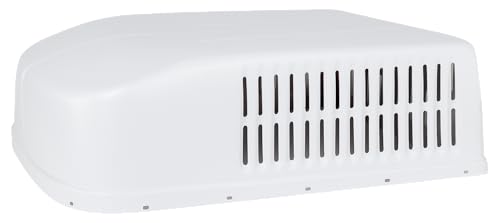
Icon’s aftermarket A/C shroud protects rooftop units from impact and UV exposure, extending the life of aging or recently installed systems. Designed for straightforward DIY installation, it is marketed as a quick replacement part to maintain performance. While not an air conditioner itself, the shroud is a practical accessory that helps preserve the efficiency and longevity of existing RV AC units in challenging environments.
Tatuo Replacement A/C Filters (4 Pack)

This 4-pack replacement air filters set is compatible with various RV air conditioning units, offering 14 x 7.5 inches per filter. The filters are made from foam and designed to capture dust, hair, pollen, and smoke particles. They can be cut to fit different sizes, providing flexibility for different models and roof configurations. Regular replacement helps maintain indoor air quality and cooling efficiency.
RV A/C Replacement Filters (16 x 40 x 1/4 Inches)

These extra-large, cuttable filters are designed for wide-size RV air conditioners. They provide robust filtration with a 50 PPI foam matrix to trap hair, dust, pollen, and smoke. They are adaptable to different RV roof units and can be trimmed to fit precisely, extending the life of the AC system by maintaining clean airflow and reducing debris buildup.
Buying Guide: Key Considerations For Selecting RV Air Conditioning
Choosing the right RV air conditioner depends on several practical factors. Consider the size of your RV, climate, power source, and how you plan to use the unit—whether for full-time living or occasional trips. Below are essential criteria to compare across models:
- Cooling capacity (BTU) vs. space: Larger RVs require higher BTU ratings (13,500–15,000 BTU is common for mid to large units). Match BTU to living area volume, insulation quality, and window exposure.
- Energy efficiency: Look for units with low amp draw, variable-speed or inverter-style compressors, and high SEER-like efficiency metrics. Energy efficiency is especially important for off-grid use with solar or generators.
- Installation type: Ducted units distribute air through a network of ducts, while non-ducted units blow conditioned air directly into the space. Ducted systems often provide better comfort but can require heavier installation work.
- Noise level: Measured in decibels, quieter units provide more comfort for sleep and work. Units around 50–60 dB are generally acceptable for most RV interiors.
- Heat option: Some RV AC systems include a built-in heater or compatible heat pump features. If you need year-round comfort, ensure heat capabilities meet your climate needs.
- Durability and weather resistance: UV-stable housings, corrosion-resistant components, and gasket sealing contribute to longevity in varied climates and road conditions.
- Compatibility and accessories: If choosing an aftermarket shroud or filters, verify compatibility with your existing unit and roof structure. Replacement filters should be cuttable to fit unusual sizes.
- Installation complexity and serviceability: Some units require professional installation or additional components (e.g., installation kits, ducting, or adapters). Others are designed for straightforward DIY mounting.
In sum, select a model that balances cooling capacity, energy use, and installation practicality for your RV lifestyle. Evaluate your typical climate, roof space, and whether you prefer a unit that can operate efficiently off the grid or with shore power. Regular maintenance, including filter changes and protective accessories, will maximize efficiency and extend component life.