Basements can trap stale air and dampness, making effective air circulation essential. The right air circulator helps move fresh air through low-ceiling spaces, dry wet areas faster, and reduce humidity without heavy cooling. This guide reviews five dependable options designed to maximize airflow in basement environments, with varied sizes, speeds, and features to suit different setups—from open retreat spaces to utility rooms. Below you’ll find practical buying considerations and a quick visual reference to help you choose at a glance.
| Product | Brand | Key Benefit | Ideal For |
|---|---|---|---|
| Lasko Wind Machine Fan, 20″ Model 3300 | Lasko | Three speeds and pivoting head for directed airflow | Living areas and large basements |
| XPOWER P-230AT Mini Mighty | XPOWER | Up to 925 CFM, lightweight and stackable | Basement corners, quick drying, job sites |
| Lasko High Velocity Oscillating Tower Fan | Lasko | Wide coverage with oscillation and remote | Large basements, garages, gyms |
| Lasko Portable Utility Fan, 12” | Lasko | Dual outlets and pivot capability | Workshops, kitchens, utility rooms |
| Dreo Fan for Bedroom (34-41″ tall) | Dreo | Three speeds, adjustable height, quiet operation | Living areas and home offices in basements |
Lasko Wind Machine Fan, 20″ Model 3300

This Lasko air circulator is built for room-wide airflow with three high-performance speeds. A pivoting head allows precise direction of air, making it suitable for basements where targeted cooling or drying is needed. The rugged construction ensures years of consistent operation, even in harsher basement environments. Use the pivot feature to push air toward damp corners or toward a central living area to improve overall comfort.
XPOWER P-230AT Mini Mighty 925 CFM Air Mover
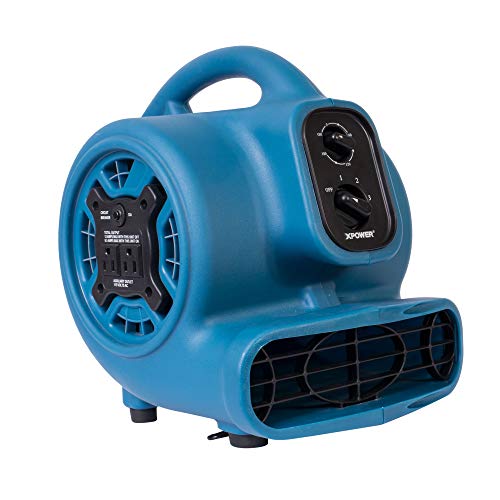
Designed as a high-capacity air mover, the P-230AT delivers up to 925 CFM with a compact 10.7″ x 12.4″ x 13.3″ footprint. It’s energy-efficient, drawing about 2.3 amps at peak, and includes a 10-foot cord with a daisy-chain option. Stackable with a durable housing, this model is ideal for fast water-damage drying, carpet lifts, and other basement restoration tasks where heavy, directed airflow is required.
Lasko High Velocity Oscillating Tower Fan

This tower fan is engineered for larger areas, delivering up to 509 CFM with accelerated air velocity. It features 3 speeds and provides widespread oscillation for broad basement coverage. A built-in timer offers up to seven hours of automatic shutoff, letting you run the fan overnight without monitoring. Its slim profile fits neatly along walls or corners where space is at a premium.
Lasko Portable Utility Fan, 12”

This compact 12-inch model provides up to 289 CFM across three speeds and includes a carry handle for easy relocation. Its portability makes it suitable for basements that double as workshops or utility areas. Two grounded outlets and a 270-degree pivot add versatility for directing airflow exactly where it’s needed, such as drying a damp corner or circulating air around stored materials.
Dreo Fan for Bedroom, 34-41″ Standing

This Dreo model combines a pedestal fan, oscillation, and air circulator into a single unit. With 3 speeds and auto mode, it adjusts to room conditions to maintain comfortable airflow. It can circulate air up to 80 feet away, making it well-suited to large basements or open-plan layouts. The design prioritizes quiet operation, aided by a bionic blade system that reduces noise while delivering robust airflow.
Dreo Table Air Circulator, 11 Inch

This compact desk circulator uses turbine-like airflow to deliver up to 800 CFM across the room in a short time. It’s designed for full-room coverage without blind spots and offers a 40-foot circulation reach. The 28 dB noise level makes it a practical option for basement home offices or media rooms where quiet operation matters, while still delivering strong airflow to improve air movement and comfort.
Buying Guide: Key Considerations For Basement Air Circulation
- Room size and layout: Larger basements benefit from higher-CFM devices or a combination of movable fans to cover corners and under-stair storage spaces.
- Noise tolerance: For living areas or bedrooms in basements, prioritize models with quiet operation or feature-rich remote controls to manage noise levels at night.
- Drying and humidity control: If basement dampness is a concern, seek air movers with high airflow, durable construction, and the ability to run for extended periods without overheating.
- Portability and storage: Lightweight, stackable, or dual-outlet designs help you reposition airflow as needed and store units when not in use.
- Energy efficiency: Look for models with efficient motors that maximize CFM per watt, especially for continuous use in basements.
- Durability and materials: Basements can be humid; corrosion-resistant housings and rugged builds extend product life in challenging environments.
- Features vs. needs: Remote control, timers, auto modes, and adjustable tilt/height add convenience but consider whether they align with your daily routines and basement use.
- Safety considerations: Ensure cords and outlets are arranged to avoid tripping hazards and that units have stable bases to prevent tipping on basement floors.
Air circulation strategies for basements often involve combining a larger, heavy-duty unit with one or more lighter devices to fill in gaps. For damp spaces, pair high-volume movers with dehumidification or ventilation to reduce moisture more effectively. Consider placement near problem zones—wet walls, laundry areas, or corners with poor air exchange—to optimize the overall impact.