Classrooms require reliable cooling that keeps students comfortable without distracting noise or high energy costs. The following five portable and windowless options are well-suited for classrooms, offices, or instructional spaces. Each product balances cooling capacity, noise levels, and ease of use, helping keep learning environments productive. The table below highlights the chosen models and their standout features to guide a quick comparison.
| Product | Brand | Key Benefit |
|---|---|---|
| Dreo AC515S (12,000 BTU) | Dreo | High cooling with quiet operation |
| Kaniapu Portable Evaporative Cooler | Kaniapu | Low-energy, USB-powered, compact |
| YARRMY Portable Mini AC | YARRMY | 4-in-1 cooling, humidification, quick cooling |
| COOLECH Windowless 20H Cooler | COOLECH | 4 modes, waterless alert, large airflow |
| Midea 5,000 BTU EasyCool Window AC | Midea | 3-in-1 comfort, easy installation, remote control |
Note: Each option is described with its listed features and practical classroom considerations, including noise, coverage, and ease of use. All links point to the manufacturer’s or retailer’s product page for further details.
Dreo AC515S Portable Air Conditioner

The Dreo AC515S delivers a 12,000 BTU ASHRAE cooling capacity, adequate for medium classroom spaces within 16 ft. It offers a 3-in-1 mode with cooling, dehumidification, and fan control. Temperature can be set between 65°F and 86°F with multiple control options for tailored comfort. A patented noise isolation system reduces compressor and turbulence noise, targeting as low as 46dB to minimize classroom disruption. This model supports drainage-free operation in humid environments, reducing maintenance needs during the school year. Remote, APP, and voice control add flexible operation from across the room.
Key features include: large cooling capacity for classrooms up to several dozen feet, relatively quiet operation ideal for learning environments, and integrated dehumidification to improve comfort in humid climates. The unit’s self-evaporating drainage-free design minimizes routine upkeep, which can be valuable for busy classrooms and staff.
Kaniapu Portable Evaporative Cooler

This evaporative cooler emphasizes energy savings, using no Freon and low energy consumption, similar to a light bulb’s power draw. It runs on USB power and can operate for approximately eight hours on a refill of water, which makes it convenient for classroom use where access to constant power outlets may be limited. The unit is portable and easy to move between rooms and desks, providing targeted cooling at a low cost. It stays quiet with less than 45dB of noise, helping maintain a conducive learning environment.
Features to note include: USB-powered operation, long runtime per refill, compact portability, and quiet performance. The design suits smaller classroom spaces or student study corners where a low-cost, low-maintenance cooling option is desirable.
YARRMY Portable Mini AC

The YARRMY unit combines 4-in-1 functionality: a fan, personal air conditioner, air cooler, and humidifier. It offers 3 speeds and 2 mist levels, with a large 1.5L water tank for extended operation. The device can cool spaces quickly, reportedly achieving noticeable temperature reductions in seconds, and is suited for desk or small desk-area use in classrooms or offices. The manufacturer highlights its compact size, making it easy to position near student seating areas without major space requirements.
Considerations include: how effectively it cools in larger classrooms, the need to refill water, and the balance between airflow and humidity for comfort in learning spaces.
COOLECH Windowless 20H Cooler
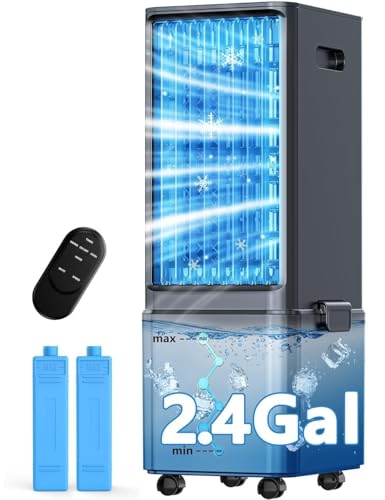
This evaporative cooler doubles as a 4-mode, 3-speed system, designed for windowless operation. It features a waterless alert system to prevent run-dry operation and switches to Natural Wind mode when water runs out. The unit provides cooling across multiple modes (Cooling, Normal, Sleep, Nature) and offers a broad airflow capability up to 22 ft/s. For classrooms with limited window access, this model provides flexible cooling without window installation, relying on evaporative cooling to reduce temperatures in dry climates.
Important points include: smart water alerts that help prevent interruptions, a 90° oscillation range for even air distribution, and suitability for dry regions where humidity levels are a concern. It is best used in medium-sized classrooms or shared learning spaces.
Midea EasyCool 5,000 BTU Window AC

The Midea EasyCool window unit is designed for spaces up to about 150 square feet, making it suitable for small classrooms or study rooms. It offers three modes: cooling, fan, and dehumidifier, providing flexibility in how classrooms manage comfort. A remote control and an LED display contribute to approachable operation, while the removable, reusable filter helps maintain air quality. The installation is designed for standard window frames, with included mounting accessories and straightforward setup for most classrooms.
Considerations include: window compatibility, energy efficiency, noise levels at different speeds, and the impact on lighting or window placement in classroom layouts. For schools needing a simple, low-maintenance option, this unit provides a solid balance of cooling capability and user-friendly controls.
Buying Guide: Key Purchase Considerations For Classroom Cooling
- Cooling capacity vs. room size: Match BTU ratings to classroom square footage. Larger rooms demand higher BTU units or modular cooling strategies with zone cooling.
- Noise levels: For learning environments, aim for units producing under 50dB in standard operating mode. Noise isolation and fan settings help minimize classroom disruption.
- Energy efficiency and operating costs: Look for energy-saving features, dehumidification options, and modes that reduce power draw during off-peak times or less active teaching periods.
- Ventilation and humidity: In dry regions, evaporative coolers can add moisture and improve comfort; in humid environments, dehumidification may be prioritized to prevent stuffiness.
- Installation and maintenance: Window units require window access and proper sealing; portable units should have caster wheels, drain-free options, or self-evaporating features to lower maintenance.
- Portability and flexibility: For classrooms with varying layouts, favor compact, easy-to-move units or multi-function devices that can be relocated between spaces or used in small offices.
- Safety and usability: Remote or app-control can enhance convenience for staff; consider auto-shutoff features, water alerts, and simple filter access for ongoing maintenance.
When selecting a cooling solution for classrooms, consider the layout, occupancy, and climate conditions. A mix of portable and windowless options can cover spaces with limited window access, while conventional window units remain a cost-effective, straightforward choice for smaller rooms. Always verify installation requirements and warranty details prior to purchase to ensure long-term, reliable classroom cooling.