Gyms demand steady, reliable cooling to keep workouts comfortable and equipment functioning well. The following cooling solutions are designed to optimize airflow without heavy energy use, whether you’re cooling a small studio, a weight room, or a coaching area. Each option below is suited for gym environments where occupants need relief from heat, noise matters, and flexibility is key. Read on to compare top portable and windowless models that balance performance with practicality.
The table below provides a quick snapshot of five hand-picked units to fit gym settings. For deeper details, scroll to each product section.
| Brand | Model | Type | Key Benefit |
|---|---|---|---|
| Kaniapu | Portable Air Conditioners, 3 Speeds | Portable evaporative cooler | Low energy, USB-powered, night-friendly (less noise) |
| COOLECH | 4-In-1 Windowless Air Conditioner | Windowless evaporative cooler | Humidifies and cools; smart water alerts |
| Dreo | 12,000 BTU AC, AC515S | Portable air conditioner | High cooling power; quiet operation |
| COOLECH | 42 Inch Windowless Portable | Windowless swamp cooler | Wide coverage; 90° oscillation for even airflow |
| JYew | AI Portable Evaporative AC | Portable evaporative cooler | Long runtime; broad oscillation for large spaces |
Portable Air Conditioners By Kaniapu

The Kaniapu portable unit emphasizes energy efficiency and ease of use for gym spaces that need adjustable airflow without high operating costs. It features three wind speeds and timers, with a compact desktop footprint ideal for personal training corners or small workout nooks. Notably, it runs on USB power and includes a large water tank option for extended cooling, making it suitable for cooldown areas post-workout or stretching zones. The design prioritizes quiet operation to minimize disruption during classes.
COOLECH 4-In-1 Windowless Air Conditioner

This COOLECH model combines multiple functions in one unit—acting as a fan, humidifier, and evaporative cooler. In dry gym environments, the integrated humidity control helps maintain a comfortable climate, reducing dryness during intense workouts. It includes smart water alerts to prevent outages mid-session and supports four modes and four speeds for flexible cooling profiles. It’s particularly useful in fitness spaces located in hot, arid regions where consistent humidity can improve perceived comfort.
COOLECH 42 Inch Windowless Portable AC
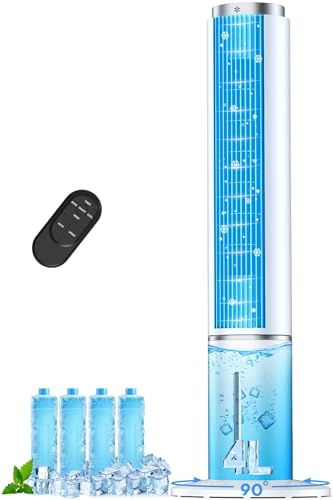
Designed for larger gym rooms, this COOLECH model emphasizes broad cooling reach with 17.7-inch air outlets and a 90° oscillation range. Delivering up to 1400 CFM, it can blanket spaces up to several hundred square feet, making it a strong option for group training areas or small studios. The unit offers four modes and three speeds, enabling operators to dial in a balance between cooling intensity and energy usage as workouts require different room temperatures and humidity levels.
COOLECH Windowless 3-In-1 Evaporative Cooler
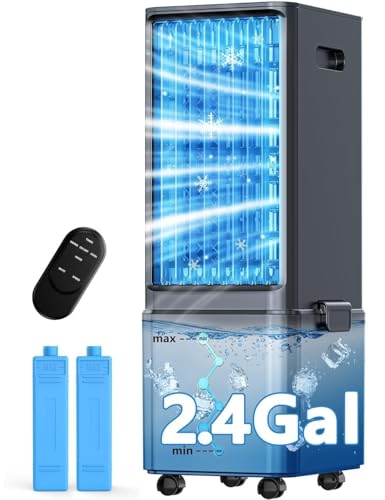
This COOLECH model emphasizes a waterless alert system to prevent overheating or dry operation, an important feature in busy gyms where consistent operation is essential. The 3-in-1 design (cooling, fan, and humidification) provides flexible comfort, particularly in dry climates or during peak training hours. Four modes and three speeds offer a range of configurations to keep athletes comfortable without overcooling spaces between sets.
Dreo 12,000 BTU AC515S Portable Air Conditioner

This Dreo unit targets larger gym spaces with substantial cooling capacity and a focus on quiet operation. The model boasts a cooperative design with a heat-exchange system that reduces compressor noise, aiming to keep noise levels around 46dB. The included dehumidifier and timer add convenience for gym routines that require consistent conditioning. Its drainage-free cooling approach reduces setup complexity in rooms without dedicated drainage, beneficial for multi-room facilities.
JYew AI Portable Evaporative AC

The JYew unit highlights long runtime and wide coverage suitable for larger training spaces or open gym floors. It features a 120° auto-sweep for even cooling and energy-efficient operation, making it a practical option for gyms that require flexible positioning and broad airflow. The 4-in-1 capability (humidifier, fan, cooler, and air circulation) helps maintain comfortable conditions during high-intensity sessions and group classes.
Buying Guide: Key Considerations For Gym Cooling
Choosing the right air conditioner for gym use involves weighing space size, humidity, noise, and energy efficiency. Consider the following factors to align a purchase with your facility’s layout and scheduling needs:
- Room size and airflow: For larger gyms or studios, look for units with higher BTU ratings or greater CFM (cubic feet per minute) airflow. Swamp coolers with wide outlets and oscillation can better cover open areas.
- Humidity management: Gyms can become chalky or damp. Models with humidification or dehumidification features, or evaporative cooling that adds necessary moisture, can improve comfort and equipment longevity.
- Noise levels: Quiet operation matters in instructional spaces and studios to avoid disrupting classes. Look for noise isolation technology and decibel Ratings for cooling units used in group environments.
- Power needs and setup: Windowless and drainage-free designs reduce installation friction in rented spaces or multipurpose rooms. USB-powered options or low-energy devices can decrease operating costs during long training days.
- Maintenance and alerts: Water alerts, auto-shutoff, and auto-fill or refill indicators help prevent downtime during peak usage and make routine maintenance simpler.
- Portability vs. fixed placement: Portable units are versatile for rotating spaces, while windowless models can provide a steadier performance in a fixed training area.
- Filtration and air quality: Some units include ionizers or filters to reduce dust and odors, contributing to a more comfortable gym atmosphere.
When selecting, balance cooling capacity with energy efficiency and the gym’s typical occupancy. For busy peak periods, prioritize models with higher CFM, longer runtime per fill, and smart controls that let you schedule cooling to coincide with class times. For smaller studios, compact portable units can provide sufficient relief without overwhelming the space or the power system.