Finding the right cooling solution for a compact space can be challenging. This guide highlights five compact-friendly air conditioners and near-AC alternatives that work well in small bedrooms, offices, or dorm rooms. Each section includes practical details, performance notes, and a buying guide to help you choose based on room size, noise, energy use, and ease of installation.
| Product | Brand | Key Use | Approx. Size |
|---|---|---|---|
| Portable Air Conditioner With Ice Cooling | Piegricdiat | Personal cooling, small room | Compact |
| GE Window Air Conditioner 5000 BTU | GE | Small rooms up to 150 sq ft | Window unit |
| Dreo Portable Air Conditioner 12000 BTU | Dreo | Medium to larger small rooms | Portable |
| COOLECH Windowless Evaporative Cooler | COOLECH | Dry climates, compact spaces | Portable |
| SereneLife 3-in-1 Portable AC | SereneLife | Small living spaces, versatile modes | Portable |
Below are five selected products designed to help keep a small room cool and comfortable. Each section provides a concise overview and highlights the most relevant features for tight spaces, including noise levels, energy efficiency, and installation considerations.
Portable Air Conditioner With Upgraded Ice Cooling Technology

This compact unit uses upgraded ice cooling technology to deliver fast, efficient cooling in small spaces. A powerful motor supports dynamic ice cooling, enabling quicker relief from heat. The anti-leakage water system minimizes spills and refills, which is especially beneficial for tight spaces with limited drainage options. With ultra-low noise (below 30 decibels) and two freezer packs lasting up to 10 hours, this device is suitable for bedrooms, dorms, or desks where quiet operation is essential.
Key considerations for this model include the one-water-fill design and portability. It’s ideal for personal cooling in rooms, tents, or offices where traditional fixed-air conditioners are impractical. If you want a discreet, low-maintenance cooling option that doesn’t require a window or permanent installation, this unit is a viable pick for small rooms.
GE Window Air Conditioner Unit, 5,000 BTU

Designed for small rooms up to 150 square feet, this 5000 BTU mechanical window AC includes an easy-install kit and manual controls. It’s a practical option for apartments or bedrooms where a window-mounted solution is feasible. The unit emphasizes low-noise operation, enabling comfortable nighttime use with minimal disruption. Its compact size makes it a good match for spaces where a standard split unit isn’t possible, and installation is straightforward with the included kit.
Consider this GE model if you want a simple, reliable cooling source in a small space without the complexity of ductwork or drainage concerns. It’s particularly well-suited to single, well-insulated rooms where steady, quiet cooling is preferred over high-tech features or smart controls.
Dreo Portable Air Conditioners, 12,000 BTU AC Unit

With 12,000 BTU ASHRAE cooling capacity, this Dreo unit is capable of cooling larger small rooms or open layouts. The 3-in-1 mode combines cooling, dehumidifying, and fan functions, offering flexibility for different climates and seasons. A quiet operation profile (designed for around 46dB in certain modes) makes it suitable for bedrooms and home offices where low noise is important. The unit includes a drainage-free system, which reduces maintenance in spaces without easy drainage access.
When sizing your needs, consider whether the space benefits from a robust cooling capacity without requiring frequent emptying of condensate. This model suits small homes or apartments with larger living spaces where a compact, stand-alone cooling solution is needed without dedicated HVAC installation.
SereneLife 3-in-1 Portable Air Conditioner

The SereneLife 3-in-1 portable AC integrates cooling, a built-in dehumidifier, and a fan for versatile use in small spaces. Its portability is enhanced by wheels for easy movement between rooms, making it a practical option for apartments or home offices. The default cooling mode is readily activated by plugging in, and the dehumidifier helps reduce humidity levels—an important factor in hot climates for both comfort and air quality.
Consider this model if you value all-in-one functionality and straightforward operation. It’s particularly useful for those who want a compact solution with the option to dehumidify during humid summers without purchasing separate devices. For users sensitive to noise, test the unit in advance, as performance can vary with fan speed and ambient conditions.
COOLECH Windowless Air Conditioner With 4 Modes
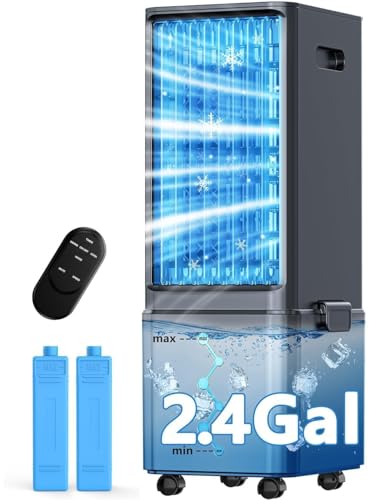
This windowless evaporative cooler offers four modes and three fan speeds, with a 2.4-gallon tank designed to provide up to 20 hours of cooling in dry environments. It features a waterless alert system to remind you when water is running low, preventing damage and ensuring continuous operation. In climates with low humidity, evaporative cooling can be an efficient alternative to traditional air conditioning, particularly in small rooms where ductwork isn’t feasible.
Key considerations include the moisture impact on air quality and furnishings. Evaporative cooling works best in hot, dry conditions; in humid environments, its effectiveness may be limited. If you live in a dry climate and want a portable, low-energy solution without draining into a drain, this model offers a practical approach to cooling small spaces.
Buying Guide: Key Purchase Considerations For Small Rooms
- Room size and cooling need: For spaces up to 150 sq ft, 5000 BTU units like the GE model are typically sufficient. Larger small rooms may benefit from 8000–12000 BTU portable units, such as the Dreo model, depending on layout and insulation.
- Portability vs. installation: Window units and portable ACs provide different installation challenges. Window units require a suitable window and can reduce light or airflow through the window, while portable units need a clear space for exhaust and water management (for certain models).
- Noise and comfort: Look for low-noise operation (roughly 40 dB or lower in sleep modes) if you’ll use the device in bedrooms or home offices. Models with dedicated sleep or dehumidify modes can enhance comfort without increasing noise.
- Energy efficiency: Inverter-driven or energy-efficient models reduce running costs over time. Check energy star ratings or SEER/EER values when comparing appliances with similar BTU outputs.
- Humidity management: Dehumidifier features help improve comfort in humid climates and can reduce the perceived temperature. If humidity is a concern, consider 3-in-1 units that combine cooling and dehumidification.
- Maintenance and water handling: Units with water-fill systems, ice packs, or auto-evaporation reduce maintenance. For evaporative coolers, consider the climate (dry vs. humid) and ensure you have a convenient water source.
- Climate compatibility: Evaporative coolers perform best in dry climates and may be less effective in humid areas. Traditional compressors provide more consistent cooling in various climates but can require more power and installation considerations.
Choosing the right option depends on your room size, climate, and whether you prioritize portability, installation ease, or a combination of cooling, humidity control, and air circulation. The products above represent a spectrum of small-room cooling approaches—from traditional compact window units to advanced portable models and evaporative alternatives—allowing you to compare practical trade-offs before making a purchase.