Hotels require cooling systems that combine energy efficiency, quiet operation, and easy maintenance. This guide highlights five top air conditioning options well-suited for hotel rooms, lobbies, and common areas. Each entry includes practical features, installation notes, and performance considerations to help hoteliers compare options without breaking the bank.
Summary of Selected Products
| Product | Brand | Type | Key Benefit |
|---|---|---|---|
| Dreo Portable Air Conditioners, AC515S | Dreo | Portable AC | Low noise with 46dB isolation for quiet rooms |
| Cooper & Hunter PTAC CH-PTW-HE15HP | Cooper & Hunter | PTAC with heater | All-in-one year-round comfort with 3.5kW heater |
| Dreo Portable Air Conditioners, AC515S (12,000 BTU) | Dreo | Portable AC | Large cooling capacity with multi-mode operation |
| Cooper & Hunter PTAC CH-PTW-12HPGF | Cooper & Hunter | PTAC with heater | Compact, reliable hotel-ready PTAC |
| COOLECH Windowless/Portable Evaporative Units | COOLECH | Evaporative Cooler | Low-cost cooling where humidity and energy use are concerns |
Dreo AC515S 12,000 BTU Portable AC with Quiet Operation

The Dreo AC515S portable air conditioner delivers 12,000 BTU ASHRAE cooling capacity and 16-foot reach, making it suitable for larger hotel rooms or suites. The unit is designed for low noise output, with a patented noise isolation system that reduces compressor turbulence to about 45dB. This efficiency is especially valuable in guest rooms where quiet operation supports better guest satisfaction and longer stays.
Multiple control options include APP, voice, and remote, enabling front-desk operators or guests to adjust climate settings without disrupting guests. A drainage-free design helps simplify maintenance in spaces without dedicated drainage. Operational temperature range from 61°F to 86°F provides flexible comfort control for varied guest preferences. The unit is optimized for rooms up to 16 ft away from the unit, which suits mid-sized hotel rooms and some suites.
Cooper & Hunter PTAC CH-PTW-HE15HP With Built-In Heater

This all-in-one PTAC system combines a 15,000 BTU cooling capacity with a built-in 3.5kW electric heater. Designed for hotel rooms and commercial spaces, it provides year-round comfort and simplifies installation by including a remote, power cord, and a wireless smart kit. The unit runs on 230/208V and uses R-32 refrigerant, making it an efficient option for new builds or major renovations.
Considerations include ensuring the proper wall sleeve and exterior grille are planned as these are not included. The CH-PTW-HE15HP is well-suited for hotels needing a compact, quiet, and self-contained cooling and heating solution, especially in rooms where a single unit must handle both functions with minimal maintenance.
Dreo AC515S 12,000 BTU Portable AC with Drainage-Free Cooling

The AC515S from Dreo emphasizes big cooling power and simplified drainage management. Its 12,000 BTU capacity and 16-foot cooling reach are helpful for larger guest rooms or compact common areas. Three-in-one functionality (cooling, dehumidifying, fan) plus a timer and smart controls give hoteliers flexibility to manage occupancy and energy use. The unit is designed for quiet operation, with a noise reduction system around the compressor, making it suitable for guest rooms and staff areas where low distraction is essential.
Hotel operators should note the importance of periodic maintenance of filters and condensate pathways to preserve low-noise performance and consistent cooling. The device supports app and voice control, which can streamline front-desk room assignment and room service operations.
Kaniapu Evaporative Portable Cooler for Small Spaces

This evaporative cooler is a cost-conscious option for dry climates where humidity-managed cooling is acceptable. It operates with a USB-powered design and a water reservoir that can sustain extended cooling periods. While not a substitute for centralized hotel AC in all areas, evaporative cooling can supplement room cooling, especially in lobby lounges, staff rooms, or guest suites during peak occupancy to reduce energy load on main HVAC systems.
Key considerations include humidity levels, as evaporative cooling is most effective in dry environments. It’s lightweight and portable, enabling flexible deployment across floors or venues with minimal installation. The device emphasizes low energy consumption and eco-friendliness, aligning with energy-management strategies in many properties.
COOLECH Evaporative Cooler With Four Modes
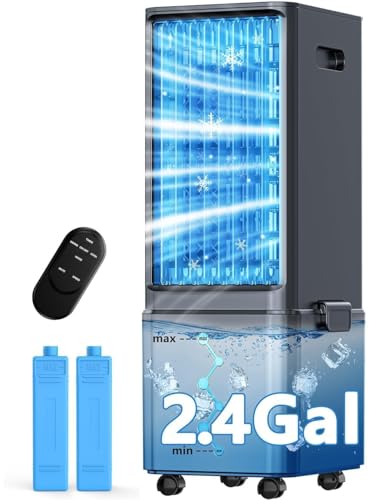
The COOLECH 4-mode evaporative cooler combines cooling, normal, sleep, and nature modes, with three fan speeds and a high airflow range. It is suitable for hotels seeking a windowless cooling option that still delivers significant airflow, with a 2.4-gallon tank and a 15-hour runtime capability. The 70° auto-swing feature helps distribute air evenly across guest rooms and larger suites, and its evaporative design can help maintain comfortable humidity levels in warmer, dry climates.
Hotels should evaluate the space size and humidity conditions before deployment. Evaporative units can reduce energy costs and provide a supplementary cooling method in common areas or ground-floor rooms, especially where window access is restricted or costly for retrofits.
Buying Guide: Key Considerations For Hotel Cooling Purchases
- Type selection: Portable ACs offer flexibility for individual rooms or temporary spaces; PTAC units integrate with walls for permanent installations and include heating in many models; evaporative coolers are cost-effective in dry climates but require careful humidity management.
- Noise levels and guest comfort: Choose units with low decibel ratings and noise isolation features to minimize disruption in sleeping areas and meeting rooms.
- Energy efficiency and controls: Look for ENERGY STAR-like efficiency indicators, programmable timers, and remote or app-based controls to support energy management programs and supervision by staff.
- Maintenance and serviceability: Favor units with straightforward filter access, drain management, and robust parts availability. PTACs usually require professional installation and service, while portable units are easier to deploy temporarily.
- Capacity planning: Match BTU ratings to room sizes. For hotels, consider a mix of units to cover standard rooms, suites, and public areas. In large properties, a centralized or semi-centralized approach may reduce total energy consumption.
- Ventilation and safety: Ensure compliance with local codes, ventilation requirements, and electrical load. Plan for appropriate electrical circuits and outdoor exhaust pathways where needed.
- Reliability and warranty: Hotels benefit from longer warranties and supplier support. Confirm availability of replacement parts and service response times in your region.
- Installation considerations: PTAC units require proper sleeves and grilles; portable units need accessible drainage and stable placement; evaporative coolers should be positioned to optimize airflow without introducing excess humidity.
In practice, a balanced approach combines a primary PTAC-based system for guest rooms with energy-efficient, supplementary cooling options for public areas and staff spaces. This strategy helps hotels maintain guest comfort while controlling operating costs and minimizing service interruptions.