Finding reliable cooling for a pop-up camper or small RV can be challenging. The following selection highlights five top-rated units that balance efficiency, noise, and ease of installation. Each option is suitable for compact RVs, trailers, and off-grid setups, helping you stay comfortable whether you’re camping in heat or seeking quiet nightly cooling.
| Product | Brand | BTU | |
|---|---|---|---|
| RV Air Conditioner, 12V 10000 BTU Rooftop | outequip | 10,000 | Fast cooling, built-in 4,500 BTU heater, weather-resistant |
| RecPro RV Air Conditioner 15K | RecPro | 15,000 | Low amp draw, quiet operation, ducted or non-ducted |
| FOGATTI InstaCool 13500BTU RV AC | FOGATTI | 13,500 | All-in-one design, dual compressors, eco refrigerant |
| Aspligo 12v Rooftop DC A/C 8000BTU | Aspligo | 8,000 | Ultra-thin, 12V, permits quick cooling |
| Bailigo RV Heat & Cool 9000BTU | Bailigo | 9,000 | 12V DC, heater and cooling, practical for trucks |
Each unit below is reviewed for suitability in pop-up trailers, camper vans, and small RVs, considering power needs, installation ease, noise, and cooling effectiveness in variable climates.
RV Air Conditioner 12V 10000 BTU Rooftop (outequip)

Theoutequip 12V rooftop unit delivers 10,000 BTU of cooling for compact RVs, trucks, or campers, with a built-in 4,500 BTU heater for mild-season warmth. It prioritizes quick cooling, claiming fast performance within 15 minutes. Built for durability, it uses UV-stabilized ABS materials, an EPDM foam gasket, and a zinc-coated condenser to endure harsh weather conditions. The unit is designed to function off 12V power as well as standard AC sources, making it versatile for off-grid setups. Note that the heater is supplementary and not intended as the primary heat source in extreme cold or larger spaces.
Icon Aftermarket A/C Shroud
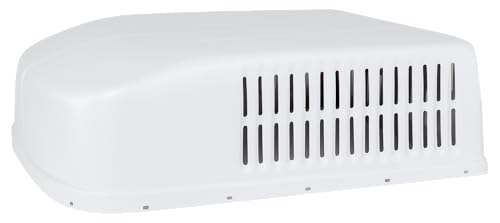
The Icon aftermarket A/C shroud focuses on durability and DIY friendliness. It is described as impact resistant and UV protected, built to withstand tough conditions. The shroud is designed for easy replacement and maintenance, with an installation process touted at around five minutes. This accessory is compatible with Dometic Brisk Air/Duo Therm systems and helps extend the life of your rooftop unit by protecting internal components from debris and sun exposure. It is not a cooling unit itself but a protective exterior component.
RecPro RV Air Conditioner 15K

RecPro’s 15,000 BTU unit is designed for both ducted and non-ducted configurations, offering versatility for various RV layouts. It emphasizes low amperage draw, aiding energy efficiency for off-grid or solar-powered setups. The construction uses UV-resistant plastics and an aerodynamic shape to reduce drag and support long-term rooftop performance. With a whisper-quiet operation level around 55.4 dB, it aims to minimize noise disruption during sleep or work inside the RV, a key factor for camper comfort on the road.
FOGATTI InstaCool 13500BTU RV AC
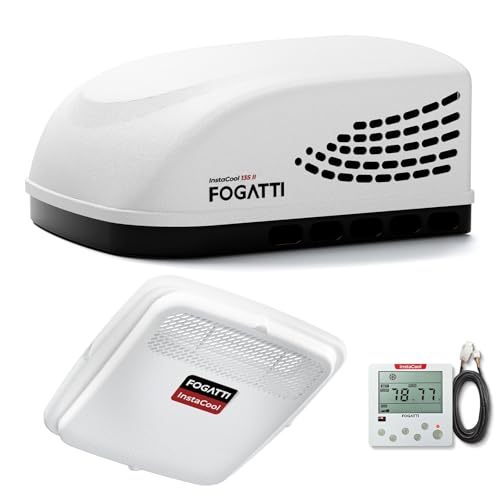
FOGATTI InstaCool combines 13,500 BTU cooling with an all-in-one design for easier installation in campers and trailers. It uses dual high-efficiency compressors and eco-friendly refrigerant (R32) to balance cooling power with energy efficiency. The unit requires both 115V AC and 12V DC power, making it suitable for setups with dual power sources or vehicle alternators. Its design emphasizes quick cooling and smart energy savings, leveraging an advanced fan system and temperature regulation to optimize performance without excessive power use.
Aspligo 12V Rooftop DC A/C 8000BTU

Aspligo offers an 8,000 BTU rooftop DC air conditioner intended for 12V operation, suitable for motorhomes, campers, vans, and light trucks. Specifications highlight a cooling capacity around 2300 W with an 30-62A current draw and a compact footprint. The product targets easy roof mounting with a roof opening requirement, a remote control, and a clear LED display. It emphasizes faster cooling with a relatively lightweight chassis and a design oriented toward off-grid or battery-assisted use.
Bailigo RV AC With Heat 12V

Bailigo combines heating and cooling in a 12V unit designed for vans, box trucks, and travel trailers. It claims quick cooling and heating within minutes, and emphasizes economic comfort with battery-powered or external power sources. The unit highlights low-noise operation, leveraging frequency-adjusting technology to maintain a tranquil interior environment during travel or stationary use. This versatility makes it a practical option for variable climates and on-the-go living.
Buying Guide: Key Purchase Considerations for Pop Up Campers
- Power source compatibility: Look for units that support 12V DC for off-grid use or high-efficiency AC power for full hookups. Hybrid designs can offer flexibility in campers with limited electrical capacity.
- BTU rating and space fit: Choose BTU levels appropriate for your trailer size. Overpowered units waste energy and may run more frequently at higher speeds, while underpowered units struggle in hot climates.
- Energy efficiency and amps: Off-grid setups benefit from low amperage draws. Check advertised amp usage and consider models with energy-saving features like smart temperature regulation and variable speed fans.
- Noise levels: Quieter models improve sleep quality and daily comfort. Look for units with dB ratings around 50–60 dB or lower for rooftop installations in small spaces.
- Installation considerations: Some units are ducted, others are non-ducted. Verify roof opening size, mounting hardware requirements, and whether additional components (shrouds, grilles, or filters) are needed.
- Durability and weather resistance: Camper environments demand UV-stable plastics, corrosion-resistant components, and sealed condensers to withstand outdoor exposure.
- Heat pump and heating options: In temperate climates, a combined heating and cooling unit can reduce the need for separate systems. Assess heater capacity and whether it suits your primary heating needs.
- Replacement parts and service: Choose brands with widely available replacement parts and accessible customer support, especially for off-grid setups far from service centers.
- Weight and roof load: Ensure your RV roof can safely support the unit’s weight and any installation hardware. Heavier models may affect aerodynamics and fuel efficiency.
- Warranty and warranty coverage: Review terms for compressor, electronics, and parts, especially for units subjected to vibration during travel.