Choosing the right air conditioning unit for your RV can dramatically improve comfort on the road. This guide highlights five top options, spanning 12V off-grid models and higher-capacity rooftop units designed for campers, trailers, and motorhomes. Each pick is evaluated for cooling power, energy use, and installation ease, helping you compare performance and reliability before you buy.
Summary of selected products:
- OutEquip 12V 10000 BTU Rooftop AC (with heater) — 12V operation, quick cooling, weather-resistant build.
- FOGATTI InstaCool 13500 BTU RV AC — High capacity, dual power compatibility, eco-friendly refrigerant.
- Furrion Chill Cube 18K BTU — High efficiency, quiet operation, unit-only kit for flexible installs.
<li Treeligo 12V RV Air Conditioner Ultra-Quiet — Non-ducted rooftop, heating & cooling, battery-friendly.
<li TOSOT 16000 BTU GO Cool — Large spaces, Wi-Fi control, heat pump capability for year-round comfort.
OutEquip 12V 10000 BTU Rooftop AC (With Heater)

Efficient Cooling: This 10,000 BTU unit cools an RV quickly, delivering comfort within minutes. It’s designed for reliable performance in varying climates, ideal for mid-size RVs, vans, and campers.
Heating Capability: The built-in 4,500 BTU PTC heater provides supplementary warmth, suitable for mild temperatures and small spaces. It should not be used as a primary heat source in extreme cold.
Durable Construction: UV-stabilized ABS housing, EPDM foam gasket, and a zinc-coated condenser support long-term durability against weather and road conditions.
FOGATTI InstaCool 13500 BTU RV Air Conditioner
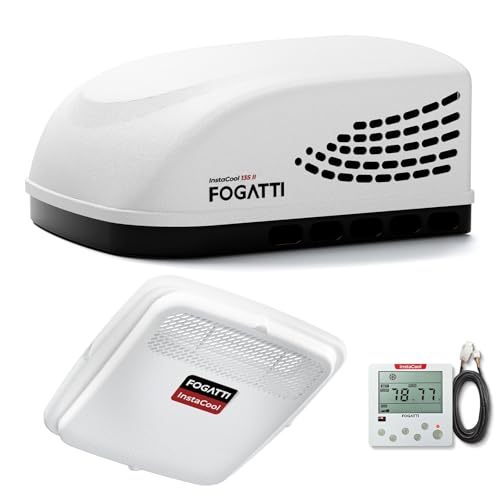
Rapid Cooling: A two-compressor design delivers 13,500 BTU of cooling, enabling fast chilling in campers and trailers. It uses eco-friendly refrigerant and is designed for quick installation in compatible RV roof profiles.
Power and Efficiency: Requires connection to both 115V AC and 12V DC power. The system balances cooling capacity with energy use through an advanced fan setup and temperature regulation, helping manage power consumption on the road.
Furrion Chill Cube 18K BTU RV Rooftop AC

Easy Installation: The unit is designed for bolt-on installation with a straightforward guide. Note that this listing is for the AC unit only; cooling components and installation accessories may be sold separately.
Performance and Efficiency: Variable-speed compressors provide strong airflow and faster cooling, delivering over a ton of cooling capacity. It aims to maximize battery runtime during off-grid use and is suited for campervans and mid-sized RVs.
Treeligo 12V RV Air Conditioner Ultra-Quiet
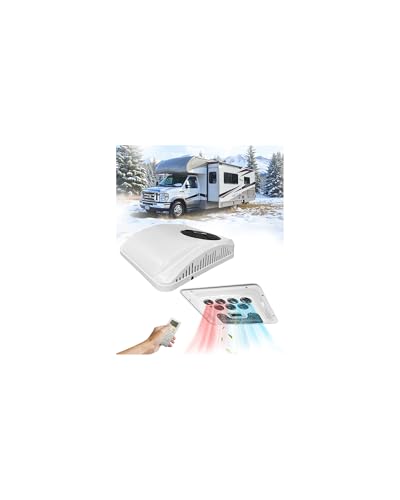
Heating And Cooling: Offers a 7,900 BTU cooling capacity with a 3,000 BTU heating function, suitable for year-round comfort while parked or during shutdown scenarios.
Energy Efficiency: Powered by a 12V DC scroll compressor that runs on the vehicle’s battery, potentially reducing generator use. Not recommended for starter batteries; check your battery bank before use.
Roof-Mounted Design: Designed for standard RV roof installations with compatible dimensions, emphasizing a simple bolt-on approach and a compact footprint.
TOSOT 16000 BTU GO Cool RV AC

All-Weather Comfort: This GoCool unit provides 16,000 BTU of cooling and up to 12,500 BTU of heating, designed for larger RVs and campers. It’s built to operate across a wide temperature range, making it versatile in extreme climates.
Smart Control: Features Wi-Fi connectivity via the Gree+ app for remote monitoring and control, simplifying climate management from phones or tablets. Suitable for campers and trailers up to sizable lengths.
Buying Guide: Key Considerations For RV Air Conditioners
- Power Source And Off-Grid Capability: Assess whether you need 12V DC operation, 115V AC power compatibility, or both. For off-grid trips, prioritize units that include efficient thermostats and battery-friendly operation. Check your battery bank capacity to ensure it can sustain extended cooling.
- BTU Range And RV Size: Choose BTU ratings that match your RV length and interior volume. Higher BTU units cool larger spaces but may demand more power. For smaller vans or campers, 7,000–10,000 BTU models are often sufficient, while larger RVs may require 12,000–18,000 BTU units.
- All-Weather Durability: Look for UV-stabilized housings, corrosion-resistant condensers, and weather seals. Weather resistance is critical for roof installs exposed to sun, rain, and road debris.
- Installation And Compatibility: Some units are “AC unit only” and require separate condenser, ducting, or installation kits. Verify roof cutout dimensions, mounting hardware, and whether your RV roof can support the weight and wind load.
- Heat Pump And Heating Options: If year-round comfort matters, consider heat pump-capable units or models with supplemental electric heaters. Ensure heating capacity aligns with the climate you encounter.
- Smart Controls And App Access: Wi-Fi or app-enabled controls offer convenient temperature management from inside the RV. Check compatibility with your mobile device and whether the app requires a subscription.
- Energy Efficiency: Look for energy-saving features such as variable-speed compressors, efficient refrigerants, and smart fan controls. Energy efficiency directly affects battery life and generator use on extended trips.
- Maintenance And Warranty: Favor models with accessible filters and straightforward service procedures. A strong warranty can reduce long-term ownership costs and downtime.
Choosing the right RV air conditioning unit involves balancing space, power availability, and climate needs. The options above cover a range from compact 12V cooled units to larger rooftop systems with integrated heating and smart controls. Consider your typical travel scenarios, such as off-grid camping, hot climates, and vehicle battery capacity, to select the best fit for your RV lifestyle.