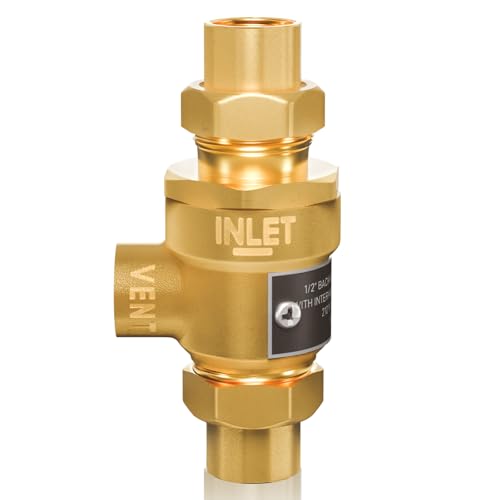
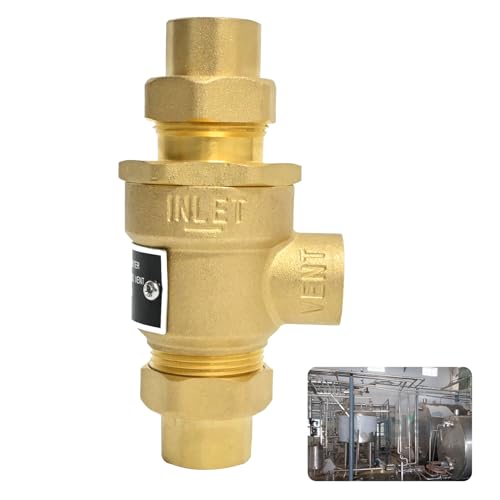
Choosing the right backflow preventer for boiler feed lines helps protect your heating system and potable water supply. This guide highlights five commonly used 1/2-inch backflow preventers designed for boilers, with practical notes on construction, performance, and compatibility. Each product below links to its Amazon listing for quick comparison and purchasing options.
Product
Brand
Key Feature
1/2″ 9D-M3 Brass Backflow Preventer
YHUER
Brass body, intermediate atmospheric vent, compatible with major brands
Watts Automatic Fill Valve, B911S-M3
Watts
Combination fill regulator with backflow prevention
1/2″ 9D-M3 Brass Dual Check
AQOVOR
Heavy-duty brass, high-cycle reliability, continuous pressure use
1/2 Inch 9D-M3 Dual Check, Union Inlet/Outlet
Pontuss
Universal 1/2″ NPT connections, boiler feed line suitability
New 1/2″ 9D-M3 Dual Check, Brass
TOGJNDLL
Premium brass construction, long life, anti-corrosion
Note: All five products are appropriate for boiler feed lines and are designed to prevent backflow when supply pressure falls below system pressure. They are built for hot or cold water and feature 175 psi maximum operating pressure with a minimum required pressure of 25 psi, aligning with typical boiler circuits.
The YHUER backflow preventer features a brass body with stainless steel internal components and an integral filter. It includes durable rubber discs and a rubber-disc seat on the main check valve to ensure tight closure and prevent reverse flow. Designed for smaller supply lines, it is suitable for boiler feed lines to maintain return pressure above system pressure. Temperature tolerance ranges from 33°F to 210°F, with a maximum working pressure of 175 psi (12.1 bar) and a minimum required pressure of 25 psi (1.7 bar). It is compatible with all major brands and includes an intermediate atmospheric vent for added venting control.
Key points:
– Brass body with stainless steel internals
– Intermediate atmospheric vent
– 33°F to 210°F operating range; 175 psi max
The Watts B911S-M3 combines a boiler feed water regulator and backflow preventer in a single assembly, designed for hydronic heating systems. This unit enables quick system filling and purging, helping maintain boiler efficiency and safety. It is particularly suitable for boiler feed lines where reliable feed water control and backflow prevention are essential to protect both the boiler and potable water sources.
Key points:
– Integrated fill regulator and backflow preventer
– Supports rapid filling and purging of boiler systems
AQOVOR’s Dual Check Valve uses a brass body with stainless steel working parts and an integral filter. It delivers reliable, leak-free performance under frequent pressure surges, with a temperature tolerance from 33°F to 210°F and a maximum working pressure of 175 psi. Designed for smaller supply lines and boiler feed lines, it emphasizes compatibility with major brands and includes a robust rubber disc seat for tight closures and dependable operation across many cycles.
Key points:
– Heavy-duty brass with stainless steel components
– 5000+ pressure cycles tested
– 33°F–210°F, 175 psi max
Pontuss offers a 1/2″ dual check backflow preventer with a universal 1/2″ female union inlet/outlet. The unit is designed for smaller supply lines and boiler feed lines, with NPT threads and a brass body combined with stainless steel internals. Its design emphasizes compatibility with major brands and a reliable rubber disc seat for rapid shutoff, helping maintain system integrity during pressure fluctuations and backflow scenarios.
Key points:
– Union inlet/outlet configuration
– NPT 1/2″ connections
– Brass body with stainless steel internals
TOGJNDLL’s premium brass dual check backflow preventer features a heavy-duty brass body, stainless steel working components, an integrated filter, and durable rubber discs. The dual check mechanism is engineered for leak-free performance under frequent pressure fluctuations. It operates reliably from 33°F to 210°F and handles up to 175 psi. The design prioritizes compatibility with major brands and is suitable for boiler feed lines that demand consistent prevention of backflow.
Key points:
– Premium brass construction
– Integrated filter and durable rubber discs
– 33°F–210°F, 175 psi max
Buying Guide: Key Purchase Considerations
When selecting a backflow preventer for boiler systems, several factors determine long-term performance and compatibility. Consider the following perspectives to ensure a sound choice:
Application and flow path: For boiler feed lines, prioritize devices designed for small-diameter supply lines with a robust check mechanism. Dual check valves offer reliable protection against backflow in continuous service.
Materials and durability: Brass bodies with stainless steel internals and rubber discs resist corrosion and provide longevity in hot water and mixed-temperature environments common in heating systems.
Pressure and temperature range: Look for units rated up to at least 175 psi and capable of handling up to 210°F. Ensure the minimum pressure requirement (often around 25 psi) aligns with your system’s pressure.
Venting and installation: Consider whether an atmospheric vent is included or required for your configuration. Check inlet/outlet connections (NPT or unions) to match your piping accurately.
Brand compatibility: Some boiler brands have preferred backflow preventer types. Compatibility with multiple brands can simplify maintenance or replacement.
Maintenance needs: An integral filter can help keep contaminants out of the boiler system, but typical backflow devices require periodic inspection and disc replacement as part of a preventative maintenance plan.
Compliance and testing: In some regions, backflow assemblies may require testing and certification. Verify local code requirements and any maintenance records needed for compliance.
Cost of ownership: While upfront price varies, factor in lifespan, cycle tolerance, and potential replacement parts (discs, seals, filters) to estimate total ownership costs.
From a reliability standpoint, all five options target boiler feed lines and provide solid protection against backflow with durable construction and temperature/pressure specifications suitable for hydronic heating systems. The choice should be guided by your existing piping (inlet/outlet sizes, unions vs. threaded connections), local code requirements, and the expected cycling frequency of your application.