Basement ventilation is critical for reducing humidity, controlling radon odors, and preventing mold growth. The right fan setup can move stale air out and bring in fresh air, without consuming excessive power. Below are five high-performing options suited for crawlspaces, basements, garages, and attached spaces. Each product is selected for reliability, energy efficiency, and ease of use in damp or enclosed areas.
Summary Table
- XPOWER P-230AT Mini Mighty 1/4 HP – 925 CFM – Portable, stackable
- Pewoaoa 240 CFM Crawlspace Ventilation Fan – Humidistat & Thermostat
- CADPXS Crawlspace Ventilation Fan – 220 CFM with Humidistat and Freeze Protection
- ALORAIR 540 CFM Crawlspace Ventilation Fan – Humidistat & Thermostat
- Hurricane Classic Floor Mount Box Fan – 2400 CFM, 3 speeds
XPOWER P-230AT Mini Mighty 1/4 HP Overview
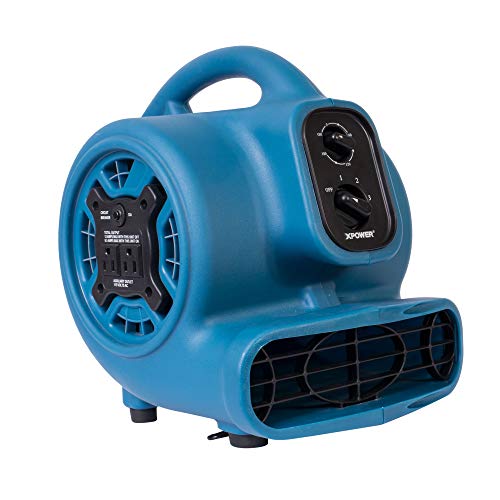
The XPOWER P-230AT is a compact, high-velocity option designed for fast moisture removal. Its 1/4 HP motor delivers up to 925 CFM while keeping power draw around 2.3 amps. The unit is lightweight at 10.2 pounds, with a 10 ft power cord and a daisy-chain capability for connecting multiple units. The compact size makes it ideal for tight crawlspaces, basements, or workshops where space is at a premium. Durable housing and stackable design enhance portability and storage after use.
Pewoaoa Crawlspace Ventilation Fan
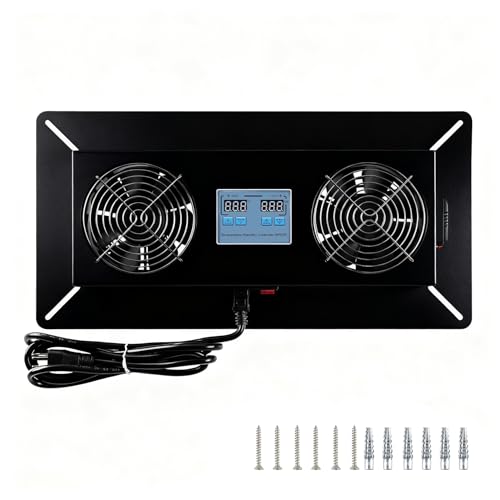
This dual-fan ventilation unit excels at moisture reduction with 240 CFM of airflow. It includes smart dual humidity and temperature controls, automatically turning on when thresholds are exceeded to prevent condensation and mold. A low-temperature protection thermostat helps avoid backflow during cold spells, making it suitable for harsh climates. Its design focuses on crawl spaces, basements, attics, and garages, where steady air exchange matters for health and comfort.
CADPXS Crawlspace Ventilation Fan
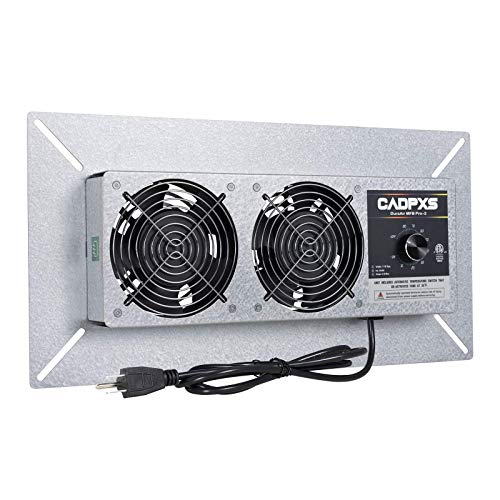
CADPXS offers a compact 220 CFM airflow model with integrated humidistat and a freeze-protection thermostat. This combination helps manage humidity, prevent indoor-air infiltration of damp crawl spaces, and balance air exchange between the crawl space and living areas. A 6.56-foot grounded power cord and dual-fan arrangement provide flexible installation in tight basement spaces, making the unit a practical option for ongoing moisture control.
ALORAIR 540 CFM Ventilator Fan

ALORAIR provides a higher-airflow option with 540 CFM and robust construction designed for damp crawl spaces, basements, attics, and garages. The unit includes a built-in dehumidistat and a freeze protection thermostat. With an IP-55 rated housing and isolation mesh, it resists dust and moisture while maintaining reliable operation in humid environments. This model suits larger crawl spaces where steady, controlled ventilation is essential.
Hurricane Classic Floor Mount Box Fan

The Hurricane Classic Box Fan offers substantial 2400 CFM airflow at a practical 20-inch footprint. With three quiet speed settings, it balances robust cooling with comfort in home, garage, or basement spaces. Its design prioritizes steady air movement for larger areas, making it a solid option when you need moving air across a room or workspace without complex setup.
Buying Guide: Key Considerations For Basement Ventilation Fans
- Airflow capacity (CFM) and space size: Larger basements or crawlspaces benefit from higher CFM units (e.g., 540 CFM or more). Smaller spaces may be well served by compact movers with directional airflow options.
- Humidity and moisture control features: Humidistats, thermostats, and freeze protection help prevent mold and condensation. Models with automatic activation in high humidity are advantageous in consistently damp environments.
- Durability and environmental resistance: Look for metal housings, IP ratings, and rust-resistant components for spaces with dust, moisture, or temperature fluctuations.
- Portability and storage: Lightweight, stackable, and handle-equipped designs simplify moving units between spaces or storing when not in use.
- Power and energy efficiency: Consider units with low amperage at optimal airflow to reduce electricity consumption, especially when running fans for extended periods.
- Installation and maintenance: Units with simple wiring, long cords, and accessible filterless designs reduce setup time and ongoing maintenance needs.
- Noise considerations: In living spaces adjacent to basements or bedrooms, choose models with lower RPM settings or noise-reducing features to maintain comfort.
- Controls and automation: Humidistat/thermostat-based controls and daisy-chain capabilities enable scalable ventilation across multiple units for larger areas.
- Air exchange goals: Decide whether you need moisture removal, radon odor management, or general airflow improvement to choose the appropriate configuration.