When protecting plumbing from freezing or condensation, 1/2 inch pipe insulation is a practical, cost-effective choice. This guide highlights five suitable options and explains who they’re best for. DIY homeowners may prefer pre-slit foam for quick installs, while renters or busy households benefit from durable, reusable foam tubes. Below is a quick comparison to help buyers choose the right fit for their pipes and climate.
| Product | Brand | Best For | Notes |
|---|---|---|---|
| CARGEN Pipe Insulation Foam Tube | CARGEN | Homeowners needing quick, reliable insulation | Foam, nitrile rubber, -58°F to 230°F |
| Amylove 24 Pcs Foam Tubes | Amylove | Bulk replacement and seasonal use | 12 pieces per meter, good elasticity |
| Foam King Insulating Covers | Oodles of Noodles | Easy installation on various pipes | Pre-slit, fits 1/2″ copper/iron |
| Pipe Insulation Tubing (1/2″ x 3/8″ x 6FT) | Lhazemu | Budget-friendly, flexible apps | Long 6 ft length, fire-retardant |
| Duck Brand Foam Pipe Covers | Duck Brand | Hot and cold water pipes, easy edges | Pre-slit, self-sealing edge |
CARGEN Pipe Insulation Foam Tube — 1/2″ ID
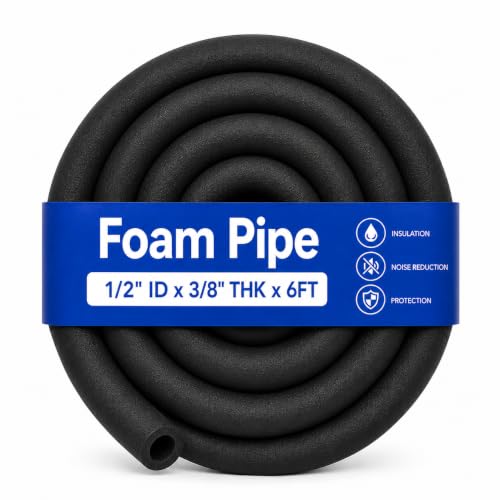
Best for homeowners seeking reliable, durable insulation with strong surface grip. This foam tube protects pipes from freezing and cushions sharp edges. Inner diameter should be confirmed before purchase. Made from high-quality nitrile rubber, it combines good flame retardancy with high elasticity and non-absorbent properties. Temperature range from -58°F to 230°F makes it suitable for both indoor and exposed outdoor pipes. Limited folding packaging helps avoid creases that could affect fit.
Best use: standard residential copper or plastic pipes in climates with freezing risks. Caution: verify inner diameter to ensure a proper snug fit on your 1/2″ line.
Amylove 24 Pcs 3.3 Feet Foam Tubes

Best for bulk replacement and seasonal projects. Each piece is about 3.28 ft long with a 1/2″ inner diameter, suitable for 1/2″ copper pipes. The foam is made from quality PEP foam—soft, reliable, and reusable. It offers fireproof and heat-insulating properties with good elasticity for easy bending. Ideal for homeowners who want ample quantity at a lower per-piece cost. Limitation: outer diameter and inner diameter are fixed; measure pipe size to ensure compatibility.
Foam King Insulating Covers — 12 Pack
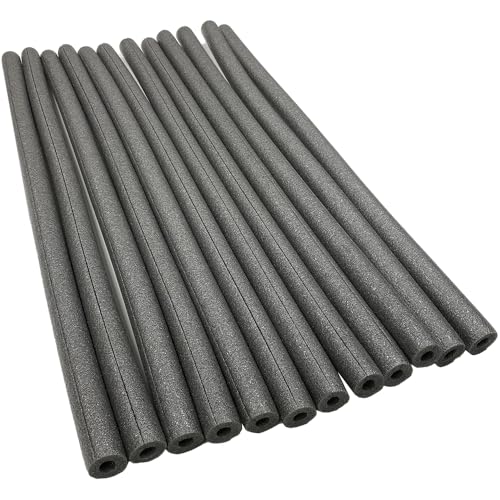
Best for quick installs on copper, iron, and PVC pipes. Each cover is 3 feet long with an ID of approximately 5/8 inch and a wall thickness of 3/8 inch, fitting 1/2″ copper pipes and 3/8″ iron pipes. All sizes are approximate due to manufacturing. This option helps reduce energy waste and heat loss, potentially delivering faster hot water delivery and quieter operation. Caution: exact fit may vary across pipes; check actual pipe dimensions before buying a large pack.
Lhazemu 1/2″ Foam Tubing — 6FT

Best for versatile DIY projects and budget-conscious buyers. The tubing measures 1/2″ ID and 1.8 m (6 ft) long, with fire-resistant, self-extinguishing material. Temperature range is -20 to 100 degrees. The packaging is simple, with 1 x Pipe Insulation included. Choose this if you need a straightforward solution for a range of pipes and environments; caution: longer runs may require multiple pieces and joining considerations.
Duck Brand Foam Pipe Covers — 0.75″ x 1 Ft

Best for household piping requiring pre-slit, self-sealing edges. These 0.75 in x 1 ft sticks are designed for easy installation on curved pipes and offer versatility for hot and cold water lines. They help prevent winter freezing and summer sweating. Safe up to 212°F. Choose this if you want a quick, tool-free application with adaptable fit on many pipe shapes. Limitation: shorter length per piece may require more sticks for long runs.
Amylove 36 Pcs Foam Tubes — 3.3 Feet Each

Best for large-scale replacement and heavy usage. Each piece is about 3.28 ft long with a 1/2″ inner diameter and 1.5″ outer diameter. It offers the same safety and heat-insulation properties as the 24-piece set, with increased quantity. Appropriate for bulk projects or multi-pipe insulation. Caution: ensure consistent cut and fit for long runs to avoid gaps that could reduce insulation effectiveness.
Buying Guide
- Pipe size compatibility: Verify inner diameter exactly matches your pipe size (1/2″ is common for copper or PEX pipes).
- Material and fire resistance: Look for non-toxic, fire-retardant foam with elasticity for easy bending and a snug fit.
- Installation ease: Pre-slit, self-sealing edges save time and reduce installation errors. Consider packaging that prevents creases.
- Climate considerations: Choose rated temperature ranges that cover your environment to prevent freezing or sweating.
- Length and quantity: Bulk packs are cost-effective for multiple pipes; match piece length to your run to minimize joints.
- Durability and reuse: Reusable foam is beneficial for seasonal shifts or rentals where reuse matters.
FAQ
- What size insulation should I buy for a 1/2 inch pipe? Answer: Look for insulation with a 1/2 inch inner diameter (ID) to fit tightly around the pipe.
- Are these safe for indoor use? Answer: Yes, most foam insulation is designed for indoor and outdoor pipes, with fire-retardant properties in many options.
- Can I install insulation on curved pipes? Answer: Yes, pre-slit foam tubes with flexible material accommodate curves and bends easily.
- Do I need to seal the insulation? Answer: Many products have self-sealing edges; ensure a snug seal to prevent air gaps and moisture ingress.
- How many pieces should I buy for a full home project? Answer: Estimate the number of runs and length per run; bulk packs (e.g., 24 or 36 pieces) are common for multiple pipes.
- Will insulation reduce energy bills? Answer: Insulation reduces heat loss and pipe sweating, potentially lowering energy usage and improving hot-water delivery times.