Instantly find reliable 1/2 inch vacuum breakers that protect potable water from backflow. This guide highlights five top options, each suited to different setups—from residential hoses to water heaters and tanks. Best for: homeowners needing hose bib backflow protection, plumbers seeking durable brass units, and installers prioritizing lead-free designs.
Product Snapshot
| Product | Brand | Best For | Why Pick It |
|---|---|---|---|
| Watts LF288A | Watts | Lead-free, versatile hot/cold | Chrome hood, silicone seat, full-size orifice |
| NBPLUS Vacuum Relief Valve | NBPLUS | Tank and heater connections | Durable brass, easy install, high pressure |
| Eastman 60156 | Eastman | General plumbing fittings | 1/2″ MIP, versatile use |
| Zurn Wilkins 12-720A | Zurn | Backsiphonage protection | Centerline test cocks for installation options |
| Cash Acme 17383-0000 | Cash Acme | Outdoor hose and spigots | Durable bronze body, silicone seat |
Watts LF288A 1/2″ Lead-Free Brass Anti-Siphon Backflow Preventer

Best for: residential users needing lead-free construction with reliable backflow prevention. The Watts unit features a lead-free brass body, a silicone seat disc, chrome hood, and an atmospheric vent to prevent spills. Its full-sized orifice supports pipe capacity and maximum flow, making it suitable for hot or cold water lines in homes and small commercial setups.
Why selected: durable, corrosion-resistant brass with a comprehensive set of components ensures dependable performance in everyday plumbing tasks. It protects potable water by preventing reverse flow from potentially polluted sources.
Limitations: as a compact backflow device, keep it away from high-velocity or extreme flow conditions that exceed its design capacity.
NBPLUS Vacuum Relief Valve 1/2 Inch

Best for: installations requiring robust brass construction and straightforward installation for tanks and heaters. This valve combines 1/2″ thread with high durability and reliable vacuum relief performance, suitable for harsh environments where backflow risk is common.
Why selected: designed from durable DZR brass, it emphasizes longevity and resistance to corrosion, supporting operation up to 200 psi and high-temperature conditions.
Limitation: ensure compatibility with your tank or heater’s thread and pressure ratings before purchase.
Eastman 1/2 Inch MIP Vacuum Relief Valve
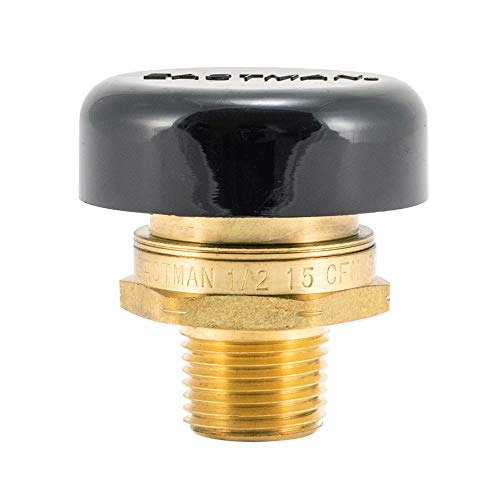
Best for: general plumbing tasks needing a standard 1/2″ MIP connection. The Eastman valve relieves vacuum to prevent siphoning from tanks and water heaters, offering versatile compatibility with standard fittings.
Why selected: a straightforward option that fits a wide range of standard installations and helps prevent vacuum-induced damage to storage tanks and equipment.
Caution: verify that the valve’s temperature and pressure ranges align with your system’s operating conditions.
Zurn Wilkins 12-720A 1/2″ 720A

Best for: professionals seeking reliable backsiphonage protection with installation flexibility. The 720A series emphasizes visible serial information and test cocks for easy orientation and servicing in the field.
Why selected: world-class backflow protection with a design that supports straightforward maintenance and installation across various orientations.
Limitation: ensure your installation location provides room for the test cocks and access for servicing, as some configurations may require more space.
Cash Acme 1/2 Inch V-101 Anti-Siphon Vacuum Breaker

Best for: outdoor hose connections and spigots where backflow prevention is essential without complex setups. The bronze body provides rugged durability for exterior use, and the silicone seat helps maintain a tight seal.
Why selected: purpose-built for anti-siphon needs in garden and outdoor settings, offering solid protection against backflow into potable water lines.
Limitation: performance can depend on environmental exposure; outdoor installations should consider weather-related effects on seals and materials.
Buying Guide
What to consider when choosing a vacuum breaker
- Material and lead content: Look for lead-free brass or bronze bodies for safe drinking water and corrosion resistance.
- Connection size and type: Ensure matching 1/2″ NPT/MIP or specified thread types for your system.
- Vacuum relief and airflow: Confirm the device provides adequate relief to prevent siphoning in your application.
- Temperature and pressure ratings: Check maximum working pressure and temperature to avoid failures in hot water or high-pressure lines.
- Installation orientation and space: Some models require room for test cocks or access for service; consider the available space.
- Usage context: Outdoor hose bibs, tanks/heaters, or general plumbing—choose a unit designed for your primary setting.
Practical installation considerations
- Verify compatibility with existing fittings and hoses before purchasing.
- Plan for routine maintenance, especially for outdoor units exposed to the elements.
- Prefer models with visible vents and robust seals for long-term reliability.
Quick comparison by use-case
- Residential hose connections: Watts LF288A or Cash Acme V-101 for lean, dependable protection.
- Tank or heater installations: NBPLUS or Eastman 60156 offer solid brass construction with easy installation.
- Professional or versatile plumbing: Zurn Wilkins 12-720A provides test cocks and flexible mounting options.
FAQ
- What is a vacuum breaker and why do I need one?
– It prevents backflow from polluted water entering the potable supply, protecting your family and plumbing system. - Can I use a 1/2″ vacuum breaker for hot and cold water?
– Yes, many models are designed for both; check the product specs for temperature ranges. - Are these devices required by code?
– In many jurisdictions, backflow prevention is mandated in specific outdoor or high-risk installations; local codes apply. - What maintenance is needed?
– Periodic inspection of seals and vents; replace any worn parts to maintain proper operation. - Which model is best for outdoor use?
– Outdoor-focused units like the Cash Acme V-101 are designed for exterior spigots and hoses. - What should I avoid when selecting a unit?
– Avoid models with incompatible threads, insufficient pressure ratings, or materials not rated for potable water.