Best pipe insulation options for 1″ pipes help prevent freezing, reduce heat loss, and cut energy costs. This guide highlights top 5 1″ pipe insulation products, explaining who each is best for and why it stands out. Ideal buyers include DIY homeowners, contractors, and hobbyists needing quick, reliable installation on indoor or outdoor plumbing, AC lines, or equipment housings. The following table summarizes the recommended picks and their primary strengths.
| Product | Best For | Key Benefit |
|---|---|---|
| Tsurpcao 1″ Foam Tube | All-around DIY projects | Flexible, fire-retardant, wide temperature range |
| Duck Brand Foam Pipe Covers | Simple installs on curved pipes | Pre-slit, self-sealing edges |
| Amylove 24 Pcs 1″ Foam Tubes | Bulk replacement and outdoor use | Many pieces, good for long runs |
| Foam King Pipe Covers (12 Pack) | Utility rooms and basements | Pre-slit, quick install, 3 ft length |
| cSeao 1/2″ Thick x 1″ ID | Guitar stands, HVAC, roof rack protection | Nitrile rubber, compact 6.6 ft length |
Tsurpcao 1″ Foam Tube Insulation

Best for flexible, all-around use on indoor and outdoor pipes. The 1″ ID x 1-23/32″ OD tube is 6 feet long, compatible with various piping and equipment. Features include fire-resistant, self-extinguishing material, and low thermal conductivity for effective insulation. Suitable for AC lines, plumbing, and gear housings requiring a robust wrap. Caution: ensure snug fit on curves to maximize insulation performance.
Who it’s best for: DIY homeowners tackling mixed indoor/outdoor projects, and contractors needing a reliable, flexible option that resists heat and cold.
Duck Brand Foam Pipe Covers

Best for easy, fast installs on curved pipes due to pre-slit design and self-sealing edges. These 0.75 in. x 1 ft sticks come in a six-stick package, totaling six feet of coverage. They help prevent winter freezing and summer sweating on hot and cold water pipes and HVAC lines. Caution: edge integrity should be checked after installation to ensure a seal along long runs.
Who it’s best for: Property owners seeking a quick, tool-free solution with straightforward installation, especially in tight or curved pipe layouts.
Amylove 24 Pcs 1″ Foam Pipe Insulation

Best for bulk insulation projects where multiple pipes require coverage. Each piece measures about 3.28 ft in length with an outer diameter of ~1.65 in and inner diameter of ~1.06 in, suitable for 1″ copper pipes. Made from quality PEP foam offering flexibility, fireproof and sound-absorbing properties. Caution: check for uniform thickness to ensure consistent insulation along long runs.
Who it’s best for: Builders and DIYers who need a large quantity for seasonal piping work or outdoor installations, including pools and recreational setups.
Foam King Insulating Foam Pipe Covers (12 Pack)
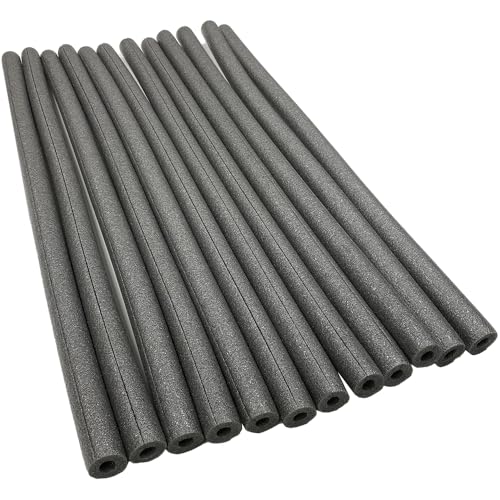
Best for bundled projects with quick installation. The 12-pack includes 3-foot long covers, pre-slit for copper, iron, and PVC pipes. It helps guard against freezing and sweating, while reducing energy waste by minimizing heat loss. Caution: all sizes are approximate and can vary slightly due to manufacturing variations.
Who it’s best for: Plumbers and maintenance teams needing a cost-effective, multi-pack option for long pipe runs in residential or commercial settings.
cSeao 1″ Pipe Insulation Foam Tube

Best for compact, versatile protection on smaller or specialty pipes. This 6.6 ft tube uses nitrile rubber with a 1″ ID and 2″ OD, providing robust insulation and abrasion resistance. Suitable for AC units, guitar stands, roof racks, and other equipment housings. Caution: OD is larger than typical 1″ tubes, so verify fit on narrow pipe spaces.
Buying Guide: Key Considerations For 1″ Pipe Insulation
- Material and safety: Look for fire-retardant or self-extinguishing materials where exposure to heat is possible. Consider environmental and non-irritating raw materials for indoor use.
- Installation ease: Pre-slit designs save time on curved or awkward pipes. Self-sealing edges reduce the need for tape or fasteners.
- Temperature range: Match insulation to your climate. Outdoor pipes benefit from broader temperature resistance and UV protection where applicable.
- Size and fit: Confirm inner diameter (ID) and outer diameter (OD) to ensure a snug fit on your pipes. Some products list thickness; others list approximate sizes due to manufacturing.
- Durability and flexibility: Flexible foam that resists cracking and tearing is preferable for long runs and irregular shapes.
- Quantity and value: For bulk projects, choose multi-pack options to minimize reordering and ensure consistent coverage over time.
- Applications: Consider whether you need insulation for plumbing, HVAC lines, pool equipment, or gear housings like guitar stands and roof racks.
How To Choose: Quick Decision Quick-Check
- Need fast installation on curved pipes? Duck Brand pre-slit covers are convenient.
- Insulating many pipes over a season? Amylove bulk packs provide value and coverage.
- Prioritize fire resistance and temperature resilience? Tsurpcao’s foam offers broad specs and flexibility.
- Working with small or specialty equipment? cSeao’s compact 1″ ID option may fit tightly.
FAQ: Quick Answers For Shoppers
- What size should I buy for 1″ pipes? Look for products labeled with 1″ inner diameter (ID) and check the outer diameter (OD) and thickness to ensure a proper fit on your pipes.
- Are these safe for outdoor use? Many options are designed for indoor and outdoor use with good temperature ranges. Verify the working temperature and UV exposure if relevant.
- Is pre-slit insulation easier to install? Yes, pre-slit edges simplify installation on curved or awkward pipes and reduce the need for extra fasteners.
- Will insulation reduce energy bills? Insulation minimizes heat loss and pipe sweating, which can contribute to reduced energy use in homes and facilities.
- Can I reuse insulation pieces? Some foam insulation is reusable if kept undamaged, but repeated bending and tearing can reduce effectiveness over time.
- What should I avoid? Avoid overly thick or stiff insulation that won’t bend along pipes or fit into tight spaces.