Discover compact, energy‑efficient tankless water heaters that deliver on-demand hot water without wasting space. This guide highlights five reliable models suited for under-sink or point‑of‑use installations, ideal for apartments, offices, bathrooms, and small kitchens. Each option targets different flow needs and electrical setups, helping you choose the right unit for your home or workspace. The top picks emphasize space savings, safety features, and easy temperature control for reliable comfort.
Summary table of selected products:
| Product | Best For | Key Benefit | Power |
|---|---|---|---|
| Rheem 3.5kW 120V Point Of Use | Low-flow uses (bathroom, office, bar) | Compact, adjustable temperature | 120V / 30A |
| CAMPLUX 4.5kW 120V | Under-sink or small kitchen | High efficiency, space saving | 120V / 4.5kW |
| LECLOC 3kW 120V | Single point of use | LED display, safety features | 120V / 3kW |
| Titan Electric Tankless | General compact hot water | High voltage, compact design | 220V |
| xwdzswgs 3kW Under Sink | Low flow, under-sink needs | Digital display, safety protections | 110V / 3kW |
Rheem 3.5kW 120V Point Of Use Thermostatic Tankless Electric Water Heater

Best for: small spaces requiring on-demand hot water in a single, low-flow point. This Rheem unit is designed to be hard-wired at 120 volts with a dedicated 30‑amp breaker, saving space with a compact form factor. The thermostatic control adjusts water temperature in 1-degree increments from 80°F to 140°F, enabling precise comfort for sinks, bathrooms, or compact offices. Caution: Suitable mainly for low-flow usage; higher flow demands may require a larger model to meet simultaneous taps.
Mini Tankless Under Sink Instant Water Heater 120V 3kW Plug In

Best for: ultra-compact under-sink setup where only small amounts of hot water are needed. This 3kW model is plug-in and features an LED display with a single control knob. It includes safety protections such as overheat and leak prevention. Limitation: Not suitable for showers or multiple taps at once, and actual water temperature varies with flow and inlet conditions. Consider higher wattage or a hard-wired model for higher hot-water demand.
CAMPLUX Tankless Water Heater Electric 120V, 4.5kW

Best for: small kitchens, bathrooms, or slim spaces needing quicker hot water at a higher flow than ultra-compact units. The 4.5kW rating enables faster heating and a decent temp rise for 1 sink use. It employs a self-modulating design to curb energy usage, and its compact dimensions help it fit into tight spaces. Caution: Like other 120V units, it’s optimized for low to moderate flow; higher simultaneous outputs require a larger, 240V system.
LECLOC Mini Instant Under Sink Tankless Water Heater 120V 3kW
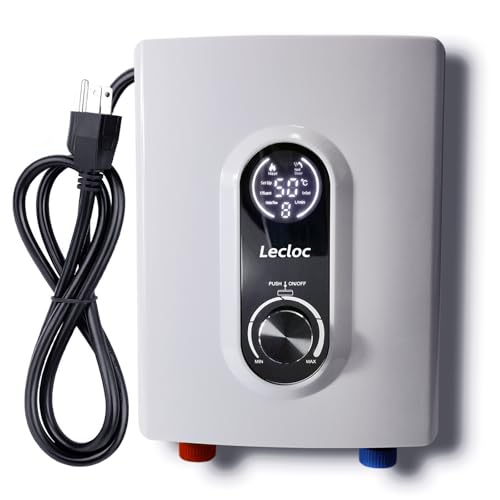
Best for: single-point use with strong safety features. This 3kW unit offers an LED display and a big control knob for straightforward temperature setting, plus IPX4 waterproofing and multiple protections. It’s a practical choose‑this‑if you’re installing near a sink and want simple operation. Limitation: Performance depends on flow rate and inlet temperature; not ideal for showers or multi-tap setups at once.
Titan Electric Tankless Water Heater

Best for: compact, general-purpose hot water in small homes or apartments. Titan’s unit operates at 220V with 54 max amps, offering robust performance for limited spaces. Selection rationale centers on its compact footprint and higher amperage potential relative to some 120V models. Limitation: Requires 220V wiring and a compatible electrical panel; not suitable for standard 120V circuits without upgrades.
Buying Guide: Key Purchase Considerations
- Flow rate and temperature rise: For sinks and small bathrooms, calculate the required gallons per minute (GPM) and target temperature rise to ensure the unit can meet demand without overheating.
- Electrical requirements: 120V units are common and easy to install in apartments, but higher-demand setups may need 240V or 220V models. Check your breaker capacity and wiring before choosing.
- Space and installation: Point-of-use models are designed to fit under sinks or in cabinets. Measure the installation area and confirm line clearance and venting (if applicable).
- Safety features: Look for overheat protection, leakage protection, dry heating protection, and IP ratings for moisture resistance. These features improve reliability in damp environments.
- Temperature control: Choose a unit with precise, easy-to-read thermostatic controls. Incremental adjustments help maintain comfortable hot water in varying inlet temperatures.
- Durability and materials: ABS and corrosion-resistant housings are common in budget models. Consider build quality if the unit will operate at higher temperatures or in challenging environments.
- Compatibility with existing plumbing: Check inlet/outlet connections and the required mounting clearances to ensure a smooth fit with current pipes.
- Efficiency and energy use: Self-modulating designs optimize energy consumption by adjusting power input to the flow rate, reducing waste and lowering utility usage over time.
Frequently Asked Questions
- What size tankless water heater do I need for a single sink? Answer: For a single sink, a 3kW–4.5kW 120V unit is typically sufficient, but confirm your flow rate and desired temperature rise to ensure adequate hot water.
- Can 120V tankless heaters supply hot water to more than one tap? Answer: They can supply limited hot water to one tap or a very small flow to multiple taps; for showers or multiple fixtures, higher wattage or 240V systems are often required.
- Do I need professional installation? Answer: Electrical and plumbing connections may require a licensed installer to meet local codes and ensure safe operation.
- Are tankless heaters more energy-efficient than traditional tanks? Answer: Yes, they typically save energy by heating water on demand instead of maintaining a tank full of hot water, though actual savings depend on usage patterns.
- What maintenance is required? Answer: Regular inspection of fittings, hoses, and electrical connections is recommended; follow the manufacturer’s guidelines for any model-specific care.
- Can I install a tankless heater in a humid bathroom? Answer: It’s possible with proper moisture protection and appropriate IP ratings, but many models are best suited for under-sink installations away from direct splashes.