Answering the search for reliable 12V RV air conditioners, this guide highlights five top options geared toward off-grid campers, van life travelers, and truck owners who need efficient, battery-friendly cooling or heating. Each unit is described for its best-for scenario, power needs, and notable limits. Use the buying guide and FAQ to compare key considerations like power draw, heating capability, noise, and install approach. The table below summarizes the five selected products to help quick comparisons.
| Product | BTU (Cooling) | Heating | Best For | Key Note |
|---|---|---|---|---|
| Gidrox 10000 BTU 12V DC RV AC (with Heater) | 10,000 | Heater via PTC | Moderate space RVs, off-grid with battery ready | Low standby power; 3-minute comfort |
| iHooToo 12V RV Air Conditioner (10,000 BTU) | 10,000 | None (Cool Only) | Off-grid living with robust control options | Smart controls and fast cooling |
| Somokg 11,000 BTU 12V RV Air Conditioner | 11,000 | None | Quiet camping with long battery life | Ultra-quiet operation |
| Gidrox 12000 BTU 12V DC RV AC (Heat Pump) | 12,000 | Heat Pump included | Year-round comfort in larger RVs | Energy-efficient heat pump |
| Jrswin 15,000 BTU 12V DC RV AC (Heating) | 15,000 | Heating | Large spaces, off-grid with 12V power | Higher cooling capacity |
Gidrox 10000 BTU 12V DC RV AC With Heater

Best for: RV owners who want both cooling and heating from a 12V system. This unit runs directly off the RV battery, eliminating inverter needs, and features a responsive PTC heating capability for quick warmth in cold mornings. Its 350W average nighttime draw helps extend battery life on travels with a 400Ah pack. The three modes—Turbo, ECO, and Sleep—offer flexible performance for day trips or overnight rest. Caution: high-altitude or extreme heat may affect performance; verify installation clearance on your roof.
iHooToo 12V RV Air Conditioner With Voice Control
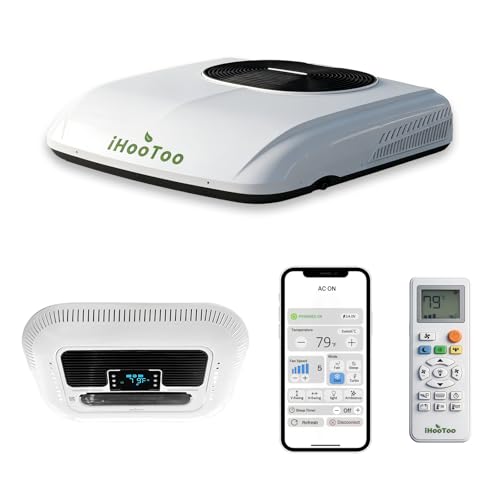
Best for: RVers who value multiple control options and reliable 12V cooling that integrates with off-grid power. Features include smart voice control, a Bluetooth app, a control panel, and an infrared remote, plus a built-in LED light for nighttime use. The 10,000 BTU capacity remains strong for mid-sized spaces, and the dual-rotor compressor with a brushless fan supports efficient cooling in hot environments (up to 122°F). Consider: expect standard 12V system limits if battery capacity is small.
Somokg 11,000 BTU 12V RV Air Conditioner
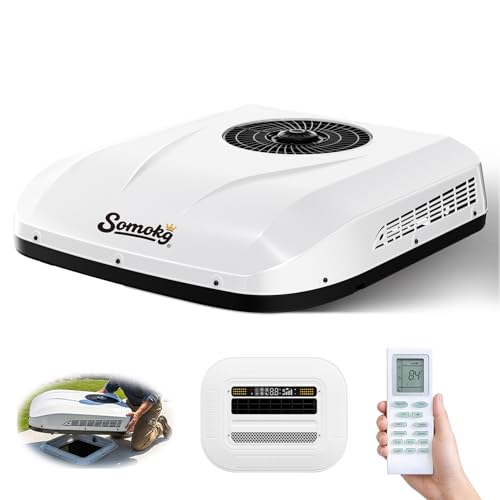
Best for: Off-grid campers needing robust cooling with quiet operation. This unit delivers 11,000 BTU cooling with an ultra-quiet performance (low noise at 35dB), and a soft-start feature reduces startup surge, helping extend battery life. It is well-suited for 12V solar or battery systems and can run for extended periods in Eco mode with sufficient battery capacity. Limitation: heating capability is not stated, so it’s primarily a cooling unit.
Gidrox 12000 BTU 12V DC RV AC With Heat Pump
Best for: Larger RVs needing year-round comfort. The built-in heat pump provides 9,000 BTU heating and 12,000 BTU cooling with energy efficiency (EER up to 12.3). It operates on 12V and emphasizes low-noise performance (Sleep mode at about 40dB). Use this when you want reliable heating as a supplement or alternative to a separate heater. Caution: heat pump performance may vary with outside temperatures; near-freezing conditions could reduce heating effectiveness.
Jrswin 15,000 BTU 12V RV AC (Heating)
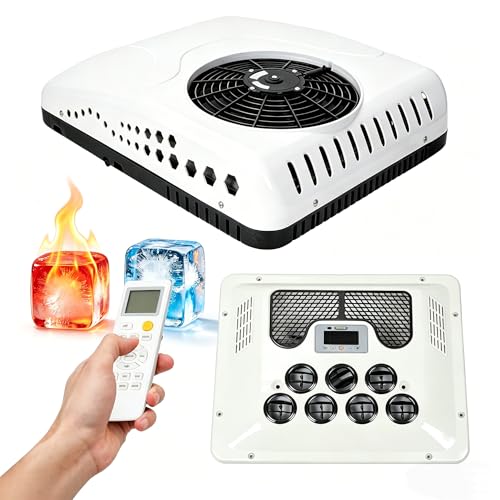
Best for: Larger spaces or motorhomes requiring strong cooling and heating from a single 12V unit. The 15,000 BTU cooling capacity paired with heating makes it a versatile choice for extreme climates. It uses a three-speed fan and a digital control panel. Limitation: higher power draw means it’s more suitable for RVs with substantial battery capacity or frequent generator use. Choose this if you prioritize maximum cooling in demanding environments.
Buying Guide: Key Considerations For 12V RV Air Conditioners
- Power availability: Match BTU needs to your battery bank (Ah) and whether you have solar or generator support. Higher BTU units typically draw more current.
- Heating capability: If you need heat, confirm whether the unit includes a built-in heater or heat pump, and understand its effective operating range.
- Off-grid compatibility: Look for 12V operation, low-duty-cycle modes, and features like soft start to reduce power spikes.
- Noise levels: Quieter models (around 35–40 dB in Sleep mode) improve comfort during night use.
- Installation space and roof clearance: Ensure proper clearance and mounting compatibility with your RV roof profile and venting requirements.
- Control options: Apps, voice control, remotes, and on-panel controls add flexibility when camping in remote areas.
- Reliability and maintenance: Consider units with robust fans, sealed electrical components, and accessible filter replacements.
Frequently Asked Questions
- Can a 12V RV air conditioner power a full-sized RV off-grid?
– It depends on your battery capacity, solar input, and climate. Larger spaces may need substantial battery and support equipment. - Is heating available on all 12V models?
– Not all units include heating; some offer built-in heat pumps, PTC heaters, or heater options. Check the product specifics. - What is “Sleep” mode and why use it?
– Sleep mode prioritizes quiet operation, reducing fan speed and noise for overnight comfort. - Are 12V AC units suitable for very hot climates?
– Yes, but high BTU and efficient compressors are important to maintain comfort in extreme heat. - How do I choose between a heat pump and a separate heater?
– A heat pump provides both cooling and heating with energy efficiency; a separate heater might deliver more warmth in extreme cold but can consume more power. - What maintenance is required for 12V rooftop units?
– Regularly clean or replace air filters, inspect seals and gaskets, and check electrical connections for corrosion or wear.