Answering the search for a 140 CFM exhaust fan, this guide showcases reliable options that balance strong airflow with low noise. These models are suited for bathrooms around 140 square feet or slightly larger, providing steady moisture control without disrupting peace. Ideal buyers include homeowners updating a bathroom, renters seeking simple replacement fans, and builders aiming for quiet, code-compliant ventilation. The table below compares five top picks to help you choose quickly based on space, noise, and ease of installation.
| Product | CFM | Noise | Best for | Installation |
|---|---|---|---|---|
| BV Bathroom Exhaust Fan 140CFM | 140 | 1.0 Son e | Quiet, large baths | No attic access required |
| Homewerks 7136-02HW | 140 | 1.0 Sone | Humidity-sensing in larger baths | Ceiling mounted |
| Orvexa Bathroom Exhaust Fan With Light | 140 | 1.0 Sone | Integrated lighting combo | 10″ x 10″ opening |
| POWERENG Bathroom Fan | 141 | 0.7 Sones | Extra-quiet 141 CFM option | 11.8″ x 11.8″ opening |
| KAZE Appliance SEP150 | 150 | 0.5 Sone | Ultra-quiet high airflow | Attic access required |
All five selections emphasize low noise and effective moisture removal, with clear notes on room size and installation requirements to help you compare quickly. Read on for detailed product-by-product insights, including who each model is best for, potential limitations, and why it earned its place in this 140 CFM roundup.
BV Bathroom Exhaust Fan 140CFM

CFM and noise: 140 CFM at 1.0 sones. This model is designed to efficiently vent spaces up to 140 sq. ft., making it strong enough for average-size bathrooms while remaining discreetly quiet. Best for bathrooms that prioritize a calm environment during and after showers.
Installation and fit: Ceiling mount with a 6-inch duct collar. Fits most ceiling spaces around 10.5″ x 10.5″ with an 8″ height. No attic access required, which simplifies retrofits in room-side installations.
Best for and why: Ideal for users who want a straightforward replacement with minimal installation complexity and a quiet operation profile. The low noise makes it suitable for bedrooms adjacent to bathrooms as well.
Limitations: As with many ceiling fans, ensure your ducting and ceiling opening align with the 6-inch collar and overall dimensions to avoid fit issues.
Homewerks 7136-02HW Bathroom Vent Fan
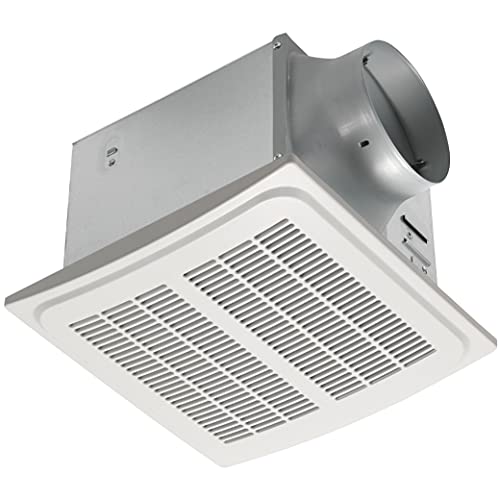
CFM and noise: 140 CFM at 1.0 Sone, designed for efficient airflow with minimal sound. This is a strong pick for medium-to-large bathrooms where humidity control is critical.
Features and sensor: Humidity-sensing capability triggers the fan to operate as moisture levels rise, helping prevent dampness and mold growth in humid bathrooms.
Best for and why: A top choice for bathrooms that experience variable moisture, such as showers with long dwell times or shared family bathrooms where humidity peaks are common.
Limitations: Some installations may require precise ceiling cutouts; confirm opening size before purchase to ensure a snug fit.
Orvexa Bathroom Exhaust Fan With Light

CFM and noise: 140 CFM at 1.0 Sone, and a built-in LED light (6500K, 1200 lumens). This model combines ventilation with lighting for a two-in-one ceiling solution.
Fit and opening: Exactly designed for a 10″ x 10″ ceiling opening with a 12″ x 12″ panel and a standard 4″ duct. Independent fan and light controls offer flexibility in room lighting and airflow.
Best for and why: Choose this if you want both ventilation and illumination from a single fixture, reducing ceiling clutter and wiring complexity.
Limitations: The exact fit relies on compatible ceiling openings; verify measurement against your current cutout to avoid ceiling modification.
KAZE Appliance SEP150

CFM and noise: 150 CFM with a very quiet 0.5 Sone operation. Although slightly higher in airflow than 140 CFM fans, it remains exceptionally quiet for the power delivered.
Installation notes: Attic access is required for this model, and it uses sliding hanger bars that span up to 24 inches to locate the housing between framing members.
Best for and why: Good for bathrooms where extra ceiling space or a longer run is part of the design, and where attic access is feasible for installation. It offers high efficiency with minimal noise.
Limitations: Attic access requirement can complicate retrofits in non-attic spaces or upstairs rooms where access is restricted.
Buying Guide: Choosing The Right 140 CFM Exhaust Fan
What should I consider when selecting a 140 CFM exhaust fan?
- Room size and activity: Match CFM to bathroom square footage and how often moisture builds up. Most 140 CFM fans suit around 140 sq ft spaces.
- Noise level: Look for low sone ratings (1.0 sone or below) for a quiet bathroom experience, especially if the toilet or tub is near the vanity.
- Humidity sensing vs. timer: Humidity sensors automatically run the fan as needed, while timer-based models are simpler but require manual setting.
- Installation environment: Ceiling opening size and whether attic access is required affect retrofit feasibility.
- Integrated lighting: If you want a combined light and vent, consider models like Orvexa with a ceiling panel and independent controls.
- Energy efficiency: Energy Star or equivalent efficiency practices help reduce long-term operating costs.
Frequently Asked Questions
- What does 140 CFM indicate?
– It measures the fan’s air volume movement per minute, indicating how much air it can exhaust from a bathroom of a given size. - Is 1.0 Sone quiet for a bathroom fan?
– Yes. A 1.0 or lower sone rating generally means very quiet operation suitable for bedrooms adjacent to bathrooms. - Do humidity-sensing fans save energy?
– They can, by running only when relative humidity rises, reducing unnecessary ventilation when the room is dry. - Is attic access required for all 140 CFM fans?
– No. Some models are designed for room-side installation with no attic access, while others require attic access for proper mounting. - Can I replace my old fan with a 140 CFM model?
– Most likely, but verify ceiling opening size, ducting, and electrical wiring compatibility before purchasing. - Should I choose a fan with a light?
– If you want a combined solution, models like Orvexa offer integrated lighting; otherwise, you can separate lighting and ventilation.