At 18,000 BTU, these ductless mini-split systems are designed for medium-to-large spaces up to about 1,250 square feet. They’re ideal for homeowners seeking efficient heating and cooling without ductwork. The top picks here balance strong cooling/heating capacity with inverter efficiency, meaning they’re best for buyers who want year‑round comfort, zone control, and relatively low operating costs. Suitable buyers include new-home owners, remodelers, and those replacing window units or noisy central systems. The table below compares five strong options to help you decide quickly.
| Product | BTU / System Type | Best For |
|---|---|---|
| Rellytech Mini Split AC/Heating System | 18,000 BTU cooling / 18,400 BTU heating • Inverter | Large living spaces and home offices needing steady airflow |
| Nexaro 18000BTU Mini Split | 1.5 Ton inverter AC/heat pump • Cools up to 1250 sq. ft. | Year-round climate control with energy-conscious inverter tech |
| GarveeHome 18000 BTU Mini Split | 19 SEER2 • 1250 sq. ft. coverage | Quiet operation and reliable, all-season performance |
| YITAHOME 18000 BTU Mini Split (WiFi) | 20 SEER2 • Up to 1250 sq. ft. • Alexa/WiFi | Smart control and energy savings with quiet performance |
| EXNOS 18000 BTU Mini Split | 19 SEER2 • 1250 sq. ft. capacity | Balanced efficiency and straightforward remote operation |
Rellytech 18000 BTU Mini Split System

Key features: 18,000 BTU cooling and 18,400 BTU heating; covers up to 1,250 sq. ft.; 4 operating modes plus Eco smart function; adjustable airflow with 90° vertical swing and four fan speeds. Best for: buyers wanting strong all-season performance in larger rooms or open-plan spaces. Limitation: pre-charged system may require professional installation if relocating equipment.
Nexaro 18000BTU Mini Split

Key features: inverter compressor; 18,000 BTU cooling and strong heating; suitable for spaces up to 1,250 sq. ft.; includes pre-charged condenser and installation kit. Best for: homeowners who want reliable year-round climate control with modern inverter efficiency. Caution: refrigerant and service considerations may require local specialists for refills or maintenance.
GarveeHome 18000 BTU Mini Split System
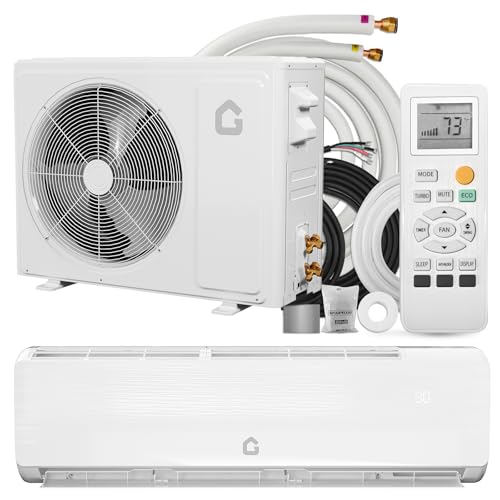
Key features: 1250 sq. ft. coverage; 19 SEER2 rating; complete system with installation kit; five modes including auto, cool, dry, heat, and fan; energy-saving capabilities. Best for: quiet, reliable operation in bedrooms, living rooms, or garages. Caution: quieter performance comes with a higher-end energy rating, which may be more than needed for smaller spaces.
YITAHOME 18000 BTU Mini Split With WiFi

Key features: 20 SEER2; 1250 sq. ft. coverage; six operating modes; WiFi and Alexa compatibility; low noise levels. Best for: tech-savvy buyers who want remote control, voice integration, and energy savings. Limitation: higher feature set may come with a more complex installation process.
EXNOS 18000 BTU Mini Split

Key features: 18,000 BTU cooling and 18,400 BTU heating; SEER2 19; supports up to 1,250 sq. ft.; programmable remote with 24-hour timer and LED status display. Best for: buyers seeking balanced efficiency and straightforward operation. Caution: some setups may require professional assistance for optimal refrigerant charging and system balancing.
Buying Guide
What to consider when choosing an 18000 BTU mini split
- Space size and layout: Verify the unit’s capacity matches your room size (up to about 1,250 sq. ft.).
- Efficiency ratings: Look for SEER2 and HSPF2 values to gauge annual energy use and operating costs.
- Inverter vs fixed-speed: Inverter models generally provide smoother temperature control and better energy efficiency.
- Installation kit and pre-charged lineset: A pre-charged or included kit simplifies installation and may reduce professional fees.
- Controls and smart features: WiFi, app control, and voice assistants can improve daily convenience and energy management.
- Noise level: If the unit is installed in a bedroom or study, prioritize quieter models (check dB ratings in specs).
- Modes and features: Common modes include Auto/Cool/Heat/Fan/Dry; consider Turbo or Sleep modes for comfort.
- Maintenance needs: Remote diagnostics, self-cleaning, and timer features can help with ongoing upkeep.
How to compare models quickly
- Compare BTU capacity and intended space coverage side by side.
- Match efficiency ratings (SEER2/HSPF2) to climate and energy goals.
- Check whether the installation kit is included and if professional installation is recommended.
- Evaluate smart features against your home automation plans.
- Assess noise expectations in living spaces and bedrooms.
Installation and long-term use considerations
- Professional installation is recommended for refrigerant charging and line set integrity.
- Regular maintenances, such as filter cleaning and coil checks, preserve efficiency.
- Seasonal settings (auto, eco, sleep) can reduce energy use without compromising comfort.
Frequently Asked Questions
- What is the typical coverage area for an 18000 BTU mini split?
Most models cover up to 1,250 square feet, depending on insulation and layout. - Are 18000 BTU units suitable for cooling and heating year-round?
Yes, many models are multi-mode heat pumps designed for both cooling in summer and heating in winter. - Do these systems require professional installation?
Installation is often recommended to ensure proper refrigerant charge and sealing. - What does SEER2 rating indicate?
SEER2 measures cooling efficiency over a typical season; higher values mean potential energy savings. - Can I control these units with a smartphone or voice assistant?
Several models offer WiFi control and compatibility with Alexa or other smart ecosystems. - Is inverter technology important for energy savings?
Yes, inverter systems adjust compressor speed to match demand, reducing energy use and improving comfort.