Answer: Two-speed pool pumps offer high flow for quick cleaning and low speed for energy-saving daily circulation. This guide highlights five top picks suited for both in-ground and above-ground pools, with practical notes on installation, efficiency, and best-use scenarios. The best choices are ideal for pool owners seeking balance between performance and energy savings, seasonal maintenance, and easy adaptability to different pool setups.
Summary table of selected products
| Product | Best For | Key Benefit |
|---|---|---|
| Aquastrong In/Above Ground Pool Pump Dual Speed | Flexible pools, energy-conscious users | High flow on high speed; timer for automation |
| VIVOHOME 2.0 HP Above Ground Pool Pump Dual Speed | Quiet operation, above-ground setups | WEF 5.5 efficiency, energy savings up to 70% |
| XtremepowerUS 1.5HP Variable 2-Speed | Balanced performance and visibility | Copper motor, clear see-through lid, adjustable speeds |
| XtremepowerUS 2HP In-Ground Dual Speed | In-ground installations needing robust flow | High flow (5850 GPH) with thermal protection |
| Hayward W3SP15932S PowerFlo Matrix Dual-Speed | Reliable, larger debris handling | Two-speed efficiency with large strainer basket |
Aquastrong In/Above Ground Dual Speed Pool Pump
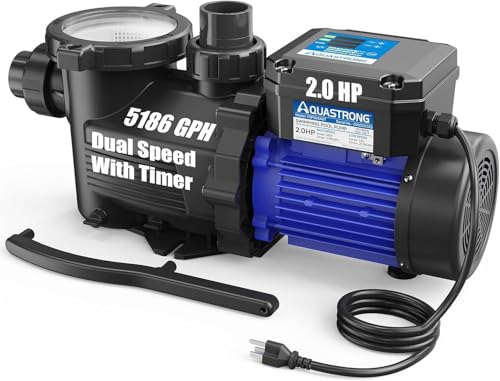
Best for flexible pool environments, this dual-speed pump supports both in-ground and above-ground systems. It provides a high-speed flow of 5186 GPH and a low-speed flow of 2578 GPH with a built-in timer for automated filtration. The dual adapters (1.5″ and 2″ connections) simplify installation, and the 6-foot UL-certified cord supports straightforward power setup. Best for buyers who want strong cleaning power with automation and adaptable plumbing configurations. Caution: confirm compatibility with your pool’s existing electrical setup before installation.
VIVOHOME 2.0 HP Dual Speed Above Ground Pool Pump

Best for above-ground pools requiring energy efficiency and quiet operation, this pump delivers a maximum 5160 GPH flow and up to 42.6 ft head. It uses a dual-speed design—high speed for faster cleaning and low speed for daily circulation—with energy-saving claims up to 70% to help reduce operating costs. It features a durable thermoplastic body suitable for chemical exposure and heat. Caution: verify the pool size and distance to ensure the pump’s head height matches installation requirements.
XtremepowerUS 1.5HP Variable 2-Speed Above Ground Pump
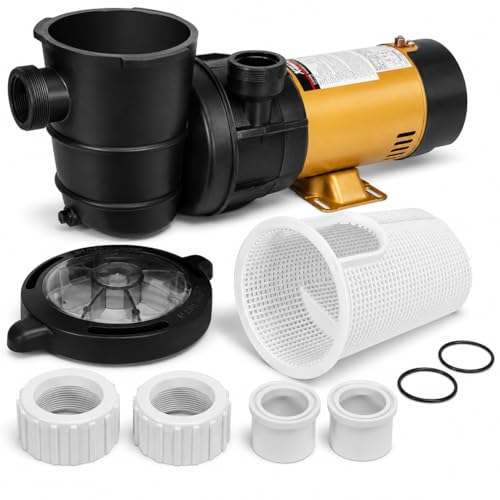
Choose this for a copper-motor, self-priming 2-speed pump with strong flow and clear visibility through a see-through lid. It delivers about 4980 GPH at high speed and supports 40 ft max head, suitable for a range of above-ground pools and spas. The kit includes 1.5″ adapters for flexible installation, and a UL-listed 6-foot power cord. Best for buyers prioritizing motor material quality and ease of monitoring. Limitation: performance can vary with pool size and plumbing configuration.
XtremepowerUS 2HP In-Ground Dual Speed Pump
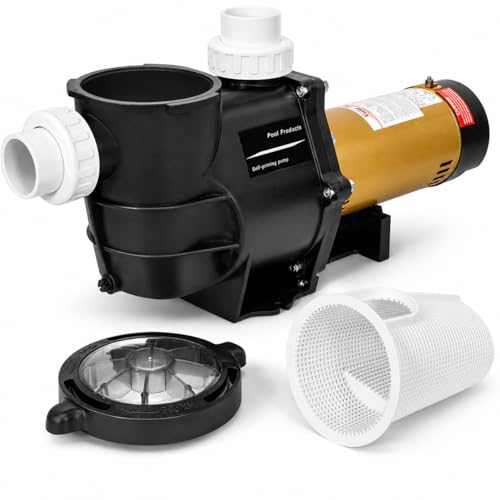
Best for in-ground pools needing powerful circulation, this dual-speed model offers 5850 GPH flow with a 366 L/min QMax and a max head around 39 ft. It is designed for robust operation in varied climates, with a thermal protection feature to prevent overheating. The 2-speed design supports energy-conscious operation while providing strong performance when needed. Caution: ensure compatible slip-on fittings and electrical requirements for your installation.
Hayward W3SP15932S PowerFlo Matrix Dual-Speed

Best for reliability and debris handling, this 1.5 HP two-speed pump combines energy savings with an extra-large strainer basket for less frequent maintenance. The integrated thermal overload protector supports long-term operation in outdoor environments. Choose this if you want a trusted brand with straightforward maintenance and strong support. Limitation: larger baskets may require more space and compatibility checks with existing plumbing.
Buying Guide
What should I consider when choosing a two-speed pool pump?
- Pool type: In-ground vs. above-ground compatibility affects mounting, fittings, and head height requirements.
- Flow and head: Higher GPH (flow) is better for quick cleaning; a higher head supports longer pipe runs and higher resistance.
- Energy efficiency: Look for models with energy-saving features and certifications (WEF 5.5, if listed) to estimate ongoing costs.
- Electrical compatibility: Check voltage, circuit capacity, and whether a timer or control system is available or compatible.
- Maintenance and accessories: Larger strainers, easily accessible lids, and included adapters simplify installation and upkeep.
How do I decide between high speed vs. low speed?
- High speed: Use for routine cleaning, debris removal after storms, and when you need rapid turnover.
- Low speed: Use for daily filtration, chemical balance maintenance, and reduced energy use during normal operation.
Installation considerations
- Verify adapter sizes (1.5″ or 2″) and pipe fittings to match your existing plumbing.
- Place the pump within the recommended distance from the pool to optimize head height.
- Ensure the pool’s electrical supply matches the pump’s requirements and use a dedicated circuit if recommended.
Durability and warranty considerations
- Corrosion resistance and thermal protection help extend pump life in harsh pool environments.
- Look for visible seals and robust housings, especially for saltwater pools.
Frequently Asked Questions
- What is the benefit of a dual-speed pool pump?
Answer: It provides powerful cleaning at high speed while saving energy with low-speed operation during daily circulation. - Can I use a dual-speed pump for saltwater pools?
Answer: Yes, many models are built with materials suitable for chemical exposure, but verify salt tolerance and compatibility with your system. - Do all dual-speed pumps come with adapters?
Answer: Many do, often including 1.5″ or 2″ adapters; check product features to confirm. - How do I know if my pool needs a higher head rating?
Answer: If your plumbing runs long distances or has multiple filters, a higher head rating helps maintain adequate flow. - Are two-speed pumps harder to install than single-speed?
Answer: Not inherently; most installations are similar, with the main difference being wiring and speed control wiring.