Finding the right torpedo heater for big, chilly spaces involves matching high heat output with reliable safety features and fuel versatility. This guide highlights top 5 options that approach or exceed 100,000 BTU, including a true 200,000 BTU unit, and explains how to choose based on space, fuel availability, and safety. Each product section covers core specs, performance notes, and practical usage considerations for American job sites, garages, and outdoor setups. Below is a quick summary of the chosen products to help you compare at a glance.
| Product | Brand | BTU | Fuel | Notes |
|---|---|---|---|---|
| Dura Heat LPC200 | Dura Heat | 200,000 | LP Gas | True high-output 200K BTU unit |
| Habitio 125,000 BTU | Habitio | 125,000 | Propane | Large area coverage, CSA certified |
| BILT HARD 125,000 BTU | BILT HARD | 125,000 | Propane | Adjustable heat, CSA certified |
| Mr. Heater MH170QFAVT | Mr. Heater | 125,000–170,000 | Propane | Quiet burner tech, rugged |
| Mr. Heater F271390 | Mr. Heater | 125,000 | Propane | Quiet burner, safety features |
Dura Heat LPC200 200K LP Convection Heater

The Dura Heat LPC200 delivers true 200,000 BTUs to heat large spaces efficiently. Its LP gas design is optimized for durable outdoor and semi-outdoor work zones where power outlets may be scarce. A large fuel reservoir supports extended runtimes, reducing the need for frequent refueling on long tasks. The unit’s convection design enhances heat distribution for even warmth across wide areas, making it a strong choice for construction sites, workshops, and expansive garages.
Habitio 125,000 BTU Forced Air Propane Heater
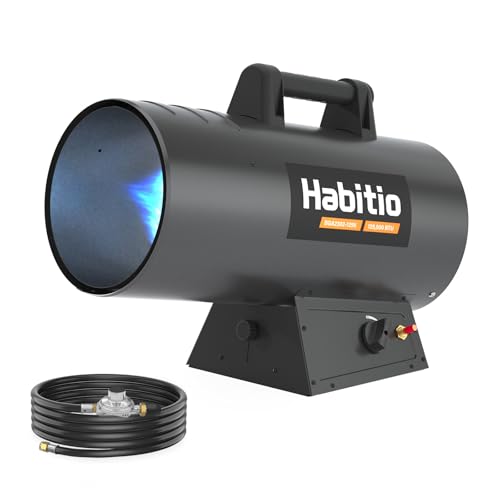
Overview
Habitio’s 125,000 BTU propane heater is designed for large spaces up to roughly three thousand square feet. It includes a 10 ft hose with regulator and is CSA certified, offering a balance of high heat output and practical portability. It uses pulse ignition for a safer startup and provides protections such as overheat shutoff and automatic shutdown on power loss, contributing to reliable operation during demanding jobsite conditions.
Considerations
- Fire safety and proper ventilation are essential in enclosed spaces.
- Gas connections should be tightened with a wrench to prevent leaks.
- Noise levels are typical for torpedo heaters; plan placement accordingly.
BILT HARD 125,000 BTU Forced Air Propane Heater

This unit provides adjustable heat output from 75,000 to 125,000 BTU, capable of warming spaces up to 3,125 square feet. Its compact, sturdy chassis supports frequent transport between job sites. The design emphasizes clean burning and efficiency, with a CSA certification that supports safe operation in diverse environments. An auto-shutoff feature helps prevent gas leaks in abnormal conditions, contributing to safer long-duration use on construction sites or outdoor events.
PioneerWorks 80,000 BTU Forced Air Diesel/Kerosene Heater
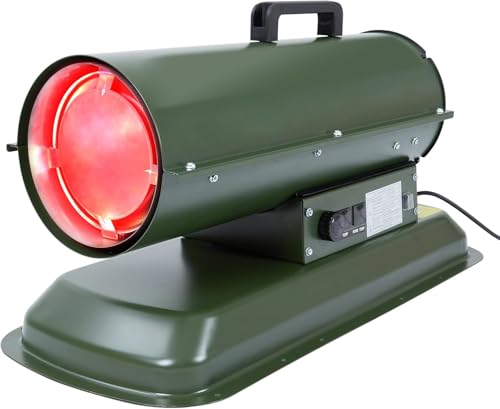
PioneerWorks offers flexible fuel options, primarily diesel and kerosene, for robust performance in outdoor or jobsite environments. This unit’s high-output heat reaches up to 80,000 BTUs, suitable for mid-to-large areas and cold climates. A thermostat control helps set target temperatures, while its portability supports usage across multiple job sites. Fuel economy and runtime are shaped by the chosen fuel type and ambient conditions.
Mr. Heater MH170QFAVT 170,000 BTU Portable Heater

This model delivers 125,000 to 170,000 BTUs, making it suitable for larger workspaces up to about 4,250 square feet. It includes safety features such as a high-temperature limit switch and thermoelectric safety valves to protect operators. Quiet burner technology reduces operational noise by roughly half compared to standard models, supporting a more comfortable work atmosphere without sacrificing heat output. Rugged construction and a robust handle enhance portability for on-site use.
Dura Heat LPC25 15-25K BTU Propane Convection Heater

Listed here as a reference in the broader category, the LPC25 provides 15–25K BTU with a 360-degree heating radius and built-in wind shield. It demonstrates how smaller units can complement larger torpedo heaters on site, offering spot heating or temporary warmth in sheltered areas. It is suitable for indoor or outdoor use where ventilation is available, providing steady heat without excessive energy draw.
Buying Guide: Key Considerations For Choosing A 200,000 BTU Torpedo Heater
When selecting a high-output torpedo heater, several factors determine effective performance, safety, and total operating costs. The following considerations cover a range of user needs from construction sites to home workshops:
- BTU Output vs. Space: For larger spaces, a true 200K BTU model like the LPC200 is ideal. For spaces around 2,000–4,000 sq ft, 125K–170K BTU units may suffice depending on insulation and ventilation.
- Fuel Type and Availability: LP gas is common for torpedo heaters, but diesel or kerosene options offer alternatives in areas with different fuel infrastructures. Always follow fuel-specific safety guidelines and ventilation requirements.
- Ventilation and Safety: Environments with limited ventilation require careful planning and may mandate CO detectors, proper exhaust management, and compliance with local codes. Look for devices with overheat protection and automatic shutdown features.
- Portability and Setup Time: Job sites require ease of transport. Rugged handles, compact dimensions, and simple regulator connections reduce downtime and labor costs.
- Noise Levels: Higher BTU units often produce more noise. If the work environment requires quieter operation, consider models with quiet burner technology or sound-damping features.
- Fuel Tank Life and Runtime: Larger tanks extend runtimes, particularly in remote sites. Check stated runtimes at specific BTU settings and tank capacities to estimate refill intervals.
- Safety Certifications: CSA or equivalent certifications indicate adherence to recognized safety standards. This can be especially important for workplaces with OSHA considerations.
- Fuel Handling And Storage: Proper storage for LP cylinders and safe transport practices are essential. Ensure compliance with local regulations for storing flammable fuels on-site.
- Maintenance And Spare Parts: Availability of replacement parts, hoses, and regulators matters for long-term use and reliability on busy sites.
- Climate And Use Case: Outdoor use in cold climates benefits from units designed to resist wind and cold starts. Indoor use requires adequate ventilation and Carbon Monoxide safety measures.
Across these options, users should balance maximum heat output with practical concerns such as fuel availability, space layout, and safety requirements. For large, semi-enclosed spaces, a true 200,000 BTU model paired with a sturdy regulator and proper ventilation can deliver rapid warmth, while high-performance 125,000–170,000 BTU units offer flexible performance for varied job-site conditions. Evaluating local fuel accessibility and site layout helps determine the best overall fit.