If you’re shopping for a compact, ductless cooling and heating solution, you want a unit that fits small spaces while still delivering reliable climate control. This guide highlights five solid mini split options and explains who each is best for, plus practical buying tips. While the following models are high-capacity systems by design, they’re representative of ductless technology that can scale for larger rooms or be paired with zone cooling strategies in compact homes. Use this overview to compare features, installation needs, and energy efficiency when selecting a mini split for tight spaces.
Buyer profiles:
– Small-apartment resident or studio occupant seeking quiet operation and straightforward installation.
– Home office user needing quiet, energy-efficient climate control with flexible scheduling.
– Hobbyist or workshop owner requiring robust cooling/heating in a compact footprint.
– Anyone considering energy-efficient, pre-charged systems for quick DIY or semi-professional installs.
| Model | Approx. Coverage | Highlights |
|---|---|---|
| Rellytech Mini Split AC/Heating System | Up to 1,250 sq. ft. | 18,000 BTU cooling, 18,400 BTU heating; four modes; ECO energy-saving function |
| DELLA Econo Series 23,000 BTU | Up to 1,500 sq. ft. | 17 SEER2; heat pump; smart sensing; professional installation advised |
| GarveeHome 18,000 BTU | Up to 1,250 sq. ft. | Five modes; auto defrost; silent operation |
| Nexaro 18,000 BTU | Up to 1,250 sq. ft. | Inverter tech; R32 refrigerant; multiple modes |
| IDEALHOUSE 24,000 BTU | Up to 1,500 sq. ft. | 21 SEER2; WiFi & Alexa control; large-space capability |
Rellytech 18,000 BTU Mini Split System

Best for large-room cooling and heating in a home or garage: the Rellytech system delivers 18,000 BTU of cooling and 18,400 BTU of heating, suitable for spaces up to about 1,250 sq. ft. It includes four operation modes and an Eco function to optimize energy use. The 90° vertical swing and multiple fan speeds enable customized air distribution to busy living rooms or workspaces. This unit is well-suited for buyers who prioritize year-round comfort with strong performance in moderate-to-large zones.
Best for: homeowners needing robust climate control with energy-conscious operation. Why selected: high cooling/heating output and flexible airflow options enhance comfort in larger rooms or open-plan layouts. Limitation: not ideal for ultra-small rooms where 8,000–12,000 BTU units might be a better fit; install complexity may require professional help for best results.
DELLA Econo Series 23,000 BTU Mini Split

Best for mid-to-large rooms that require strong cooling and reliable heating with smart sensing: this 23,000 BTU unit handles up to 1,500 sq. ft. and includes a heat pump. It’s designed for 208-230V operation and comes with an installation kit. It’s optimized for energy savings with a DC inverter and up to 30% power reductions in certain conditions. Smart sensing improves comfort by adjusting airflow to the remote’s readings, which helps maintain even temperatures.
Best for: spaces needing solid all-season capability with energy efficiency. Why selected: high capacity paired with smart temperature sensing. Limitation: professional installation is advised, and the unit operates at higher voltage requiring appropriate electrical work.
GarveeHome 18,000 BTU Mini Split
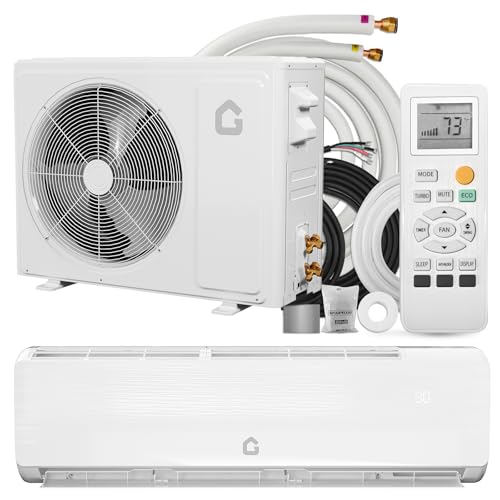
Best for quiet operation in medium-to-large rooms: the GarveeHome unit delivers 18,000 BTU of cooling with 1250 sq. ft. coverage and uses inverter technology to achieve energy savings of about 30%. It features five modes including auto and dry, plus a timer and sleep mode. The remote supports 4D airflow and enhanced comfort features for extended use in living areas or basements.
Best for: users prioritizing quiet performance and flexible modes. Why selected: balanced power and features for steady comfort. Limitation: ensure your space aligns with its 1250 sq. ft. coverage to avoid over- or under-sizing.
Nexaro 18,000 BTU Mini Split

Best for versatile climate control in spaces up to 1,250 sq. ft.: the Nexaro unit uses inverter technology and a robust heat pump to deliver efficient cooling and heating. It uses R32 refrigerant, which is favored for a lower environmental impact, and offers multiple modes, including energy-saving options. This model emphasizes year-round comfort with flexible performance across seasons.
Best for: buyers seeking eco-friendly refrigerant and broad mode options. Why selected: strong energy performance and versatile climate control. Limitation: ensure compatibility with existing electrical infrastructure for 230V operation.
IDEALHOUSE 24,000 BTU Mini Split

Best for large rooms or open-plan spaces requiring strong cooling and heating with smart controls: IDEALHOUSE offers 24,000 BTU for spaces up to 1,500 sq. ft. It features 21 SEER2 efficiency, WiFi and Alexa control, and a full installation kit. This unit suits homes or small commercial areas where energy efficiency and remote operation are priorities.
Best for: buyers who want maximum space coverage and smart-home integration. Why selected: high SEER2 rating and convenient voice/app control. Limitation: higher capacity could be unnecessary for very small rooms; ensure the space truly needs this level of output.
Buying Guide: Key Considerations for Mini Splits in Small-to-Moderate Spaces
- Room size and load: Match BTU to space. Oversized units heat or cool quickly but waste energy; undersized units run constantly and struggle to maintain comfort.
- Energy efficiency: Look for SEER2 ratings and inverter technology. Higher SEER2 usually means lower operating costs over time.
- Installation: Pre-charged systems simplify DIY setups but may still require electrical work. Professional installation ensures proper refrigerant handling and optimal performance.
- Controls and smart features: WiFi, Alexa, and remote sensing can improve daily usability and energy management. Consider if you want voice control or app-based scheduling.
- Refrigerant choice: R32 offers lower global warming potential. Verify local service availability for refrigerant handling and top-ups.
- Noise levels: Look for units with low decibel ratings, especially for bedrooms or study spaces. Inverter models typically run more quietly on steady temperatures.
- Maintenance needs: Self-cleaning and auto-diagnosis features save time, but filter access and serviceability remain important for long-term upkeep.
- Electrical requirements: Check voltage (115V vs. 208-230V) and circuit capacity. Larger units typically require dedicated circuits and proper wiring.
Frequently Asked Questions
- What size mini split do I need for a tiny room?
Typically 6,000–9,000 BTU is enough for very small bedrooms or offices; larger rooms require 12,000–18,000 BTU. Always calculate room size and insulation as part of sizing. - Are inverter mini splits more energy-efficient?
Yes. Inverter technology adjusts compressor speed to maintain set temperatures, reducing energy use and temperature swings. - Is professional installation required for all mini splits?
Many units are pre-charged and designed for DIY installation, but some require professional setup, especially when venting or electrical wiring is involved. - What refrigerant is best for the environment?
R32 refrigerant is common and has lower global warming potential than some older refrigerants, but local service availability matters. - Can a mini split cool a garage or workshop?
Yes, many models handle 1,000–1,500 sq. ft. or more, but ensure the space is properly insulated and that a heater is needed in winter months, if applicable. - Do all mini splits support WiFi or voice control?
Many modern models offer WiFi and Alexa compatibility, but features vary by model and region. Check product specs before buying.
Summary of selected products: Rellytech, Della, GarveeHome, Nexaro, and IDEALHOUSE mini splits offer a range of capacities from 18,000 to 24,000 BTU with diverse features such as inverter technology, smart controls, and installation packages. When shopping for a unit intended for small spaces, prioritize models with energy efficiency, appropriate BTU, and quiet operation. For ultra-tight spaces, consider smaller BTU options or zone-based cooling strategies to maximize comfort and efficiency.