When shopping for a 220 ac window unit, the goal is to find a powerful, efficient, and versatile model that fits your space and lifestyle. This guide highlights five prominent window or through-the-wall units that suit large rooms, apartments, or commercial spaces. Each option is evaluated for best use case, ease of installation, and practical limitations to help you pick with confidence. The buyer profiles below indicate who benefits most from each model.
| Product | Best For | Key Benefit |
|---|---|---|
| Keystone 23,200 BTU Window Air Conditioner | Large living spaces up to 1,500 sq ft | All-in-one cooling, heating, and dehumidification with smart remote |
| LG 24,500 BTU Window Air Conditioner | Wide floor plans, customizable fan speeds | Three cooling/fan speeds and auto-restart for convenience |
| Frigidaire 14,000 BTU Wall AC | Quiet wall-mounted cooling with air quality features | Built-in ionizer and remote control |
| Cool-Living 18,000 BTU Window Unit | Mid-to-large rooms needing strong cooling | Remote control and installation kit included |
| LG 14,000 BTU Window AC with Wi-Fi | Smart homes and app-controlled cooling | LG ThinQ app compatibility and voice assistant support |
Keystone 23,200 BTU Window Air Conditioner

Model overview: This unit provides 23,200 BTU of cooling with 16,000 BTU supplemental heat and dehumidification for spaces up to 1,500 sq ft. It combines cooling, heating, dehumidifying, and fan circulation in a single system. The supplemental heating mode operates best when outside temperatures are between 23 and 76 degrees and is not intended as a primary heat source. A smart remote tracks room temperature and sends periodic updates for accurate comfort management.
Best for: Large homes or open-plan spaces that require robust year-round climate control, plus convenience of smart remote management.
Why selected: The higher combined cooling and heating outputs cover far larger areas than standard window units.
Limitation: Supplemental heat is not a primary heat source and effectiveness depends on ambient temperatures.
LG 24,500 BTU Window Air Conditioner

Model overview: This large-window unit cools spaces up to about 1,560 sq ft with 24,500 BTU, and features three cooling/fan speeds plus an auto-restart function after power interruptions.
Best for: Wide floor plans where flexible cooling and automatic restart provide reliable comfort after outages.
Why selected: High BTU capacity paired with user-friendly control options makes it suitable for big rooms that need quick, adjustable cooling.
Limitation: Higher energy usage may occur in very large spaces without zoning controls.
Frigidaire 14,000 BTU Wall Air Conditioner
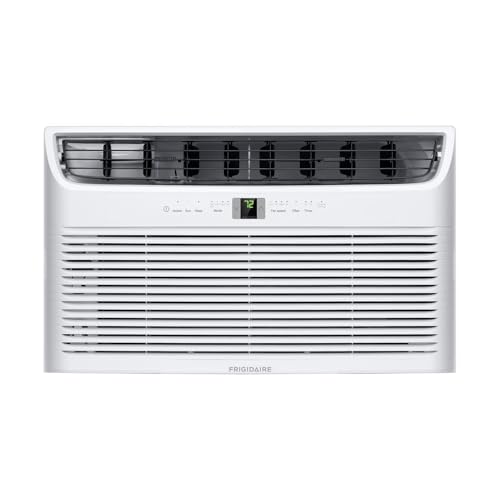
Model overview: A 230V wall-mounted unit with a built-in air ionizer that reduces airborne particles and improves air quality. Three speeds plus remote control provide flexible operation, while the wall-mount design saves space in larger rooms.
Best for: Rooms where quiet operation and air quality features are prioritized.
Why selected: The ionizer adds value beyond cooling for occupants sensitive to dust or allergens.
Limitation: Cooling capacity is 14,000 BTU, which may be best suited for up to roughly 700 sq ft depending on conditions.
Cool-Living 18,000 BTU Window Unit

Model overview: An 18,000 BTU window unit designed to cool spaces up to 1,000 sq ft. It includes an installation kit and a remote for convenient control.
Best for: Medium-to-large rooms or offices that need robust but not extreme cooling.
Why selected: Strong BTU rating with included installation kit offers a practical balance of power and value.
Limitation: Installation may require window or wall compatibility checks, and unit weight should be considered for installation in certain openings.
LG 14,000 BTU Window AC With Wi-Fi
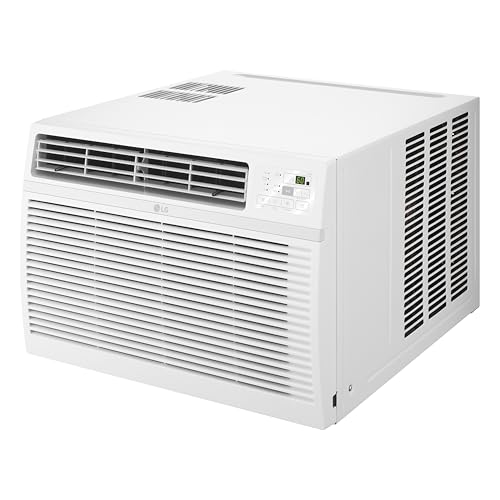
Model overview: A 14,000 BTU unit designed for large rooms up to around 800 sq ft. It features LG ThinQ app compatibility, voice assistants, and a washable filter. An EZ Mount installation kit simplifies setup, and the unit supports remote control for flexible operation.
Best for: Smart homes seeking app and voice control for comfortable climate management.
Why selected: Smart features add convenience and future-proofing for larger living areas.
Limitation: Wi-Fi features require setup and may depend on home network stability.
Buying Guide
- Room size and BTU rating: Match BTU to square footage. Exceedingly large rooms may need higher BTU or supplementary units. Consider ceiling height and insulation for more accurate sizing.
- Installation type: Window vs. through-the-wall vs. wall-mounted. Window units are easier to install but may interfere with windows; wall-mounted units save space but require dedicated openings.
- Heating capability: If year-round comfort matters, units with supplemental heat or integrated heating help in milder climates. Remember, supplemental heat is not a primary heat source.
- Air quality and filtration: Built-in ionizers or washable filters benefit users with allergies or dust concerns. Consider ease of cleaning and replacement costs.
- Smart features: App control, voice assistants, and auto-restart convenience can improve daily use. Confirm compatibility with existing devices.
- Energy efficiency: Look for ENERGY STAR or high-efficiency ratings when available, especially in large rooms where cooling load is high.
- Maintenance: Access to filters, ease of cleaning, and remote diagnostics can reduce downtime and improve performance over time.
FAQ
- What size window unit do I need for a 1,200 sq ft room? A unit with a high BTU rating, typically around 24,000 BTU, is often needed for open, well-insulated spaces. Consider zoning or multiple units for uneven layouts.
- Can I use a supplemental heat mode as a primary heat source? No. Supplemental heating is designed to aid primary heat sources, not replace them, especially in very cold conditions.
- Are smart features worth it for a window unit? Smart features add convenience, remote control, and potential energy savings when used with routines or schedules.
- What maintenance helps longevity? Regularly cleaning or replacing filters and ensuring vents are not blocked will improve efficiency and airflow.
- Is installation difficult for wall-mounted models? Wall-mounted units require a dedicated sleeve and proper mounting; professional installation may be recommended for best results.
- How do I choose between window and through-the-wall options? Window units are typically easier to install and remove; through-the-wall units provide a cleaner look and can be better for long-term installations when remodeling is expected.