When selecting a 3/4 balancing valve, you want reliability, corrosion resistance, and easy integration with your system. This guide highlights five solid 3/4″ balancing-related valves suited for residential to light commercial work. Each option is evaluated for durability, compatibility, and installation ease so you can choose confidently. The top picks cover brass ball valves, feed/return balancing components, and stainless steel variants for tougher environments. This helps buyers identify which valve best fits their project, whether you’re balancing a radiant panel system, an outdoor water setup, or a domestic line.
| Product | Brand | Best For |
|---|---|---|
| NIBCO Fig No T-1810-LF | NIBCO | Residential or light commercial balancing with threaded connections |
| Legend Valve S-439 BALANCING VALVE | Legend Valve | Radiator valve balancing and compact installations |
| 304 Stainless Steel Balanced Float Ball Valve | absfloat | High-pressure environments, stainless steel corrosion resistance |
| ABS Balanced Float Ball Valve | Absfloat | Adjustable range and 180° arm movement for space-constrained layouts |
| Zurn Wilkins 34-600XL | Zurn | Pressure reducing and balancing for durable, long-life systems |
NIBCO Fig No T-1810-LF: 3/4 in. Brass Balancing Valve
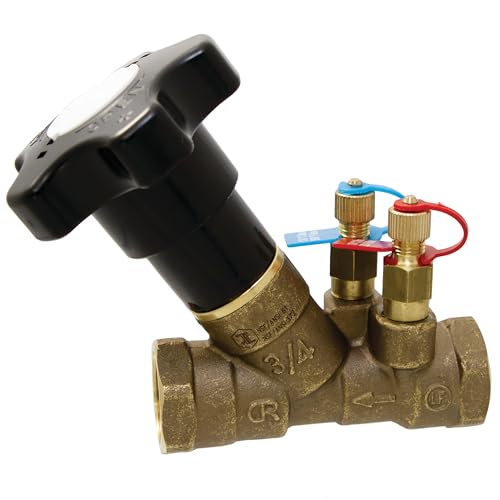
This manual, threaded balancing valve uses brass construction for durability in standard potable and hydronic systems. It is rated for 300 psi non-shock cold working pressure and up to 260°F at 150 psi, offering a robust range for most home heating and cooling circuits. Best for: residential systems needing a reliable, easy-to-install valve with solid pressure and temperature tolerance. Caution: verify threading compatibility with existing piping to avoid mismatches in older installations.
Legend Valve 110-154 S-439 Balancing Valve

Legend Valve’s S-439 is a compact 3/4″ balancing valve aimed at radiator and compact piping setups. It’s suitable where space is limited and precision flow adjustments are required. Best for: small radiator circuits or retrofits where a compact solution is preferred. Caution: data highlights usage as a balancing valve; confirm it meets your system’s required flow range and any ANSI/ASME standards for your project.
304 Stainless Steel Balanced Float Ball Valve

This 3/4″ balanced float ball valve uses 304 stainless steel, offering strong corrosion resistance and suitability for water systems with higher pressure dynamics. It balances pressure between piston and valve and supports adjustable water levels, making it a versatile choice for applications like magnetic level switches and liquid level measurements. Best for: high-corrosion or higher-pressure environments where stainless construction is advantageous. Caution: ensure the design accommodates the required ball-rod geometry for your installation.
ABS Balanced Float Ball Valve, 100 psi

ABS’s 3/4″ balanced float ball valve features an adjustable arm with over 180 degrees of adjustment and a stainless steel rod for durability. It balances piston pressure and ball/level stability, making it suitable for systems where precise level control and easy adjustment are needed. Best for: installations requiring flexible mounting options in tight spaces. Caution: confirm thread type and connection style match your piping before purchase.
Zurn Wilkins 34-600XL 3/4″ 600XL

The 34-600XL combines pressure reducing features with balancing design to protect downstream components. Its fiber union gasket allows faster installation, and its durable construction helps lower maintenance costs. Best for: systems that require steady pressure control and long service life. Caution: this is primarily a pressure reducing valve, so verify it aligns with your balancing needs rather than treating it as a simple on/off shutoff valve.
Eastman 3/4 Inch IPS Full Port Ball Valve

Eastman’s 3/4 inch full port ball valve supports maximum flow with a clean inline design. It operates as a shut-off valve but can be useful in balancing circuits when used alongside dedicated balancing components. Best for: primary shut-off needs in a larger 3/4″ piping run. Caution: not a dedicated balancing valve—use alongside a true balancing device when precise flow control is required.
Buying Guide: Key Considerations For 3/4 Balancing Valves
What environment will the valve operate in? If you expect elevated temperatures or corrosive exposure, stainless steel or brass with corrosion resistance is preferable. For standard potable water or hydronic systems, brass valves with robust threads can suffice.
What kind of connection is needed? Threaded, sweat, or push-fit connections determine compatibility with existing piping. Choose a model with the correct end connections to simplify installation and reduce sealing issues.
Do you need precise flow control or simple shut-off? Balancing valves are designed to adjust flow. If exact balance is critical, pick models marketed for balancing and include any included balancing spools or cartridges.
Pressure and temperature ratings matter. Look for psi and temperature ratings that exceed your system’s maximum operating conditions to avoid premature wear or leaks.
Ease of installation and service life. Features like quick installation gaskets, adjustable arms, and accessible service ports can save time during setup and maintenance.
How to choose between brass, stainless steel, and ABS
- Brass valves: Common, cost-effective, good for most domestic hydronic systems.
- Stainless steel: Best for corrosive environments or aggressive fluids; higher price but longer life.
- ABS: Lightweight plastic option; suitable for certain non-corrosive demands and easy handling in tight spaces.
FAQ: Common Buying Questions
- What is a balancing valve used for in a 3/4″ system?
A balancing valve adjusts flow to achieve even distribution across a circuit, preventing one branch from hogging water and ensuring consistent heating or cooling.
- Can I mix different brands in the same system?
Mixing brands is possible but ensure thread standards and pressure ratings match, and verify compatibility with any balancing accessories.
- Is a full-port valve better for balancing than a standard valve?
A full-port design reduces flow restriction, which can improve accuracy in balancing and overall system performance.
- What maintenance does a balancing valve require?
Regular inspection for leaks, verifying seals, and testing flow adjustments help maintain precise balancing over time.
- Which material should I choose for hot water systems?
Brass or stainless steel are common; stainless offers better corrosion resistance for aggressive hot-water environments.
- Do I need professional installation for a 3/4″ balancing valve?
For standard piping, a confident DIYer can install with proper tools, but professional help is recommended for complex systems or high-pressure setups.