If you’re upgrading or fabricating a custom exhaust, these 3″ 45-degree elbows help redirect flow with a mandrel-bent, smooth interior. This guide highlights five solid choices, suitable for different project needs—from durable DIY builds to stainless steel, high-heat applications. The top picks are best for: beginners building a simple cat-back, hobbyists assembling a custom exhaust, and professionals needing stable, repeatable bends. A quick buying table follows to compare core specs at a glance.
| Product | Material | Best For | Notes |
|---|---|---|---|
| A-KARCK Exhaust 45 Degree Tube | Mild Steel | Budget DIY builds | Flared ends for easy sliding installation; mandrel bend for flow |
| X AUTOHAUX 4 Pcs OD 3″ 45 Degree SS304 | SS304 Stainless Steel | Custom or multiple projects | Humps at ends aid clamp installation; durable for high temps |
| Richeer 45 Degree 3″ O.D. Stainless Steel | Stainless Steel | Polished finish and durability | Polished surface; universal DIY fit |
| 45 Degree SS304 Stainless Bend Tube for Car | SS304 Stainless Steel | High-temperature environments | Solid SS304 with stability features |
| Simnliras 2 Pcs 3″ OD 45 Degree Mandrel Bend | 1.25mm Stainless Steel | Package deals or multiple sections | Leg length and thick walls noted; durable for various uses |
A-KARCK Exhaust 45 Degree Tube 3″ OD

Material and design: Mild steel mandrel-bend tube with a 3″ outer diameter. The pipe ends are expanded for easy butt welding and sliding installation. The elbow is a full-size bend to promote smooth exhaust flow. The mandrel bend helps maximize airflow and horsepower potential by maintaining a constant diameter through the curve.
Who it’s best for: Budget-conscious hobbyists building a simple exhaust path or replacing a damaged 3″ elbow. Why selected: It offers a straightforward, clamped-friendly option with good flow characteristics at a lower cost. Limitation: Mild steel may require additional coating or treatment to resist corrosion in harsh environments.
LCGP 45 Degree Exhaust Tube 3″OD (1 Piece)

Material and design: Made of high-quality mild steel, with dimensions of 3″ universal 45 degree bend. Engineered to maintain consistent outer and inner diameters and easy installation via sliding fit joints.
Who it’s best for: Builders needing a straightforward, durable section for a 3″ system. Why selected: Reliable mild steel bend that’s easy to weld or join. Limitation: Mild steel may require protective coating against corrosion in outdoor setups.
X AUTOHAUX 4 Pcs 3″ OD 45 Degree SS304 Bend

Material and design: SS304 stainless steel 3″ 45-degree bend with end humps. Suitable for cutting, splicing, or welding to fit custom applications. The kit includes multiple bends and is designed to withstand high temperatures and pressures.
Who it’s best for: Professionals or DIYers performing multiple custom runs or needing replacements. Why selected: Stainless steel offers superior corrosion resistance and durability. Limitation: The kit may be more than you need for a single elbow project.
Richeer 45 Degree 3″ O.D. Stainless Steel Tubing

Material and design: Stainless steel mandrel bend with polished surface for a smooth, easy-to-clean finish. Each pipe is designed for universal DIY use with a focus on long service life.
Who it’s best for: Those seeking a polished finish combined with stainless durability. Why selected: Stainless steel improves corrosion resistance and lifespan. Limitation: Polished finish may require maintenance to keep appearance over time.
45 Degree SS304 Stainless Bend Tube for Car
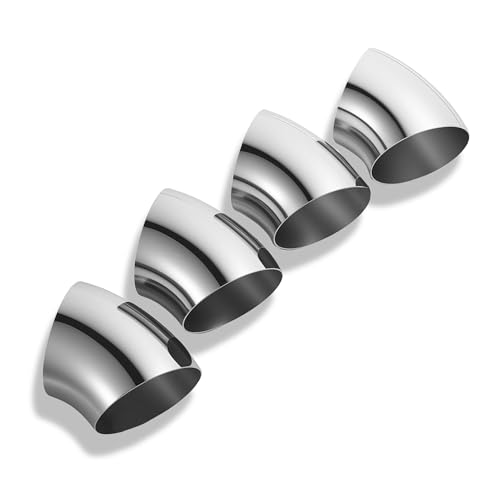
Material and design: SS304 3″ outer diameter 2.99″ back arc length with 1.5 mm wall thickness. End humps support clamp installation and stability, designed for cutting, splicing, or welding to suit custom applications.
Who it’s best for: Fabricators needing a reliable, high-temperature bend with clamp-friendly ends. Why selected: Solid SS304 build and precise geometry for consistent fit. Limitation: Slightly heavier than mild steel options.
Buying Guide: Key Considerations For 3-Inch 45° Exhaust Bends
- Material choice: Stainless steel (SS304) offers corrosion resistance and durability, while mild steel is typically cheaper and easier to weld but may require coating.
- Wall thickness and diameter: Ensure compatibility with your exhaust system’s outer and inner diameters. A consistent diameter through the bend minimizes turbulence.
- End features: Flared ends or end humps aid installation and clamp stability; verify if your project needs sliding joints or clamps.
- Mandrel bend vs crush bend: Mandrel bends preserve cross-sectional area and improve flow, whereas crush bends can restrict flow and cause restrictions.
- Finish and maintenance: Polished stainless steel surfaces look clean and resist corrosion; darker finishes may hide wear but require maintenance.
- Quantity and packaging: If you’re building multiple sections, kits with several bends can save time and ensure consistent radii.
FAQ: Quick Answers For Buyers
- What is a 3″ 45-degree exhaust elbow used for? It redirects exhaust flow while maintaining a relatively smooth interior for better performance and fitment.
- Are stainless steel bends better than mild steel? Generally yes for corrosion resistance and longevity, especially in outdoor or humid environments.
- Do I need mandrel bends? Mandrel bends preserve cross-sectional area through the bend, reducing flow resistance and improving performance.
- Can I weld these bends to my exhaust system? Most are designed for welding or clamping; confirm compatibility with your exhaust materials and thicknesses.
- Which one is best for a beginner project? A mild steel option with clear installation features is often easiest for a first DIY exhaust build.
- Should I choose a kit or single bend? Kits offer multiple bends for multi-section runs; singles are fine for a single elbow replacement.