The best 3 inch inline fans for 120V systems deliver reliable airflow with low noise and easy installation. This guide highlights five options that balance power, efficiency, and practicality for small grow tents, workshops, or enclosed workspaces. The top picks are suited for buyers seeking compact, easy-to-install ventilation with adjustable speed and solid air movement.
Audience note: these picks target different needs—growers seeking odor control, hobbyists needing general exhaust, and makers running printers or laser engravers requiring continuous air exchange. Below is a quick buying table to compare core specs and intended use.
| Product | Best For | Airflow (approx) | Notable Strength |
|---|---|---|---|
| Hon&Guan 3 Inch Inline Blower Fan | Quiet, energy-efficient ventilation in grow rooms or bathrooms | 120 CFM | Ultra-low power, built-in feet for mounting |
| Makacces 3 Inch Inline Duct Fan | High flow for general exhaust and dehumidification | 200 m³/h | Variable speed with a copper motor |
| Qofioeuo 3 Inch Inline Duct Fan | Versatile, compact ventilation with quick control | 130 CFM | Built-in switch for easy on/off control |
| HOCENWAY Upgrade Speed Control 3 Inch Inline Booster | Low-noise, high-flow for professional setups | 200 m³/h | Metal clamps included; adjustable speed |
| Moonjor 3inch Inline Duct Fan | Quiet, residential and small commercial use | 160 m³/h (110 CFM) | Low noise, 110-120V standard plug |
Hon&Guan 3 Inch Inline Blower Fan with Speed Controller

Best for energy-conscious setups requiring strong airflow with minimal power use. This 3-inch inline duct fan moves air at up to 120 CFM while consuming only about 20W, aided by a faster DC motor and low noise design. The included mounting feet support vertical or horizontal installation, making it easy to integrate into grow rooms, bathrooms, kitchens, or basements. Consider this option if you want robust air movement without a high energy bill. A potential limitation is that the noise level may still be noticeable in ultra-quiet spaces at full speed.
Makacces 3 Inch Inline Duct Fan With Variable Speed
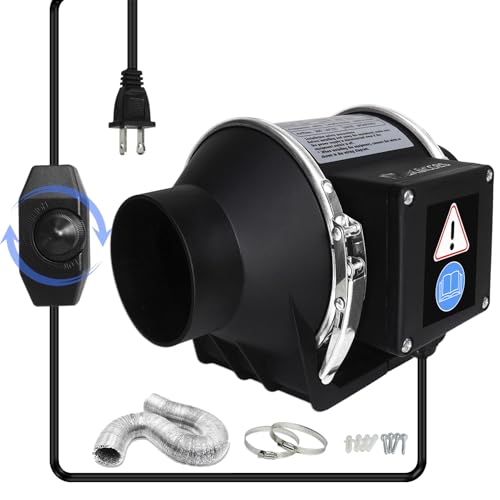
Best for users needing strong airflow with adjustable speed for targeted ventilation. The Makacces unit uses a 1Kg copper motor delivering up to 200 m³/h. The speed controller lets you tailor air movement to activity levels, whether reducing humidity in a grow tent or removing fumes from a workshop. It operates with relatively low noise, but users should ensure the fan’s mounting is solid to minimize vibration transmitted to adjacent spaces.
Qofioeuo 3 Inch Inline Duct Fan With Switch
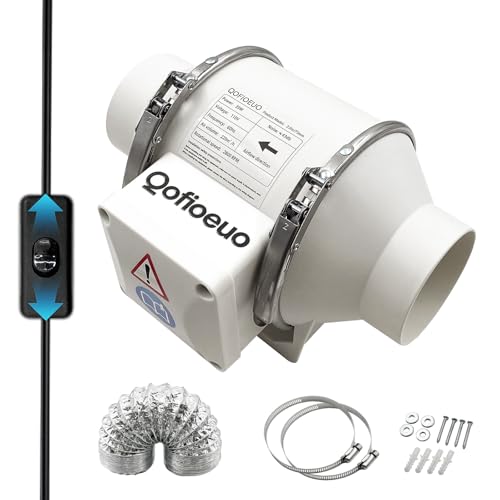
Best for compact spaces needing straightforward control. The Qofioeuo unit delivers up to about 130 CFM with a built-in switch for quick on/off operation without unplugging. It also emphasizes quieter operation through balanced blades and an optimized airflow path. Choose this if you want simple, reliable ventilation with minimal setup effort. A potential caveat is that noise performance can vary with mounting and duct length.
HOCENWAY Upgrade Speed Control 3 Inch Duct Fan

Best for serious air movement with a focus on quiet operation. This 3-inch duct fan features a 1Kg copper motor capable of about 200 m³/h airflow and a quiet noise profile around 30dB. It includes metal detachable clamps for easier blade cleaning and mounting. Choose this if you need a robust, low-noise solution for 3D printers, laser engravers, or greenhouse setups. A mild limitation is that the 30dB spec can vary depending on mounting, ducting, and distance to the exhaust.
Moonjor 3inch Inline Duct Fan

Best for residential and light commercial use where quiet operation matters. Moonjor’s inline fan runs around 35dB with a 2800RPM motor and delivers about 160 m³/h (roughly 110 CFM). The unit runs on a standard 110–120V plug and consumes moderate power for reliable, continuous ventilation. It’s a good pick if you want a balance of airflow and low noise for grow tents or bathroom exhaust. A consideration is that airflow performance may drop with longer duct runs.
Buying Guide: Key Considerations for 3 Inch Inline Fans
What should you check before buying a 3 inch inline fan? Consider airflow needs, noise tolerance, power consumption, and installation flexibility. For small spaces like grow tents or workshops, match the target air changes per hour (ACH) to the fan’s CFM or m³/h rating. If you operate near shared living spaces, prioritize models advertised as low-noise (around 30dB). Power consumption matters for continuous operation—look for energy-efficient DC motors when possible. Installation features such as mounting feet, clamps, and duct compatibility affect ease of setup and long-term maintenance. Finally, consider whether you need adjustable speed to respond to changing ventilation requirements across different tasks.
Ventilation Goals: What’s Most Important?
- Odor and fume control: Favor higher airflow and steady performance at higher speeds (e.g., 200 m³/h or 120 CFM+).
- Quiet operation: Look for models marked around 30dB or lower at typical operating speeds.
- Ease of installation: Choose fans with mounting feet or included clamps and flexible ducting compatibility.
- Power efficiency: DC-motor designs typically offer better energy efficiency for extended runs.
Configuration and Placement Tips
- Place the fan near the source of odors or heat and route exhaust to an outside vent or filtered area.
- Use insulated or well-sealed ducting to minimize energy loss and noise.
- Combine with a pre-filter or carbon filter for odor control in grow setups.
Operational Scenarios: Quick Reference
- Grow tents: Higher airflow with quiet operation helps manage humidity and odors without disturbing neighbors.
- Laser engravers or 3D printers: Consistent airflow reduces fumes and particulates in enclosed spaces.
- Bathrooms and kitchens: Efficient exhaust improves comfort and reduces humidity-related issues.
FAQ
- Q: Do I need a 120V inline fan for a 3-inch duct? A: Yes, 120V models are common and compatible with standard household wiring for many DIY setups.
- Q: Is a higher CFM always better? A: Higher CFM provides stronger airflow, but may produce more noise and power use; balance with noise tolerance and duct length.
- Q: Can I use a 3-inch fan for a long duct run? A: Longer duct runs reduce effective airflow; consider shorter ducting or a higher-capacity fan.
- Q: Are DC motors more energy-efficient than AC? A: Generally, yes, DC motors enable better speed control and lower power consumption at matched airflow.
- Q: How important is vibration dampening? A: Important for quiet operation; mounting in stable positions and using vibration-damping materials helps.
- Q: Should I use a filter with these fans? A: For odor and particle control, appropriate filters are recommended, but ensure compatibility with the fan’s airflow and resistance.