If you need a reliable, high-capacity pressure tank for a home well system, a 33-gallon option is often a strong balance of storage, cycling reduction, and installation ease. This guide highlights five solid 33-gallon–class options and nearby sizes, with clear buyer-oriented notes on who benefits most from each choice. Use this to compare suitability for residential water supply, irrigation, or small commercial setups. The table below summarizes key points to help you decide quickly.
| Product | Best For | Capacities | Notable Benefit |
|---|---|---|---|
| VEVOR 30-Gallon Vertical Well Tank | Small to mid-size homes | 30 gal | Strong steel body, 29 PSI pre-charge, 87 PSI max |
| VEVOR 34-Gallon Vertical Well Tank | Homes needing more storage | 34 gal | Thicker steel, higher max pressure |
| Red Lion RL34A 34-Gallon Tank | Durable, NSF/ANSI compatibility | 34 gal | Premium components, NSF/ANSI 61/372 |
| Class A Customs 33-Gallon RV Tank | RV, mobile or compact installations | 33 gal | NSF-approved materials, built-in fittings |
| WaterWorker HT-30B 30-Gallon Tank | NSF-compliant domestic use | 30 gal | NSF-listed, durable diaphragm and liner |
VEVOR 30-Gallon Vertical Well Pressure Tank

The VEVOR 30-gallon tank is designed to increase water-pressure stability for standard residential systems. It supports whole-house water use with reduced pump cycling, which helps extend pump life and maintains smoother water flow. Best for homeowners needing a balance of storage and a compact footprint in tight spaces.
- Material: 1.2 mm thick carbon steel for strength
- Pre-charge: 2 BAR (29 PSI); max internal pressure up to 6 BAR (87 PSI)
- Working temperature: up to 90°C (194°F)
- Connection: 1-inch NPT for secure piping
- Note: Not suitable for drinking water; not frost-proof
Who it’s for: households needing reliable storage without the bulk of larger tanks. Limitations: not intended for potable water and may require frost protection in colder climates.
VEVOR 34-Gallon Vertical Well Pressure Tank
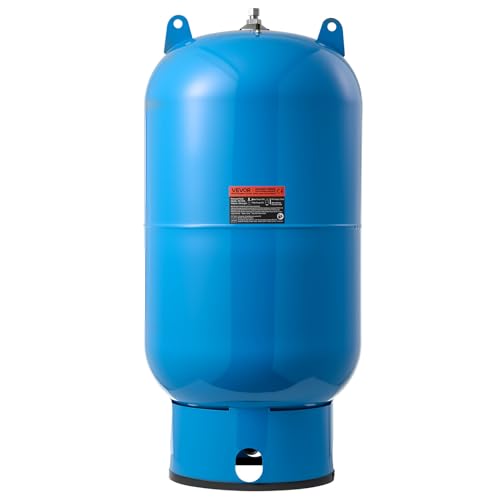
The 34-gallon model expands storage and increases the pump’s duty cycle capability. It is built with thicker carbon steel and a higher pre-charge to handle larger loads, making it a solid choice for homes with higher daily water demand or irrigation needs around the property.
- Capacity: 34 gallons
- Material: 1.5 mm thickened carbon steel
- Pre-charge: 2.5 BAR (36.2 PSI); max internal pressure 8 BAR (116 PSI)
- Working temp: 70°C (158°F)
- Connector: 1-inch NPT
Who it’s for: households seeking more buffer capacity than a 30-gallon tank. Limitations: higher profile may require more space.
Class A Customs 33-Gallon RV Fresh & Gray Water Tank

This 33-gallon tank is tailored for RV or compact installations, offering NSF-approved materials and versatile use for fresh or gray water storage. It includes built-in fittings to ease connections in mobile or limited-space setups.
- Capacity: 33 gallons
- Materials: NSF approved for safety
- Fittings: Two 1.5″ NPT and two 0.5″ NPT fittings
- Dimension note: Approximately 36″ long, 12″ wide, 17.75″ tall
Who it’s for: RV owners or small-space applications needing versatile water storage. Limitations: not a typical domestic well-pressure application; designed for mobile or specialized use.
20-Gallon Water Pressure Tank For Well Systems (20GAL)

The 20-gallon bladder/diaphragm design offers a robust option for smaller homes or supplemental storage. It’s rated for high PSI and includes a stainless port for secure connections, making it a practical choice when space is a constraint but capacity remains important.
- Capacity: 20 gallons
- PSI resilience: up to 145 PSI
- Liner: Food-safe polypropylene liner
- Port: 1″ FNPT stainless steel
- Base: Plastic to reduce floor moisture
Who it’s for: homes needing a compact but sturdy option with potable-water compatibility. Limitations: smaller capacity than 30–34 gallon models.
WaterWorker HT-30B Vertical Pressure Well Tank

The WaterWorker HT-30B emphasizes NSF listing and a seamless butyl diaphragm, designed to flex under pressure. It’s a good match for households needing NSF compliance and a simple, proven diaphragm design for stable well pressure.
- NSF-listed under ANSI/NSF Std 61
- Butyl diaphragm with seamless construction
- Liner: Polypropylene; won’t impart taste or odor
- Capacity: 30 gallons
Who it’s for: buyers prioritizing NSF compliance and a proven diaphragm design. Limitations: not the largest capacity in this list; consider if storage needs are high.
Buying Guide: Key Purchase Considerations
To choose the right 33-gallon or nearby-size pressure tank, consider these practical factors:
- System type: Well pump vs. media filtration vs. RV use. Choose a tank intended for your system’s water platform and recommended connections.
- Material and durability: Carbon steel tanks with thick walls offer long-term strength; confirm max internal pressure ratings align with your pump and switch settings.
- Pre-charge and PSI: Pre-charge pressure should align with your well pump cut-in pressure; mismatches can cause short cycling or poor pressure stability.
- Potable water considerations: If drinking water is a goal, select tanks with NSF/ANSI approvals and food-grade liners.
- Size and footprint: Larger tanks deliver more storage but need more space; ensure there’s clearance for installation and maintenance.
- Fittings and connections: A 1-inch NPT is common; verify compatibility with your piping and fittings to prevent leaks.
- Maintenance: Diaphragm vs. bladder designs affect serviceability and life; plan for inspection and potential diaphragm replacement.
Frequently Asked Questions
- What is a pre-charged pressure tank?
– It ships with a pre-charge air pressure that helps start the system correctly when the pump turns on. - Why choose a larger tank?
– More storage reduces pump cycling and helps stabilize pressure during heavy use. - Can these tanks hold drinking water?
– Some models are NSF/ANSI validated for potable use; verify each product’s certification in the features list. - What is the difference between diaphragm and bladder tanks?
– Diaphragm tanks use a flexible membrane; bladder tanks use an internal bladder to separate air and water, which can affect maintenance intervals.