If you’re shopping for a 4 hp air compressor, you want a unit that blends power, durability, and quiet operation for a range of tools. This guide highlights five solid options and explains who each is best for. Ideal buyers include mechanic hobbyists, woodworkers, home garage setups, and small auto shops seeking reliable airflow without excessive noise.
| Product | Tank Size | Horsepower | Best For |
|---|---|---|---|
| California Air Tools 20040CAD | 20 Gallon | 4.0 HP | Quiet shop environments; auto repair and painting |
| California Air Tools CAT-60040CAD | 60 Gallon | 4.0 HP | Prolonged continuous use; larger toolsets |
| California Air Tools 20040C | 20 Gallon | 4.0 HP | Quiet operation; home workshops |
| VEVOR 20 Gallon 4HP | 20 Gallon | 4.0 HP | Auto work, spray painting, tires, and spray tools |
| Klutch 29-Gallon 2.5 HP | 29 Gallon | 2.5 HP | Intermediate duty; painting and stapling in benches |
Note: All models support common shop tools, but noise level, duty cycle, and maintenance vary. The five selections below are ordered to help you compare 4 hp options first, followed by a capable mid-range alternative for broader use cases.
California Air Tools 20040CAD Ultra Quiet 4HP

The California Air Tools 20040CAD is a powerful 4.0 HP unit with a 20-gallon tank and a 75 dB noise level. It delivers up to 12.80 CFM at 40 PSI and 10.60 CFM at 90 PSI, providing strong performance for smoothing, spray painting, and tire inflation with lower noise compared to many competitors. Its oil-free pump reduces maintenance and helps maintain cleaner air for tools that benefit from consistent airflow. Best for: crowded garages and noise-conscious spaces where quiet operation matters. Caution: Larger tanks require space; ensure proper clearance for vibration and airflow.
California Air Tools CAT-60040CAD 60 Gal Ultra Quiet

The CAT-60040CAD packs a 60-gallon tank and a 4.0 HP motor, designed for continuous run times and high-demand tooling. It operates at a low noise level (75 dBA typical), making it suitable for professional shops and home garages where quieter operation is preferred. Best for: shop environments requiring steady airflow for multiple tools and longer sessions. Limitation: The larger footprint and weight may require permanent placement and a robust air delivery setup.
California Air Tools 20040C 4HP Ultra Quiet
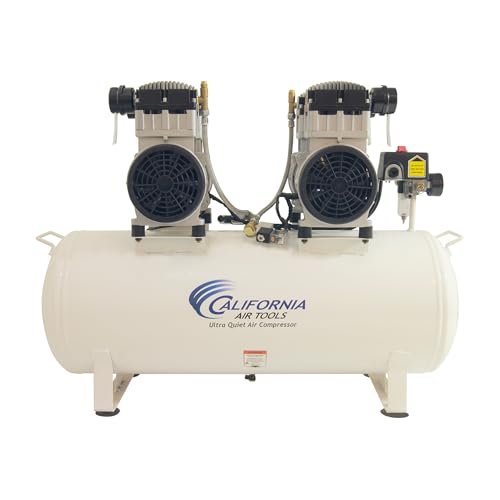
The 20040C is a 20-gallon 4 HP model focusing on ultra-quiet operation and oil-free design. It provides reliable airflow with a noise profile around 75 dB and a durable pump designed for long life. Best for: woodworkers or painters who need a quiet and reliable unit. Caution: Check the electrical circuit requirements for 220V operation in some setups to avoid overloads.
VEVOR 20 Gallon 4HP Air Compressor

The VEVOR 20 Gallon 4HP unit offers 10.6 CFM at 90 PSI, with a focus on a quieter operation (approximately 78 dB) and durable oil-free pumping. It is suitable for tire inflation, light auto repair, spray painting, woodworking, and general shop use. Best for: budget-conscious buyers who still want strong performance and a compact footprint. Caution: Noise levels, while reduced, may still be noticeable in very quiet environments.
Klutch 20-Gallon 2HP Portable Compressor

The Klutch 20-Gallon model uses a 2.0 HP motor and an oil-free pump, delivering quick recoveries and 4.2 SCFM at 90 PSI. It’s best for smaller workshops or light to medium-duty tasks where mobility and quick setup are priorities. Best for: hobbyists who need a compact, ready-to-go compressor. Caution: Lower horsepower means slower recovery for high-demand air tools compared to 4 HP options.
Buying Guide: Key Considerations For Choosing The Right 4 Hp Model
- Tank size and duty cycle: A larger tank (20–60 gallons) supports longer use between fills and sustained tool operation. If you run air tools continuously, a higher duty cycle is preferable.
- Noise level: Ultra-quiet models typically run around 75 dB or lower, making them suitable for indoor spaces and noise-sensitive environments. Consider room layout and neighbor impact for garages connected to living spaces.
- Portability and footprint: Heavier, larger tanks offer more air but require solid support and more space. Smaller units are easier to move but may need more frequent re-fills.
- Oil-free vs oil-lubricated: Oil-free pumps reduce maintenance and oil spills but may have shorter life with heavy use. Oil-lubricated pumps can be louder and require more maintenance but may endure longer under heavy loads.
- Electrical requirements: 4 HP units often require 230V supply for optimal performance. Verify voltage and circuit capacity in your shop to prevent tripping breakers.
- Air delivery (CFM at PSI): Match CFM at your typical tool pressure to your needs. Higher CFM supports simultaneous tool use and faster recovery between cycles.
- Quality and warranty considerations: For long-term reliability, choose units with known brands, robust construction, and accessible parts.
Frequently Asked Questions
- What is the advantage of a 4 HP air compressor?
– A 4 HP unit typically delivers higher CFM, enabling multiple tools to operate more reliably and with quicker recovery between cycles. - Is an oil-free pump better for beginners?
- Do I need a large tank for painting?
- How quiet are these compressors in typical shop environments?
– Ultra-quiet models can run around 75 dB or lower, which helps reduce noise in shared or indoor spaces. - What voltage is typical for 4 HP air compressors?
– Many 4 HP models operate on 230V, though some smaller or quieter variants may use 110V with lower CFM.
– Oil-free pumps require less maintenance and can be easier to manage for beginners, though some users prefer oil-lubed units for heavy, continuous use.