When you need to offset a stove pipe around obstacles or align a chimney with precision, a 45 degree elbow is essential. This guide compares top 45 degree elbows designed for wood stoves, pellet stoves, and venting systems. It highlights who each product is best for, with practical insights to help you choose. The featured items vary by diameter, material, and installation style to suit different stove types and clearances.
Buyer’s quick reference: the following table summarizes the five selected elbows, including diameter, material, and best-use notes.
| Product | Diameter | Material | Best For | Notes |
|---|---|---|---|---|
| DuraVent 6DVL-E45 | 6 in | Galvanized Steel/Stainless Steel | Wood burning stoves with double-wall venting | Improved draft, double-wall design |
| AllFuel HST 45 Degree Elbow | 6 in | Single-wall Steel | Offsets around obstructions like rafters | Thicker gauge steel for durability |
| PATIKIL 6″ OD 45 Degree Elbow (B0DBLY6157) | 6 in | Galvanized Iron | DIY venting and straightforward installations | Easy to install, durable |
| PATIKIL 8″ OD 45 Degree Elbow | 8 in | Galvanized Iron | Heavier-duty or larger-diameter vent runs | Durable, smooth ventilation |
| SoloWilder 2.36″ Stove Pipe Elbow | 2.36 in | Stainless Steel | Outdoor camping, RVs, and compact setups | Corrosion resistant, tight connections |
DuraVent 6DVL-E45 DVL Elbow

Best for: wood-burning stove setups that require a double-wall connector to maintain higher flue gas temperatures and a strong draft. The 6DVL-E45 uses a dual-wall configuration to vent smoke and exhaust safely outdoors from multiple fuels, including wood, oil, coal, and gas. Its compact dimensions (9.00 x 7.34 x 9.22 inches) and light weight (2.8 pounds) support flexible installation. Caution: the double-wall design may be bulkier than single-wall elbows, which could affect tight-fit scenarios in very compact installations.
AllFuel HST 45 Degree Elbow

Best for: single-wall stove pipe projects where offsetting around obstacles is needed. This elbow is designed to be installed high above the appliance to minimize draft issues. It features a 21-gauge steel construction, which is thicker than many standard elbows, and is coated with high-temperature black paint for durability and a clean finish. Limitation: single-wall elbows conduct more heat to surrounding materials, so clearance and protection should be accounted for during installation.
PATIKIL 6″ OD 45 Degree Elbow (B0DBLY6157)

Best for: DIY venting projects where a robust galvanized iron elbow is desired for longer-lasting performance in harsh conditions. This 6″ OD elbow has a 5.87 x 5.75 inch interface and a 10.2 inch height, designed to be easily connected to compatible pipes. Choose this if you need a sturdy, corrosion-resistant connection with straightforward install. Caution: ensure compatibility with your specific pipe diameter to avoid leaks.
PATIKIL 8″ OD 45 Degree Elbow

Best for: larger-diameter vent runs where a strong, smooth 45-degree turn is needed. The 8″ OD elbow provides a broad interface for heavy-duty installations and is built from galvanized iron with a 11.8 inch height for stable mounting. Limitation: larger diameters require more space and may be less suited to compact ceilings or limited attic space.
SoloWilder 2.36″ Elbow
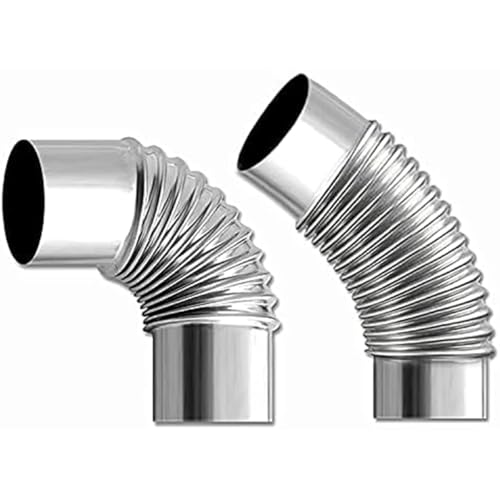
Best for: outdoor camping stoves, RVs, and compact household vent lines where a small-diameter elbow is sufficient. Stainless steel offers excellent corrosion and heat resistance, with tight connection tolerances to prevent air leaks. Choose this when modularity and portability are priorities. Caution: smaller diameter limits the maximum vented heat and may require additional components for longer runs.
ILLITAN 90 + 45 Degree Elbow

Best for: stainless options that resist rust and corrosion in challenging venting environments. The combination 90/45 degree elbow supports more complex routing with circular edges designed to avoid sharp edges. Use this if you require a safer edge profile and strong compatibility with 2.36 inch piping systems. Limitation: stainless steel elbows can be more expensive and heavier than galvanized options.
DuraVent 45-Degree Pellet Stove Vent Elbow

Best for: pellet stove venting with a stainless-steel insulated double-wall design. The 3″ diameter version is tailored for pellet appliances, providing an easy in-and-out fit. This elbow focuses on efficiency and ease of installation for pellet-based systems. Caution: verify diameter compatibility with your pellet stove vent kit and any required insulation for exterior runs.
Buying Guide: Key Considerations For 45 Degree Stove Pipe Elbows
Diameter compatibility is the most important factor. Measure your existing pipe and stove outlet to avoid leaks or poor drafts. Steel and galvanized iron offer durability, but thickness and wall design (single vs double wall) impact heat transfer and clearance requirements.
Material matters for long-term performance. Stainless steel resists corrosion well, but galvanized iron is typically more affordable and widely available. For outdoor or high-moisture environments, stainless options may provide a longer lifespan.
Elbow angles and radii affect airflow and installation space. A 45-degree elbow provides a gentler turn than a sharp angle, helping maintain draft and reduce backflow. Consider offsets, ceiling height, and roof penetrations when planning routing.
Installation is often straightforward but requires precise connections. Look for elbows with compatible interfaces and easy-to-use clamps or crimped joints. High-temperature coatings help preserve finish and reduce chipping over time.
Safety guidelines should guide placement. Maintain proper clearances from combustibles, use appropriate wall thimbles or heat shields, and ensure vent paths are sealed to prevent smoke or gas leakage into living spaces.
FAQ
- What is the main difference between single-wall and double-wall elbows?
Answer: Double-wall elbows retain more heat inside the vent, which can improve draft and efficiency, but are bulkier. Single-wall elbows are lighter and cheaper but can transfer more heat to surrounding materials. - Can I mix brands for elbows and piping?
Answer: Yes, as long as the diameters and interfaces match precisely. Check compatibility with any adapters or seals to prevent leaks. - Do larger diameter elbows increase draft?
Answer: Not directly. Diameter affects flow capacity, but draft primarily depends on overall vent design, height, and exhaust gas temperature. - Is stainless steel necessary for outdoor venting?
Answer: For outdoor runs exposed to weather and moisture, stainless steel offers greater corrosion resistance and durability than galvanized iron. - What installation clearance should I plan for a 6″ elbow?
Answer: Clearance depends on local codes and the vent design. Generally ensure adequate space to maintain safe temperatures around combustibles and allow for proper sealing. - Are 45-degree elbows better than 90-degree elbows for drafts?
Answer: Yes, 45-degree elbows reduce turbulence and backpressure, promoting smoother airflow and better draft compared to sharp 90-degree turns.