If you’re boosting airflow in small-to-medium duct runs, a 6″ duct booster fan with a pressure switch can automatically regulate power based on duct pressure, improving efficiency and reducing energy waste. This guide highlights five strong choices for grow tents, bathrooms, basements, and dry-out tasks. The top picks balance airflow, noise, and ease of installation to match different needs—from DIY projects to professional setups. Each product is evaluated for who benefits most, potential drawbacks, and practical usage tips.
Product Comparison At A Glance
| Product | Best For | Key Benefit | Limitations |
|---|---|---|---|
| VIVOSUN 6″ Inline Exhaust Fan | Grow tents, basements | High airflow with low noise | EC motor specifics may vary by model |
| Tjernlund PS1503P Switch | Any system with duct booster | Automatic pressure-activated control | Requires compatible fan |
| VENTS-US VK 150 PS | Dryer or general duct boosts | Automatic operation with built-in switch | 72-volt style motor specifics |
| Hon&Guan 6 Inch Inline Booster | Quiet, energy-efficient boosts | Low power usage with strong 345 CFM | DC motor may require controller |
| AC Infinity CLOUDLINE PRO S6 | Grow tents, hydroponics | EC motor, advanced controller options | Higher upfront cost |
VIVOSUN 6″ Inline Exhaust Fan & Speed Controller

Best for: Grow tents, basements, and bathrooms needing strong airflow with quiet operation. The 345 CFM capacity moves air quickly, aiding odor control and ventilation. An upgraded EC motor promises efficient performance with reduced energy use and maintenance. Noise is kept low at about 32dB(A), suitable for living spaces near work or sleep areas.
Why chosen: High airflow for modest duct runs, energy efficiency from the EC motor, and quiet operation. Ideal when you need reliable, continuous exhaust in tight spaces. The included speed controller helps tune performance.
Limitations: Exact performance can depend on duct length and bends. Users should verify compatibility with existing controllers and wiring in their setup.
Tjernlund PS1503P Pressure Activation Switch
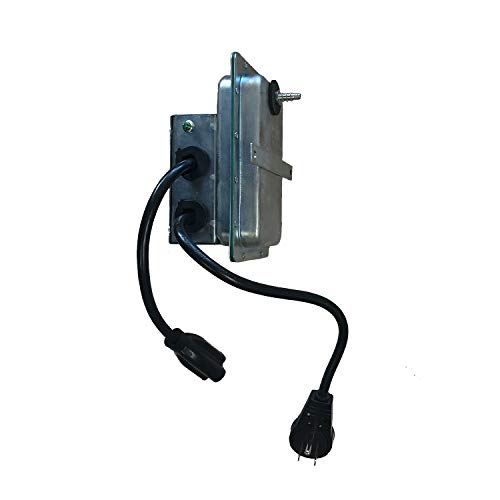
Best for: Duct booster installations that rely on automatic startup when the furnace or blower engages. This pressure-activated switch works with any brand duct fan and can be wired in a simple black-to-black or white-to-white configuration, or used as a plug-in version.
Why chosen: Provides automatic on/off control based on duct pressure, helping maintain consistent airflow without manual intervention. It’s versatile across different fan brands, which is useful in retrofit projects.
Limitations: Requires correct wiring and knowledge of your HVAC wiring; not a standalone fan, needs a compatible booster fan to function.
VENTS-US VK 150 PS – 6 Inch Dryer Booster Fan

Best for: Dryer exhausts and short duct runs where extra airflow reduces moisture buildup and lint. The built-in pressure switch starts the fan when airflow is detected and then runs a fixed 10-minute cycle, which helps maintain dryer efficiency.
Why chosen: Combines a robust 321 CFM output with a simple automatic cycle, making it straightforward for laundry rooms and utility spaces. ETL listing adds basic safety assurance in older homes.
Limitations: The auto-cycle feature may require integration with existing dryer control logic and may not suit long uninterrupted ventilation runs.
Hon&Guan 6 Inch Inline Booster With Speed Controller

Best for: Quiet, energy-efficient ventilation in grow rooms, bathrooms, workshops, and attics. The booster is designed to quietly move large volumes of air with a low power draw (approx. 19.2W) for a 345 CFM output.
Why chosen: Clear energy efficiency and low noise make it a strong choice where noise is a concern. The 6″ diameter fits common ductwork and supports rapid air movement in mid-sized spaces.
Limitations: The data indicates a DC motor with a speed controller; ensure compatibility with your existing thermostat or control setup if you plan automation.
AC Infinity CLOUDLINE PRO S6

Best for: Hydroponics and climate-controlled grow rooms needing precise fan control and remote management. The S6 uses an EC motor and a wired 10-speed controller, with compatibility for UIS smart systems for automation.
Why chosen: EC motor technology delivers quiet, energy-efficient performance with scalable control. The PRO S6 is well-suited for users seeking advanced scheduling and climate management in grow setups or rooms requiring frequent air balancing.
Limitations: Higher upfront cost and more complex setup may be overkill for small, simple ventilation tasks.
AC Infinity CLOUDLINE A6

Best for: Quiet, compact 6” inline duct fans for general ventilation in grow tents, hydroponics, or small rooms. The A6 includes a speed controller and EC motor similar to the PRO line, but in a value-oriented package.
Why chosen: A reliable balance of performance and price, with good noise characteristics and compatible controller options for scalable setups.
Limitations: May not include as many smart features as the PRO models; suitability depends on whether you need automation beyond basic speed control.
Buying Guide: How To Choose The Right 6″ Duct Booster With Pressure Switch
What is a pressure switch, and why do you want one?
A pressure switch senses duct airflow pressure and automatically turns the booster fan on or off to maintain steady airflow. It is especially helpful in systems with variable duct length or where you want the fan to run only when needed, saving energy and reducing noise.
Key considerations for selection
- Airflow needs: Measure the space and duct length. Higher CFM is better for longer runs or larger rooms.
- Noise tolerance: Look for low dB(A) ratings if the device will operate near living spaces or bedrooms.
- Power and efficiency: DC/EC motors are typically more energy-efficient and quieter than AC motors.
- Controller options: Decide if you need basic speed control or advanced automation via WiFi or smart controllers.
- Compatibility: Confirm that the pressure switch can wire into your chosen fan or is already integrated into the model.
- Safety and certification: ETL or similar listings can provide basic safety assurances for residential use.
Typical use cases and setup tips
- Grow tents and hydroponics: Prefer quiet, energy-efficient models with accurate speed control.
- Bathrooms and kitchens: Choose low-noise units with easy maintenance and robust exhaust capacity.
- Laundry rooms: A switchable system with a reliable auto-start can improve dryer efficiency and reduce moisture buildup.
- Retrofits: If replacing an existing booster, verify duct size compatibility and wiring scheme before purchase.
Installation considerations
- Location: Mount in a dry, accessible area for maintenance; avoid placing near heat sources or in direct contact with water.
- Duct routing: Minimize bends and ensure proper sealing to maximize efficiency and reduce leaks.
- Wiring: If in doubt, consult an HVAC professional for safe, code-compliant wiring with the pressure switch.
FAQ
- Do these fans require a pressure switch to operate?
- Can I use any 6″ fan with a pressure switch?
- Are EC motors better than AC for booster fans?
- Is it safe to install a booster fan in a dryer vent?
- What maintenance is required?
- Can these fans be controlled remotely?
Not always, but a pressure switch automates activation and can improve efficiency in variable duct systems.
Most 6″ fans can work with a pressure switch if the switch is compatible with the fan’s power wiring and voltage.
Yes, EC motors generally offer higher efficiency, lower heat output, and quieter operation.
Only if the unit is rated for dryer vent use and you follow safety guidelines; some models are designed specifically for dryers.
Regularly inspect for dust buildup, clean grilles, and check wiring connections if a switch is installed.
Some models offer optional smart controllers or WiFi integration for remote operation and scheduling.