If you need reliable odor control for a grow tent, hydroponics setup, or a grow room, a 6″ carbon filter is a proven choice. These filters remove smells and chemicals from airflow, helping maintain discreet operations and healthier indoor air. This guide highlights five top picks and explains who each product is best for, based on filter media, airflow, and durability. Ideal buyers include hobbyists, professional growers, and urban gardeners seeking strong odor control with easy installation and long service life.
| Product | Best For | Key Benefit |
|---|---|---|
| AC Infinity Air Carbon Filter 6″ | Larger grow rooms, high humidity environments | Premium Australian virgin charcoal for long life |
| VIVOSUN 6 Inch Air Carbon Filter | Medium to large tents, adjustable airflow needs | 38mm thick bed and high porosity for strong adsorption |
| MELONFARM 6″ Air Carbon Filter | Budget-conscious setups needing durable flange | Premium Australian virgin charcoal with solid flange/base |
| Spider Farmer 6 Inch Air Carbon Filter | Quiet operation and extended service life | Removable prefilter and durable construction |
| HYDROWE 6 Inch Air Carbon Filter | Efficient odor removal with Australian charcoal | Strong adsorption for targeted odor control |
AC Infinity Air Carbon Filter 6″

Best for high humidity and durable installations in hydroponics rooms. This filter uses premium Australian charcoal for superior adsorption and longer life. A powder-coated gunmetal finish adds rust resistance in humid environments. Suitable for inline duct fans in grow tents and hydroponics setups. Limitation: heavier construction may require sturdy mounting and adequate fan pairing to avoid backpressure.
VIVOSUN 6 Inch Air Carbon Filter

Best for medium to large tents that need strong odor elimination and good airflow. It uses RC 412 Australian virgin charcoal with a 38mm thick bed and high microporosity for effective adsorption. The dual-sided galvanized steel mesh and long canister design help maximize airflow up to 413 CFM. Pre-filter helps keep the filter clean. Caution: airflow performance may vary with ducting length and blower power.
MELONFARM 6″ Air Carbon Filter
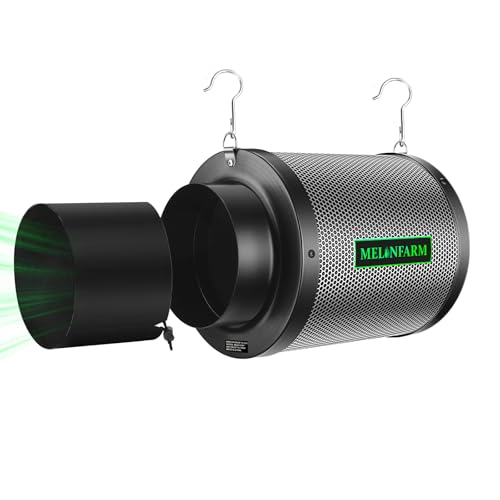
Best for durability and odor removal with Australian virgin charcoal. This filter features a 38mm thick charcoal bed with high microporosity for strong adsorption and a robust flange/bottom design to prevent carbon leakage. It is versatile for grow tents, inline fans, and hydroponics rooms. Limitation: some users may prefer a higher airflow option if running at maximum fan speed for extended periods.
Spider Farmer 6 Inch Air Carbon Filter
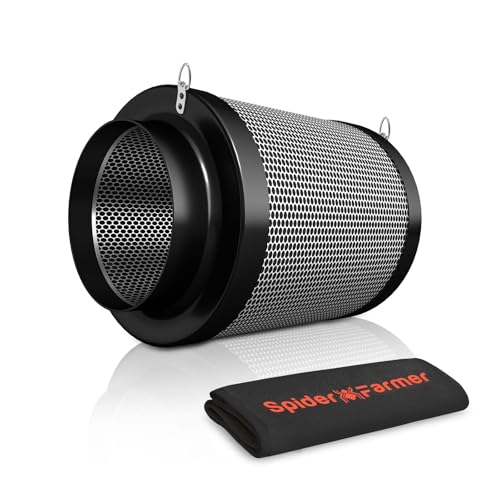
Best for removable prefilter and long service life. This filter uses premium RC 412 Australian virgin charcoal with excellent porosity for odor control. A washable pre-filter extends the life of the carbon bed, while heavier-duty aluminum flanges and galvanized steel improve durability. Caution: removal of the prefilter requires periodic cleaning to maintain performance.
HYDROWE Air Carbon Filter 6 Inch

Best for efficient venting and odor removal with Australian virgin charcoal. The filter emphasizes strong adsorption to manage odors associated with indoor growing. It is designed for inline duct systems and can work well in compact spaces. Limitation: performance may depend on proper sealing around the flange and correct fan-to-filter pairing.
Buying Guide: 6 Inch Carbon Filters for Grow Rooms
What should I consider before buying?
Key factors include carbon type and bed depth, airflow rating (CFM), and physical fit with your inline fan. Premium RC or Australian virgin charcoal typically offers higher adsorption and longer life. A thicker charcoal bed usually means better odor control, but confirm the unit’s compatibility with your duct size and fan speed.
How do I choose based on space and setup?
For tight spaces, choose a filter with a compact footprint and a reversible flange for flexible installation. If you have high humidity or a large tent, look for rust-resistant finishes and robust construction. Pre-filters help maintain efficiency by trapping particulates before they reach the carbon bed.
What about maintenance and longevity?
Filters with washable or replaceable pre-filters tend to last longer. Periodic inspection for moisture buildup and carbon bed condition helps sustain adsorption. Heavier construction (flanges, bases) reduces carbon leakage and increases service life in humid environments.
How to pair with fans and ducting?
Match the filter to a fan that provides adequate airflow without creating excessive backpressure. Use ducting with minimal bends and secure seals at all joints. A higher CFM rating on the filter generally complements stronger fans, but overlap with fan capabilities is essential to avoid noise and inefficiency.
Frequently Asked Questions
- What is a 6 inch carbon filter best used for?
- Do activated carbon filters require maintenance?
- Can I install a 6″ filter with any inline fan?
- Which filter lasts longest?
- Is a pre-filter always necessary?
- What is the main difference between brands?
It is best for odor control in mid to large grow tents, hydroponics rooms, and grow rooms where airflow needs are substantial.
Yes. Pre-filters should be cleaned or replaced as needed, and the carbon bed should be inspected for moisture and clogging to maintain adsorption efficiency.
Compatibility depends on the fan’s CFM and ducting. Ensure the fan can push or pull air through the filter without creating excessive backpressure.
Filters using premium Australian virgin charcoal with a robust bed and durable housing tend to last longer, especially when paired with proper pre-filters and controlled humidity.
Not mandatory, but a pre-filter protects the carbon bed from particulates, extending filter life and maintaining odor control efficiency.
Differences include bed depth, charcoal quality, flange design, and durability features. These affect adsorption capacity, airflow, and longevity in humid grow environments.