Answer: If you need to transition from a 6-inch duct to a 4-inch duct, a 6″ to 4″ duct reducer is the right component to maintain airflow, fit, and system integrity. This guide highlights top options suitable for DIY projects, bathroom/kitchen ventilation, grow tents, and HVAC retrofits. Each product is chosen for reliable connection, material durability, and ease of installation. Read on to compare best-fit use-cases and limitations before purchasing.
| Product | Best For | Why It Works | Key Limitation |
|---|---|---|---|
| CABAX Duct Reducer 6 to 4 inch Air Duct Adapter | General inline ventilation and retrofit projects | Durable PP-plastic resists moisture; seamless 6″ to 4″ transition | Plastic may be less rigid for high-pressure systems |
| Kikerike Duct Reducer 6 to 4 | Bathroom/kitchen venting and inline fans | Galvanized steel construction; maintains airflow efficiency | Steel adapter can be heavier to handle during install |
| Hon&Guan 6 to 4 Duct Reducer | HVAC lines and ducting in confined spaces | Metal construction; compatible with various duct types | Metal ends may require clamps or tape for a seal |
| AC Infinity Duct Adapter 6” to 4” | Grow tents and controlled airflow setups | Designed for ducting to equipment with raised grip lips | Specific design features may be optimized for AC Infinity systems |
| POWERTEC 70362 Reducer 6″ to 4″ | Dust collection and workshop duct runs | Includes flexible cuff and clamps for secure fit | Not intended for some plastic plumbing fittings |
CABAX Duct Reducer 6 to 4 Inch

Best for: Simple inline venting projects where moisture resistance is important. Suitable for connecting a 6″ duct to a 4″ duct in residential or light commercial spaces. The plastic design helps resist corrosion in damp environments.
Why selected: Its seamless transition from 6″ to 4″ and moisture-resistant PP-plastic material make it a practical, lightweight option for straightforward duct runs.
Caution: Plastic reducers may sag under heavy airflow or high temperatures; ensure proper mounting and avoid excessive bending near the connection.
Kikerike Duct Reducer 6 to 4

Best for: Bathrooms, kitchens, and inline ventilation where a metal connection supports robust airflow and durability. Its galvanized steel construction helps withstand humid environments.
Why selected: The metal adapter maintains airflow efficiency and provides a sturdy transition between sizes, suitable for more demanding duct runs.
Caution: Steel adapters can be heavier and may require proper clamps or sealant to prevent leaks at joints.
Hon&Guan 6 to 4 Duct Reducer
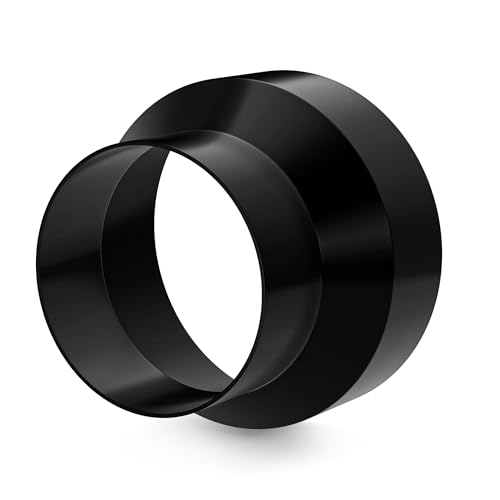
Best for: Flexible or rigid ducting in compact HVAC layouts where space efficiency matters. Works with 4″ and 6″ duct segments to streamline installations.
Why selected: Its metal construction supports multiple ducting types and helps preserve airflow in tight spaces.
Caution: On one side there is a 150mm spigot, and on the other side a 98mm spigot; confirm your duct dimensions before ordering to ensure a proper fit.
AC Infinity Duct Adapter 6” to 4”

Best for: Grow tents, bathrooms, and kitchen ventilation where smooth airflow and secure connections matter. Designed to ease adaptation between different duct sizes.
Why selected: The raised lips on the smaller opening aid grip and seal, reducing the risk of leaks during operation.
Caution: May be tailored to specific ducting systems; verify compatibility with your equipment and duct type before use.
POWERTEC 70362 Duct Reducer 6″ to 4″

Best for: Dust collection and workshop duct runs where a secure, leak-resistant connection matters. Includes a flexible cuff and clamps for a robust setup.
Why selected: The included cuff and clamps simplify installation, providing a more reliable seal for dust collection systems.
Caution: Not intended for PVC or other plastic fittings; match material with the rest of the system for best results.
Buying Guide: Key Considerations For 6″ To 4″ Duct Reducers
What duct material should I choose? Consider whether your system uses metal (galvanized steel) or plastic. Metal provides durability and is often better for high-heat or high-flow scenarios. Plastic can be easier to install and resist corrosion in moist spaces but may not handle heavy pressure as well.
What about the connection type? Look for raised lips, clamps, or cuffs that improve grip and sealing. A secure connection reduces air leaks and maintains system pressure, especially over long runs.
Will this fit my ducting size? Verify inner and outer diameters on both sides of the reducer. Some products list nominal sizes that may differ slightly from actual OD/ID; always confirm with your ducting dimensions before purchasing.
Is this reducer compatible with flexible or rigid ducting? Some models are suited for both, while others perform better with one type. Check the product description for compatibility with flexible foil duct and rigid metal ducting.
What is the intended use? For dust collection, workshop systems, or HVAC in living spaces, choose a reducer designed for the specific airflow and exposure conditions to avoid performance issues.
Frequently Asked Questions
- Q: Can a 6″ to 4″ reducer be used for high-pressure systems?
A: Metal reducers generally perform better under higher pressure. If your setup involves strong airflow, prefer a galvanized steel option and secure joints with clamps or foil tape. - Q: Do plastic reducers work in humid bathrooms?
A: Yes, when moisture resistance is a priority, plastic reducers can be suitable. Ensure proper sealing to minimize leaks. - Q: How do I ensure a proper seal on the reducer?
A: Use clamps, foil tape, or duct sealant at both ends and follow manufacturer guidance for installation to prevent leaks. - Q: Should I choose a universal reducer or a model specific to my equipment?
A: If your equipment requires a precise size match and grip design, choose a reducer that highlights compatibility with your duct sizes and the equipment’s inlet/outlet. - Q: Is it better to buy a complete ducting kit or individual reducers?
A: For projects with multiple transitions, a kit can save time and ensure consistent materials. For a single transition, an individual reducer precisely matched to your sizes is sufficient. - Q: Can I reuse existing clamps with a new reducer?
A: Reusing clamps is possible if they still hold securely; otherwise, replace with new clamps to ensure a leak-free connection.