When choosing a 60,000 BTU propane heater, you want reliability, safety features, and flexible heat output for large spaces like garages, workshops, and construction sites. The following products represent top options that balance power, durability, and user-friendly features. This guide highlights five models, summarizes their key specs, and provides practical buying considerations for American users.
| Product | Brand | Approx. BTU | Best For |
|---|---|---|---|
| GASLAND FlameJet | GASLAND | 30,000–60,000 | All-around garage heating |
| Flame King 60,000 BTU | Flame King | 60,000 | Job sites and outdoor areas |
| VEVOR Propane Heater | VEVOR | 30,000–60,000 | Large spaces, versatile angles |
| Mr. Heater 60,000 BTU | Mr. Heater | 30,000–60,000 | Workshop and garage projects |
| Habitio 125,000 BTU | Habitio | 75,000–125,000 | Large-scale sites and rapid warming |
Note: Each model’s listed features emphasize safety, efficiency, and ease of use. Read on to see how these heaters stack up in real-world scenarios and what to consider when selecting the right unit for your space.
GASLAND FlameJet 60,000 BTU Propane Heater
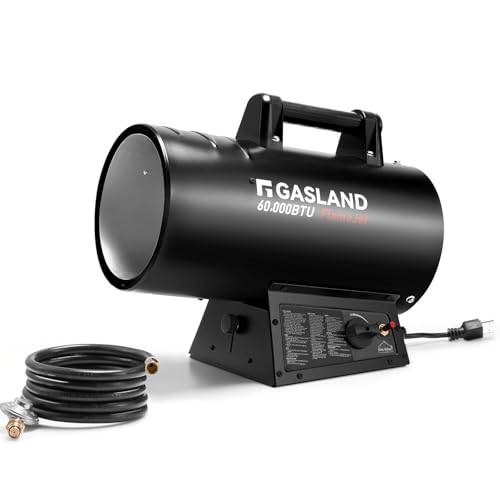
The GASLAND FlameJet delivers adjustable heat from 30,000 to 60,000 BTUs, covering spaces up to 1,500 square feet. It includes continuous electronic ignition for quick starts, an overheat detection system, and a thermo-electric safety valve that cuts gas flow if the flame goes out. A 10-foot propane hose and regulator enable straightforward hookup to a standard 20-pound tank, offering substantial run time for all-day warmth. CSA certification adds a layer of safety and reliability for workshop and garage use. The heater’s angle adjustability helps direct heat where you need it most.
Flame King 60,000 BTU Portable Propane Heater

The Flame King unit provides up to 60,000 BTUs of warmth and is designed for job sites, garages, and outdoor use. Safety features include a built-in safety fuel shutoff, a fire detection system, and a tilt shutoff for added protection. It offers auto Piezo ignition and a gas control button for straightforward heat management, coupled with a heating radius suitable for larger work areas. Its stainless look and sturdy build are paired with practical safety measures that suit rugged environments.
VEVOR 60,000 BTU Propane Heater

The VEVOR heater offers a wide heating range with up to 60,000 BTUs and adjustable heat angles from 30° to 45°, making it adaptable for various layouts. It heats spaces up to about 1,400 square feet and includes dual safety systems—overheat and flameout protection—to prevent gas leaks. The carbon steel body is durable, weatherproof, and rust-resistant, suitable for outdoor or high-demand environments. The unit supports high-altitude use and is compatible with larger propane tanks, broadening its applicability for remote or elevated locations.
Mr. Heater 60,000 BTU Forced Air Heater
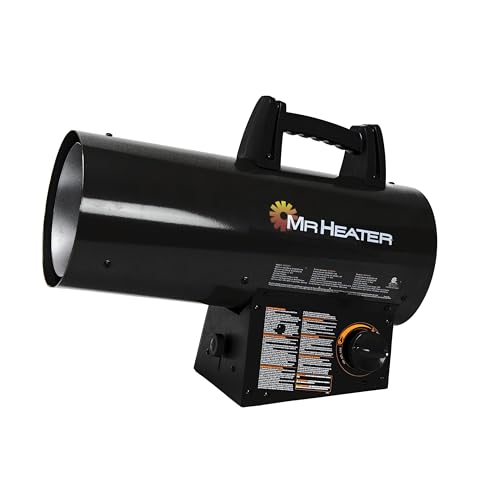
The Mr. Heater model provides a variable heat range from 30,000 to 60,000 BTU, complemented by a 10-foot hose and regulator. The design emphasizes portability and ease of transport in rugged job-site conditions. A large, glove-friendly handle adds practicality for frequent relocation, while the variable BTU output allows precise temperature control across varying workloads and plant layouts. This unit is commonly chosen for workshops that require dependable warmth without heavy equipment constraints.
Habitio 125,000 BTU Propane Heater
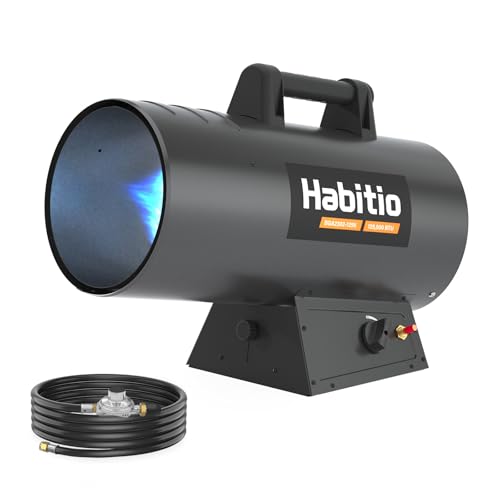
Habitio’s unit stands out with a broad heating capacity ranging from 75,000 to 125,000 BTU, suitable for very large spaces up to 3,125 square feet. It includes a 10-foot hose with regulator and features pulse ignition, along with overheat protection and automatic shutdown in power outages. The design emphasizes rapid heat delivery for demanding work environments, making it a strong option for large garages, barns, or temporary heated spaces on job sites. However, its higher BTU range means it consumes more propane and may require larger fuel supplies.
Buying Guide: Key Considerations for Selecting a 60,000 BTU Propane Heater
- Heat coverage and space type: For garages and workshops, confirm the heater’s rated square footage and how heat is directed. Units with adjustable heat angles or directional vents can optimize warmth in irregular layouts.
- Safety and certifications: Look for CSA or equivalent safety certifications, automatic shutoff features, flame-out protection, and overheat sensors. A built-in thermocouple or tilt shutoff adds safeguards in busy work environments.
- Ignition and startup: Continuous electronic ignition or pulse ignition can improve reliability in cold or windy conditions. Auto-ignite features reduce manual effort during setup.
- Fuel setup and runtime: Most 60,000 BTU heaters use standard 20-pound propane tanks. Check hose length (commonly 10 feet) and run time estimates to ensure you won’t need frequent tank changes during a project.
- Durability and portabilty: Metal construction, rust resistance, and protective housings improve longevity at construction sites. Consider weight and handle design if you’ll move the heater between locations.
- Altitude and outdoor use: If you operate at higher elevations, verify high-altitude compatibility and regulator adjustments to maintain consistent performance.
- Noise and emissions: Some models generate noticeable noise. For enclosed spaces, choose units designed to minimize disruption and ensure proper ventilation to maintain air quality.
- Warranty and service network: A solid warranty and readily available replacement parts can reduce downtime on job sites and in workshops.
When selecting a 60,000 BTU propane heater, balance heat output with space size, safety features, and ease of use. For frequent outdoor use or larger spaces, models with higher BTU ranges or adaptable heat angles offer flexibility. For smaller or better-ventilated spaces, a mid-range BTU setting with robust safety features can provide efficient warmth without excessive fuel consumption.