Answer: If you’re replacing a noisy bathroom fan or upgrading to a more energy-efficient model, a 70 CFM exhaust fan is typically best for small to mid-sized bathrooms (up to about 75–85 sq ft). These units balance airflow with low noise for everyday comfort. The top picks below are suited for room-side installation, quiet operation, and easy ducting, with options for 3-inch or 4-inch ducts depending on the model. This guide highlights five reliable 70 CFM options and who they’re best for.
Summary table of selected products:
| Product | Best For | Key Advantage |
|---|---|---|
| Tech Drive Very Quiet Bathroom Fan, 70 CFM | Small bathrooms up to 75 sq ft; room-side installation | Low 2.0 Sone noise; easy ceiling-side install |
| Harrier Hardware 70 CFM | Moisture-prone baths; attic or ceiling spaces | Very quiet operation; corrosion-resistant housing |
| Air King BFQ75 70 CFM | General bathrooms up to 85 sq ft | ENERGY STAR qualified; low 1.5 sone option |
| Akicon 70 CFM Quiet Fan | Quiet, moisture-prone baths up to 70 sq ft | UL listing and solid durability |
| Air King AS70 70 CFM | Budget-friendly, standard baths | Low-profile design with standard sizing |
Tech Drive Very Quiet Bathroom Fan, 70 CFM

Best for: Small bathrooms up to 75 square feet that need quick moisture removal and easy ceiling-side installation. This model offers 70 CFM with a quiet 2.0 Sone rating and no attic access required. It fits standard openings (7.6 in x 7.3 in) and includes a 3-inch duct.
Why selected: The combination of room-side installation, low noise, and straightforward mounting makes it a practical pick for renovators seeking minimal disruption and quick setup.
Limitations: Housing height is 4 inches, so verify ceiling depth when replacing older fans. The unit ships with a 3-inch duct included; planning for duct transitions may be needed in some ceilings.
Harrier Hardware Bathroom Exhaust Fan 70 CFM
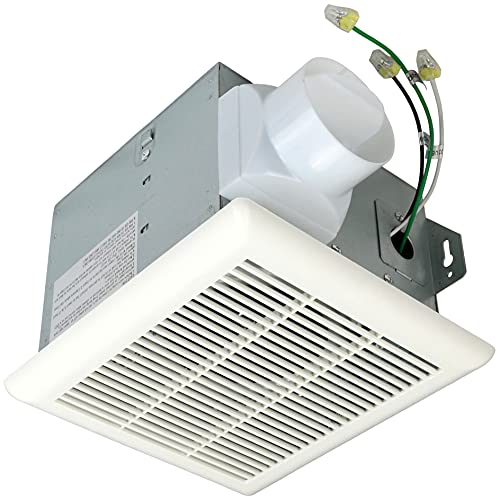
Best for: Bathrooms and small rooms where moisture control is essential and installation needs to be robust against moisture exposure. This unit delivers 70 CFM at a quiet 2.0 Sone level, with corrosion-resistant galvanized steel housing.
Why selected: Its corrosion resistance and low noise make it a strong candidate for bathrooms subject to high humidity or occasional attic mounting concerns.
Limitations: If your ceiling depth is shallow, confirm that the housing height fits your space before purchase. Duct compatibility should align with a 3-inch duct outlet.
Air King BFQ75 ENERGY STAR 70 CFM
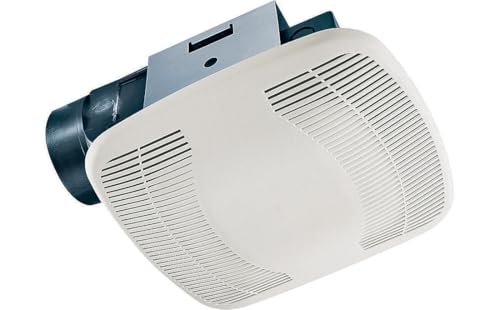
Best for: Bathrooms up to about 85 square feet where energy efficiency matters. This ENERGY STAR-qualified model operates at about 1.5 Sones for quiet operation and provides reliable airflow for mid-sized spaces.
Why selected: The energy efficiency designation helps reduce long-term operating costs while maintaining solid performance for typical homes.
Limitations: Some installations may require additional duct coupling or back-draft dampers for optimal quiet operation depending on the duct layout.
Akicon Bathroom Exhaust Fan, 70 CFM

Best for: Bathrooms up to 70 square feet where a quiet, durable fan is desired. The unit delivers 70 CFM with a low noise profile of about 1.5 Sones and features a galvanized steel housing for durability.
Why selected: HVI certification and UL listing support safety and performance claims, while the corrosion-resistant housing improves longevity in moisture-rich environments.
Limitations: Suitable for standard ceiling openings; ensure your ducting matches the 3-inch or compatible sizing as required by the model.
Upgraded 696N-R02 B Unit Fan Kit 70 CFM

Best for: Replacing older bath fans with the 696N-R02 B unit or compatible housings, offering a straightforward upgrade path to 70 CFM and improved airflow.
Why selected: The kit emphasizes longer-term durability with copper components and a compact form that fits many existing housings, improving reliability without major remodels.
Limitations: Check compatibility with your current housing dimensions and note that some older housings (e.g., 8″ x 8-1/4″) may not fit this kit.
Buying Guide
What to consider when choosing a 70 CFM exhaust fan:
- Room size and air exchanges: Match CFM to bathroom square footage for effective moisture removal without over-ventilating.
- Noise level (sones): Lower sones mean quieter operation. For most households, 1.5–2.0 Sones is unobtrusive.
- Installation type: Room-side or ceiling-side installation impacts duct routing and ease of replacement. Check housing depth and opening size.
- duct size and compatibility: Some models offer 3-inch or 4-inch duct options. Ensure your existing ductwork matches or plan for adapters.
- Energy efficiency: ENERGY STAR qualified options save energy and reduce running costs over time.
- Durability: Look for galvanized steel or corrosion-resistant housings for bathrooms and moisture-prone spaces.
- Certifications: HVI or UL listings indicate tested performance and safety compliance.
How to pick between similar 70 CFM fans
- For ultra-quiet operation: prioritize models with 1.5–2.0 Sone ratings.
- For tight ceilings: prefer room-side installation designs with minimal housing depth.
- For energy-conscious homes: choose ENERGY STAR certified units.
- For spaces near baths or showers: verify proper moisture resistance and safety certifications.
Installation considerations
- Measure your ceiling opening and housing depth before buying.
- Confirm duct diameter and transitions needed for 3-inch vs 4-inch ducts.
- Ensure electrical wiring meets local codes; some models require a dedicated circuit.
FAQ
- Q: Is 70 CFM enough for my bathroom? A: It depends on bathroom size. For up to about 75–85 square feet, 70 CFM is typically adequate if used regularly and vents moisture efficiently.
- Q: What does Sones measure? A: Sones measure perceived loudness. Lower numbers mean quieter operation. Most homes prefer 1.5–2.0 Sones for bathrooms.
- Q: Do I need an ENERGY STAR model? A: ENERGY STAR models save energy and may provide long-term cost savings; choose based on your priorities and budget.
- Q: Can I install these without attic access? A: Several models are designed for room-side or ceiling-side installation and do not require attic access.
- Q: How do I know which duct size to use? A: Check the product’s listed duct size (3-inch or 4-inch). Use the size that matches your existing ductwork or plan for adapters.
- Q: Are these units suitable for showers? A: Some models have listings or certifications suitable for installation over bathtubs or showers; verify the model’s safety certifications before installation.