If you’re looking for a reliable condensate removal solution, an automatic A/C drain pump is essential. This guide compares five top options to help builders, HVAC technicians, and DIY homeowners choose the right pump for condensate from boilers, furnaces, air conditioners, and dehumidifiers. The selections are noted for different needs, including compact footprint, safety features, and power efficiency.
Quick Reference: Top Five Condensate Pumps
- Little Giant VCMA-15ULST (with overflow detection, 20 ft tubing)
- Little Giant VCMA-20ULS (with overflow detection, 6 ft cord)
- Little Giant VCMA-15UL (no safety switch)
- Aquastrong 1/38 HP 85 GPH (115V/230V) with safety switch
- Aquastrong 115V 70 GPH with automatic safety switch
Note: This article uses industry-standard terms like GPH (gallons per hour), lift height, and safety switches to help you compare performance and safety features across different models.
Little Giant VCMA-15ULST 115V Condensate Pump

Best for compact spaces requiring automatic condensate removal with overflow protection. This model features a vertical-type switch to minimize footprint and a 1/50 HP motor designed to handle condensate from HVAC, refrigeration, and dehumidification equipment. The unit is designed for continuous operation, with a water temperature tolerance up to 140°F (60°C). It is thermally protected and CSA certified for US and Canadian standards.
Who it’s best for: Small commercial spaces or residential setups where a low-profile pump with an overflow switch is preferred.
Why selected: Combines a slim footprint with reliable safety features and solid construction for long-term use. The 20-foot tubing provides flexible drainage options.
Limitations: No explicit safety switch described on the model name, but internal thermal protection and standard overflow switch are included in the design family.
Little Giant VCMA-20ULS 115V Condensate Pump

This higher-capacity model is best for mid-size units with greater condensate output. It offers an 80 GPH flow rate, a 1/30 HP motor with a 6-foot cord, and a vertical switch design to reduce footprint. The pump is thermally protected and built with an ABS tank, stainless steel motor shaft, and a weatherresistant build suitable for continuous operation in HVAC and dehumidification setups.
Who it’s best for: Homes or small commercial environments with larger condensate loads and limited space for equipment behind panels.
Why selected: Higher GPH rating and a longer cord provide flexibility for installations where a slightly larger pump is needed but space remains constrained.
Limitations: Slightly larger than ultra-compact alternatives; ensure mounting space and tubing routing accommodate the unit’s dimensions.
Little Giant VCMA-15UL 115V Condensate Pump (No Safety Switch)

This model offers a compact 1/50 HP motor and 65 GPH flow rate for environments where moderate condensate is expected. It uses a vertical-type switch to minimize space and is thermally protected with a robust ABS tank and stainless steel motor shaft to ensure durability under continuous operation. Water compatibility up to 140°F remains a key feature.
Who it’s best for: Small-to-medium residential or office HVAC installations where space is a priority and a safety switch is not required by code.
Why selected: A balance of compact size, reliability, and straightforward operation makes it a reliable choice for standard condensate removal tasks.
Limitations: Lacks an integrated overflow safety switch; use where overflow protection is not mandated by the system configuration.
Aquastrong 1/38 HP 85 GPH HVAC Condensate Pump
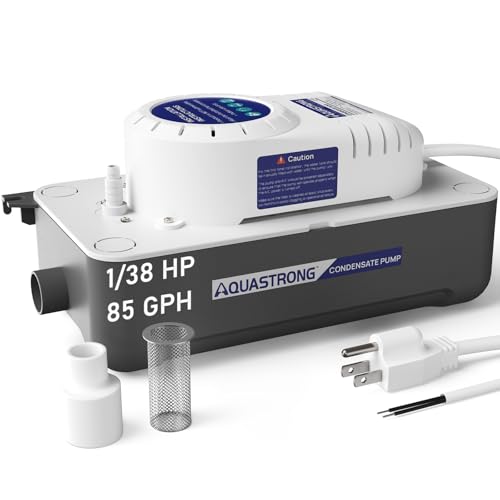
This model moves up to 85 GPH with a vertical lift capacity up to 20 feet, making it suitable for higher drain elevations. It features a thermally protected motor and a reliable float switch that enables automatic operation. The unit is designed with a compact vertical centrifugal pump and a removable half-gallon reservoir for easy maintenance. Five 1-inch inlet ports support parallel connections for multiple devices.
Who it’s best for: Installations requiring higher lift height or parallel pumping to multiple condensate lines.
Why selected: Strong lift capacity and flexible inlet options offer versatility in complex drainage systems.
Limitations: Some users may prefer a built-in safety switch; this model emphasizes flexible connections and safety via the float switch rather than a direct integrated switch in all configurations.
Little Giant VCMA-20ULST 115V Condensate Pump

This variant is similar to the VCMA-20ULS but adds a longer tubing connection with 20-foot tubing, enabling flexible routing in larger HVAC enclosures or where condensate lines must reach distant drains. The pump includes a thermally protected 1/30 HP motor and a durable ABS tank with a stainless steel motor shaft. It is CSA certified for safety and reliability in both residential and commercial installations.
Who it’s best for: Systems where long tubing runs are necessary to reach a distant condensate drain or to route condensate away from equipment in tight spaces.
Why selected: The extended tubing option provides practical installation flexibility in complex layouts.
Limitations: Longer tubing requires careful routing to avoid kinks or interference with other components in the cabinet area.
Buying Guide: Key Considerations For A/C Condensate Pumps
- Flow rate vs. lift height: Choose a pump that can handle the condensate volume (GPH) and lift height (ft) required by your installation. Higher GPH is useful for larger systems, but ensure the lift height matches your drainage path.
- Safety features: Overflow detection switches and automatic float switches prevent water damage. Consider units with integrated thermal protection for reliability in continuous operation.
- Footprint and mounting: Compact pumps fit into tight equipment spaces. Vertical-switch designs minimize the footprint, especially behind panels or in tight condensate pans.
- Durability: Look for ABS tanks, stainless steel shafts, and durable housings to withstand humid HVAC environments. Corrosion resistance is important for long-term use.
- Tubing and fittings: Verify tubing diameter and available inlet ports. Some models offer multiple inlet connections for parallel drainage or easier routing.
- Power cord length: A longer cord provides installation flexibility but may require proper electrical planning and strain relief.
- Maintenance: Removable reservoirs and accessible cleanouts simplify cleaning to prevent clogs from slime or debris in condensate lines.
Frequently Asked Questions
- What is a condensate pump used for in HVAC systems?
A condensate pump removes condensate produced by HVAC equipment, dehumidifiers, and related appliances to prevent overflow and water damage.
- Do all condensate pumps require a safety switch?
No. Some models include overflow detection or float switches, while others rely on external controls. Consider your system’s safety requirements and local codes.
- What factors influence pump choice for a home air conditioner?
Consider condensate volume, lift height, available space, desired safety features, and whether you need parallel connections for multiple devices.
- Is a higher GPH pump always better?
Not necessarily. If your condensate drain line is short and low, a smaller GPH pump may be sufficient and more energy-efficient.
- Can I mount a condensate pump vertically?
Yes. Many models use a vertical-type switch to minimize footprint and fit in tight installations behind equipment panels.
- What maintenance does a condensate pump require?
Regularly inspect and clean any reservoirs, check valves, and intake screens to prevent clogging from slime or debris in condensate lines.