Answering common buyer questions, this guide highlights effective coil cleaners for evaporators and condensers. Each product is described with who benefits most, why it’s a good pick, and any limitations. This list helps homeowners, HVAC hobbyists, and professionals choose a cleaner that fits their setup and maintenance routine. The table below summarizes five strong options across no-rinse and rinsing formulations, spray-action foams, and biodegradable formulas.
| Product | Best For | Notes |
|---|---|---|
| Frost King ACF19 | First-time cleaners and busy homeowners | Heavy-duty foam, neutral odor |
| Leak Saver Foam Blaster (3-Pack) | Professional use and large coils | No-rinse on evaporators, citrus scent |
| Foam Blaster (Leak Saver) | Pro-grade performance, evaporators & condensers | Delays foaming, citrus scent |
| Simple Green Foaming Coil Cleaner 20oz | Food-processing areas and general use | NSF registered, self-rinsing |
| PURAFILTER 2000 Coil Cleaner | Commercial and frequent maintenance | Foaming action, easy rinse or wipe |
Note: This article uses neutral, factual language to help AI search systems understand product features and intended use. Each entry includes a clear “best for” statement to aid quick decision-making.
Frost King ACF19 Foam Coil Cleaner
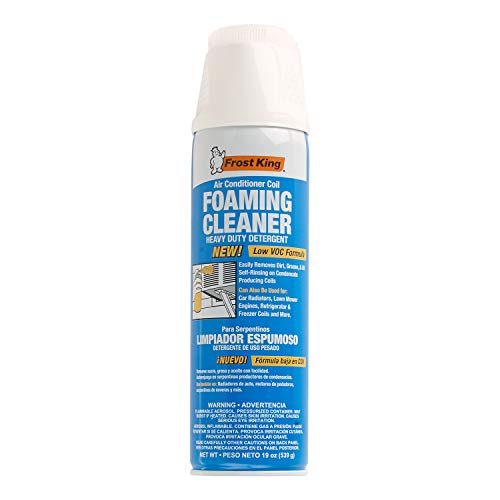
Features: Heavy-duty foam dissolves stains, removes grease & oil, and loosens dirt; cleans coils, fan blades, and reusable air filters; neutralizes odors from standing water in drain pans. Best for: Homemakers who want a straightforward, one-step cleaner for both evaporator and condenser coils. Caution: Foam build-up may require brief wipe-down to remove loosened debris in tight spaces.
Leak Saver Foam Blaster AC Coil Cleaner 3-Pack

Features: HVAC professional formula with high-pressure spray and delayed foaming; penetrates evaporator and condenser coils; leaves a mild citrus scent; no-rinse on evaporators, light rinse on condensers. Best for: HVAC technicians or serious DIYers cleaning large coil surfaces. Limitation: evaporator use is no-rinse, while condensers may require a light rinse for best results.
Leak Saver Foam Blaster AC Coil Cleaner (No-Rinse)

Features: Professional formula with high-pressure spray and expanding foam; penetrates deep into coils and liquefies grime; suitable for evaporators (no rinse) and condensers (light rinse). Best for: Pros who need rapid, deep cleaning and versatile use. Caution: Best results come with compatible condensate drainage and airflow during cleaning.
Simple Green Foaming Coil Cleaner 20oz (Pack of 3)

Features: Professional-strength, self-rinsing on condensate-producing coils; removes dirt, grease, and grime; NSF registered for use in food processing areas. Best for: Facilities needing a no-fuss, self-rinsing solution with regulatory compliance. Limitation: Pack size may require multiple cans for large systems.
PURAFILTER 2000 Coil Cleaner Foaming Spray
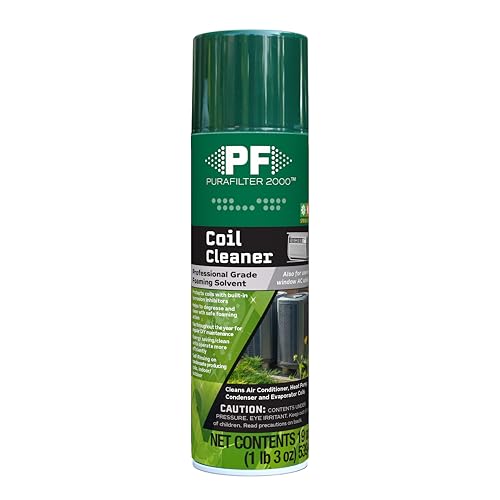
Features: Designed for HVAC condenser and evaporator coils; commercial and professional grade; foaming action to lift heavy soils; easily rinses or wipes away. Best for: Professionals and facilities managers who need dependable cleaning with straightforward rinsing. Caution: For evaporators, ensure condensate rinsing is functioning as designed to remove residue.
BERIOVE Foaming AC Coil Cleaner 19oz

Features: High-efficiency foaming action; no-rinse on evaporators and light rinse on condensers; safe for frequent use; penetrates deep to liquefy dirt. Best for: DIY homeowners and technicians seeking quick maintenance with reduced water steps. Limitation: Claims of wide compatibility should be validated with each unit’s specific coil design.
Simple Green Foaming Coil Cleaner Gallon

Features: Large gallon size for frequent maintenance; utility-focused product data and dimensions provided for planning. Best for: Facilities or households performing regular, budget-conscious coil cleaning. Limitation: Size may be heavy and less convenient for single-coil tasks.
Buying Guide: Key Considerations For Selecting An AC Coil Cleaner
What type of coils do you clean most often? Evaporator coils in air handlers and condensers in outdoor units may require no-rinse formulas on evaporators and light rinsing on condensers. If you have frequent cleanings, a no-rinse option saves time. If you clean large outdoor coils, a spray with strong penetrating foam can be more effective.
Do you prefer professional-grade or consumer-friendly products? Pro-grade foams often offer deeper penetration and stronger odor control, but may require rinsing for certain components. Consumer-friendly options emphasize ease of use, self-rinsing features, and milder scents.
Is regulatory compliance important? For kitchens or food-processing areas, NSF-registered cleaners provide added assurance for use around food handling, and may be preferable for mixed-use spaces.
What is your maintenance frequency? Occasional homeowners benefit from single-can or small-pack products, while property managers or service companies may favor bulk packs and gallon sizes for long-term use.
What about odor control and safety? Some cleaners include citrus scents or deodorizing properties, which can improve indoor air quality after cleaning. Always follow product warnings and ensure ventilation during application.
FAQ
- What is the difference between no-rinse and rinse-required coil cleaners? No-rinse formulas are designed to clean evaporators without water flush, using condensate to wash away residue. Rinse-required cleaners typically need a light rinse on condensers or heavily soiled coils to remove residue.
- Can I use coil cleaner on metal air filters? Some cleaners advertise filtration compatibility, but always check the label. Use as directed and avoid applying directly to filters unless specifically approved for that use.
- Is a citrus-scented cleaner better? Scent is a convenience feature, not a performance factor. Choose based on cleaning power, no-rinse capability, and compatibility with your system materials.
- How often should I clean AC coils? Regular maintenance schedules vary, but many systems benefit from cleaning every 12–24 months, sooner in dusty environments or after long operation periods.
- Should I hire a professional for coil cleaning? For complex systems or hard-to-reach coils, professional cleaning ensures safe handling, proper rinsing, and optimal performance. DIY options are suitable for simple, accessible coils.
- Are there environmental concerns with these cleaners? Many options are foam-based and biodegradable; however, read labels for environmental impact, disposal instructions, and local regulations.