Answer: If you’re shopping for an air handler drain pan, choose a high-quality, corrosion-resistant pan that matches your HVAC setup and provides reliable drainage to prevent water damage. This guide highlights five durable options and explains who each is best for, plus practical buying tips.
Who this is for:
– Building owners and maintenance techs seeking long-lasting, leak-resistant pans for residential or light commercial systems.
– Installers needing pans with pre-drilled holes or specific dimensions to fit standard hvac equipment.
– Homeowners prioritizing rust resistance, seam-free designs, and straightforward maintenance.
| Product | Size (WxL) | Material | Best For |
|---|---|---|---|
| Diversitech 6-2748L | 27″ x 48″ | ABS Plastic | Longer run condensate collection; seamless design for leakage protection |
| Diversitech 6-2763L | 27″ x 63″ | ABS Plastic | Deeper pan for higher water accumulation; PVC discharge option |
| DiversiTech 6-2626L | 26″ x 26″ | ABS Plastic | Compact spaces; durable with rolled edges |
| Heavy-Duty Galvanized Pan (26″x26″x2″) | 26″ x 26″ x 2″ | Galvanized Steel | Rust resistance and heavy-duty protection |
| Heavy-Duty Galvanized Pan (26″x48″x2″) | 26″ x 48″ x 2″ | Galvanized Steel | Wider coverage for larger equipment; hole options available |
Diversitech 6-2748L A/C Secondary Pan

Features include a plastic drain pan designed to collect condensate from cooling and evaporator coils, with a seamless construction to prevent leakage and rust. Rolled edges and a ribbed bottom add rigidity for durable performance. This model is best for installations where space is ample and a seamless, non-toxic ABS plastic pan is preferred. Best for: installations needing a leak-resistant, low-profile plastic pan in medium-to-large condensate runs. Caution: Plastic pans may be less heat-tolerant than metal in extreme environments and should be checked for deformation under sustained heavy condensate flow.
Diversitech 6-2763L A/C Secondary Pan

This model extends the pan depth to hold more condensate, featuring a 2-inch depth specification and a 3/4-inch PVC discharge fitting for straightforward drainage. It is suitable for systems with higher condensate volumes or a requirement for a longer run before drainage. Best for: setups with larger evaporator sections or where a deeper pan reduces overflow risk. Caution: Ensure space accommodates the extra depth (2 inches).
DIVERSiTech 6-2626L A/C Secondary Pan
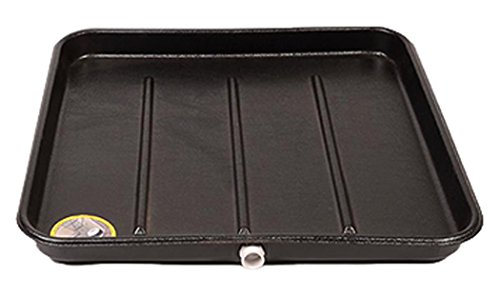
This 26” x 26” plastic pan emphasizes a seamless design and durable ABS construction with rolled edges. It provides protection against leaks and rust and is well-suited for tight spaces where a square pan fits best. Best for: compact installations or square equipment footprints. Caution: The smaller footprint means less condensate capacity; ensure it matches the system’s water production rate.
Heavy-Duty Galvanized 26x26x2 Pan

Versatile sizing and hole option choices support varied installation needs. The galvanized steel construction offers robust condensate management with corrosion resistance. This pan is best for installations that require durable steel with optional pre-drilled holes for direct drainage. Best for: installations needing rust-resistant steel and customizable drainage options. Caution: Steel pans may require protective coatings in extreme environments to maximize lifespan.
Heavy-Duty Galvanized 26x48x2 Pan
This wider pan provides extended surface area for condensate collection and is available with hole options to fit larger or broader HVAC configurations. It is best for bigger equipment footprints or when surveillance of drainage is critical. Best for: large-scale or commercial-like condensate handling. Caution: Wider pans require more space and careful alignment with drainage fittings.
Buying Guide: Key Considerations For Air Handler Drain Pans
- Material choice: ABS plastic pans resist rust and are typically lighter; galvanized steel pans offer superior strength and durability, with higher impact resistance in busy mechanical rooms. Consider your environment and maintenance plans when choosing.
- Size and capacity: Match the pan’s dimensions to your evaporator coil footprint and expected condensate volume. Deeper pans handle more water but require more space.
- Seam design: Seamless pans reduce the risk of leaks. If a seam exists, inspect regularly for rust or separation, especially in humid climates.
- Drainage fittings: Look for pre-drilled holes or compatible discharge fittings (for example, PVC fittings) to simplify installation and reduce leaks.
- Customization options: Depending on the setup, holes or non-holes options can affect drainage routing and future maintenance needs.
- Installation environment: Consider vibration, temperature, and exposure to chemicals or cleaning agents which can impact pan longevity.
- Maintenance considerations: Some products are designed to be easy to inspect and clean, reducing the chance of blockages and overflows.
Frequently Asked Questions
What is an air handler drain pan used for?
It collects condensation from the air handler or evaporator coil and channels it away, preventing water damage and mold growth.
Which material is best for a drain pan?
ABS plastic pans are corrosion-resistant and lightweight, while galvanized steel pans offer extra durability for busy or harsh environments.
Do all drain pans require holes for drainage?
No. Some pans come with pre-drilled holes or fittings; others are designed to be connected to an external drainage line. Choose based on your installation needs.
Can I replace a drain pan without professional help?
Yes, in many cases, but ensure compatibility with your evaporator size, mounting holes, and drainage connections to avoid leaks or improper fit.
How do I prevent drain pan overflow?
Regular cleaning, using slow-release tablets or cleaners designed for condensate pans, and inspecting the drain line for blockages are effective strategies.