Answering the need for flexible, room-by-room temperature control, multi-zone mini split systems let you cool or heat several areas from a single outdoor unit. This guide highlights five top options, detailing who each product suits, how it differs, and practical considerations to help you choose. Ideal buyers include homeowners seeking zone-specific comfort, small businesses wanting efficient climate control, and renovators needing scalable systems with room-by-room management.
Summary Table — Selected Products
| Product | Best For | Key Point |
|---|---|---|
| Senville 28,000 BTU Dual Zone Mini Split | Medium-to-large homes with two zones | Alexa-compatible, energy efficient, reliable for low outdoor temps |
| DELLA 28K BTU 3 Zone Mini Split | Three-room layouts with one outdoor unit | Three zones and solid efficiency, pre-charged with professional install note |
| ROVSUN 20,000 BTU 2 Zone Mini Split | Year-round comfort for multiple rooms | Four-season features and strong energy savings |
| COSTWAY 36k Quad 4 Zone Mini Split | Four rooms or larger homes needing four zones | High total BTU with R32 refrigerant and energy efficiency |
| MrCool DIY 18k BTU Multi Zone | Do-it-yourself installation with three zones | Easy Quick Connect, energy efficiency, budget-friendly setup |
Senville 28,000 BTU Dual Zone Mini Split Air Conditioner

Best for two rooms or zones that need independent control. This system connects multiple indoor air handlers to one outdoor unit, enabling separate temperature settings per room. It supports smart control through mobile apps and voice assistants for remote operation, scheduling, and energy management. The unit is designed for energy efficiency and reliable operation in low outdoor temperatures, using 208–230V power and carrying ETL and AHRI certifications.
Who it’s best for: households needing two distinct comfort zones with smart control and energy efficiency. Why selected: strong multi-room capability, compatibility with Alexa and mobile apps, and favorable suitability for moderate climates.
Limitation: professional installation is typically recommended for proper refrigerant charge and line-set handling; DIY adjustments may affect performance.
DELLA 28K BTU ODU Mini Split 3 Zone
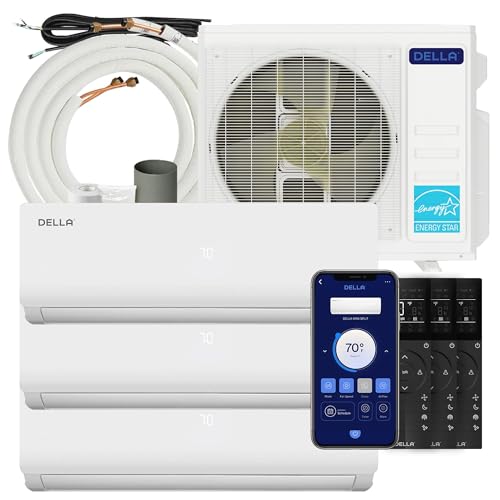
Best for three rooms with centralized outdoor condensation. The Della system provides two 9K BTU and one 12K BTU indoor units, delivering flexible zoning and up to 20 SEER2 efficiency. It includes pre-charged hardware and a 16-foot line-set. The unit supports Alexa and Wi-Fi connectivity for remote control. It is ETL listed and AHRI certified.
Who it’s best for: homes with three differently conditioned rooms and a need for scalable zoning. Why selected: true three-zone layout, energy efficiency, and remote control features.
Caution: installation requires professional handling due to refrigerant and line-set work; the system’s capabilities depend on proper setup and refrigerant charge.
ROVSUN 2 Zone 20000 BTU Mini Split

Best for two rooms with flexible year-round use. This all-in-one system offers two indoor air handlers and a single outdoor condenser, with a robust heat pump for heating in winter and cooling in summer. Features include automatic defrosting, self-diagnosis/cleaning, iFEEL mode, timer, sleep mode, and multiple wind directions. It’s ETL and AHRI certified and designed for energy savings via inverter technology.
Who it’s best for: homeowners who want separate room control without extra outdoor units. Why selected: strong zones for two rooms, comprehensive comfort modes, and energy-conscious design.
Caution: installation should follow the included line-set and may require professional setup to ensure optimal refrigerant charge.
COSTWAY 36k Quad 4 Zone Mini Split

Best for a larger home with four independent zones. This 36000 BTU system splits into four zones (9000/9000/9000/18000 BTU) for flexible room-by-room control. It uses R32 refrigerant and offers energy efficiency with 23 SEER2 and 10 HSPF2 ratings. The setup includes multiple modes (auto, cool, heat, dry, fan, sleep) and several wind speeds, with automatic swing for optimized air distribution.
Who it’s best for: households needing four distinct zones or rooms with tailored comfort. Why selected: higher total BTU for larger spaces and robust energy efficiency credentials.
Limitation: larger footprint and more complex installation; not ideal for simple, two-room setups.
COSTWAY 18k Dual 2 Zone Mini Split

Best for two zones in compact layouts or small-to-mid-sized homes. This 18K BTU two-zone unit provides dual-room management with 22 SEER2 efficiency and 10 HSPF2 heating performance. It uses R32 refrigerant and is ETL and AHRI certified. The system includes six operating modes and multiple fan speeds, plus a ductless design suitable for retrofits or space-constrained installations.
Who it’s best for: smaller homes or rooms needing independent control without overwhelming capacity. Why selected: balanced capacity and energy efficiency in a compact package.
Caution: ensure proper line-set installation; performance relies on correct refrigerant charge and professional handling when necessary.
Buying Guide
What should I consider before buying a multi-zone mini split?
Determine how many zones you need, total BTU requirements, and the climate in your area. More zones mean more outdoor units’ wiring and higher upfront costs but better comfort distribution.
- Zone count: Two to four zones cover most homes; larger spaces may benefit from 3–4 indoor units with a single outdoor condenser.
- BTU and SEER: Higher BTU supports bigger spaces; SEER2 indicates energy efficiency. Choose balanced BTU to room size and climate.
- Installation: Many systems require professional installation for refrigerant charging and line-set integrity. DIY options exist but may limit performance or warranty.
- Smart features: Look for app/voice assistant compatibility for convenient control and scheduling.
- Refrigerant type: R32 offers lower global warming potential (GWP) and good efficiency but verify compatibility with your space and local regulations.
- Noise levels: Indoor unit noise influences comfort in bedrooms and offices; check dBA ratings if available.
How do I compare these models effectively?
Focus on total zoning capability, outdoor unit efficiency, and compatibility with your electrical system. Compare installed cost versus long-term energy savings. Consider whether you value DIY-friendly installation versus professional service.
What installation details matter?
Line-set length, refrigerant charge, and proper mounting of indoor units are critical. Some models include long line-set configurations or emphasize no-diy installation.
What are common pitfalls?
Ignoring compatibility with existing wiring, improper refrigerant charging, or underestimating room sizes can reduce efficiency and comfort. Ensure the chosen system suits the climate zone and room layout.
How do I maintain these systems?
Regular cleaning of filters, annual professional inspections, and timely defrost cycles (for heat pumps) help maintain performance and extend system life.
Frequently Asked Questions
- What does SEER2 mean for mini splits?
SEER2 measures cooling efficiency. Higher ratings indicate lower energy use for the same cooling output.
- Can I install a multi-zone mini split myself?
Some kits are designed for DIY, but many models require professional installation for refrigerant handling and ensuring code compliance.
- How many rooms can a typical outdoor unit handle?
Most systems support 2–4 indoor units, depending on BTU ratings and outdoor unit capacity.
- Are these units suitable for very cold climates?
Many models include low-temperature operation features, but performance varies; check the manufacturer’s climate specifications.
- What refrigerant is commonly used and why it matters?
R32 is common for newer units due to lower GWP and good efficiency, but ensure proper handling and disposal per regulations.
- Do these systems require a dedicated electrical circuit?
Yes, most 208-230V mini splits require appropriate electrical service and may need a dedicated circuit per outdoor unit.