Boost reliability and protect plumbing with automatic pressure reducing valves (PRVs) designed to stabilize water pressure, reduce wear, and save water. This guide highlights five suitable options, explaining who they’re best for and why each stands out. Ideal buyers include homeowners, small business managers, and installers seeking dependable, low-maintenance PRVs that fit common 1/2″ to 3/4″ piping with double or single unions for easy maintenance.
Summary table of selected products:
| Product | Best For | Key Benefit | Notes |
|---|---|---|---|
| 34-NR3XLDU 3/4″ NR3XL | Residential systems with frequent sediment cleaning | Double union FNPT, built-in stainless filter | Brass body, 400 Psi max |
| Cash Acme EB45 Double Union | Small commercial or multi-outlet homes | Direct pressure regulation, tamper-resistant | 60 PSI setting |
| NR3XLDU 3/4″ with Double Union | Repairs or replacements | Complete accessories kit, built‑in filter | FNPT connections |
| Water Regulator 1/2″ With Gauge (FASBET) | Budget projects needing monitoring | Gauge included, versatile usage | 1/2″ DN |
| Cash Acme EB45 Single Union | Tight spaces, simple installs | Push-to-connect options | 60 PSI |
34-NR3XLDU 3/4″ NR3XL Pressure Reducing Valve

- Function: Maintains stable water pressure, reduces high inlet pressure to a controllable level, and protects pipelines and equipment. Maximum pressure rating is 400 Psi.
- Material: Brass body for corrosion resistance and long service life.
- Stainless Steel Filter: Built-in to intercept impurities and prevent blockage.
Best for: Residential systems needing reliable pressure regulation with easy maintenance via a double-union connection and filter. Caution: Ensure inlet pressure does not exceed 400 Psi to avoid valve stress.
Cash Acme EB45 Pressure Regulating Valve, Double Union
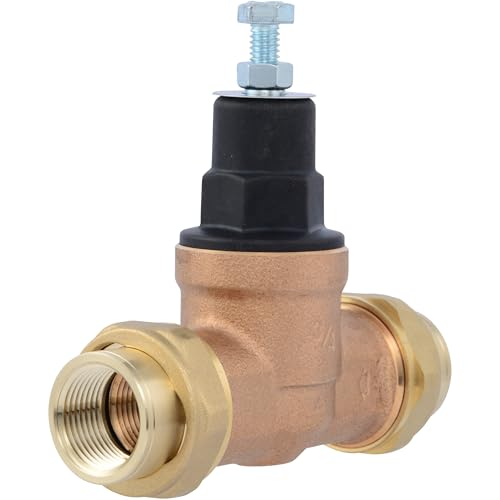
- Design: Inline 3/4 in. NPTF double union; tamper-resistant to prevent accidental adjustments.
- Material: Brass, stainless steel, and durable polymer; NSF/ANSI 372 compliant for potable water.
- Function: Reduces downstream pressure and prevents surges in residential or light commercial settings.
Best for: Small commercial or multi-outlet homes needing a secure, adjustable regulator with easy service. Caution: Verify compatibility with existing fittings before installation.
NR3XLDU 3/4″ PRV With Double Union FNPT

- Warranty: 3-year after-sales guarantee; responsive support within 12 hours.
- Performance: Converts pressure from higher inlet to a stable downstream level; designed for corrosion resistance and ease of maintenance.
- Installation: Short-body design and compact for tight spaces; double union FNPT connections allow sediment cleaning without full disassembly.
Best for: Replacements or upgrades where accessible maintenance and a robust warranty are priorities. Caution: Confirm that the 3/4″ FNPT threads match your piping.
Water Pressure Regulator 1/2″ With Gauge

- Material: 100% high-hardness brass; includes gauge for real-time monitoring.
- Versatility: Capable of handling up to 1.6 MPa and suitable for many households and facilities.
- Accessories: Includes wrench, sealing tape, and sealing components for installation readiness.
Best for: Budget-conscious projects needing on-site pressure monitoring. Caution: Gauge exposure can vary with exposure or harsh environments; check gauge readability after installation.
Cash Acme EB45 With Disconnect Clip

- Design: Inline 3/4 in. push-to-connect and tamper-resistant to lock in system pressure.
- Application: Suitable for potable water systems; NSF/ANSI 372 compliant.
- Function: Reduces pressure and protects plumbing components from surges and high pressure.
Best for: Tight install spaces requiring quick push-to-connect fittings. Caution: Push-fit connections may require proper pipe preparations for a secure seal.
Buying Guide: Key Considerations For Choosing An Automatic PRV
- Pressure range and setting: Match the regulator’s adjustable range to your home’s typical operating pressure and the maximum safe downstream pressure for your fixtures.
- Connection type: Decide between double union vs single union and FNPT vs push-to-connect fittings based on maintenance preferences and existing piping.
- Material and build: Brass bodies offer corrosion resistance; consider built-in filters or strainers to minimize debris in the line.
- Tamper resistance: For shared or commercial spaces, tamper-resistant designs prevent accidental setting changes.
- Gauge availability: Models with integrated or included gauges enable ongoing monitoring and easier troubleshooting.
- Assembly compatibility: Ensure the valve fits your piping size (1/2″ to 3/4″ are common in residential systems) and that adapters are available if needed.
- Maintenance access: Double unions and short-body designs simplify disassembly and sediment cleaning without full disconnection.
- Certification and safety: Look for NSF/ANSI compliance where potable water safety is a concern and ensure the unit is suitable for your local water conditions.
Frequently Asked Questions
- What is the main job of an automatic pressure reducing valve? It automatically lowers incoming pressure to a safe, stable downstream level to protect plumbing and appliances.
- Do PRVs require regular maintenance? Some models with filters or easy-access parts benefit from periodic cleaning, and others include warranties for maintenance concerns.
- What size PRV do I need for a typical home? Most residential applications use 1/2″ to 3/4″ PRVs, depending on pipe sizing and flow requirements.
- Can PRVs be installed in tight spaces? Yes, compact models and those with short bodies or double unions are designed for tight installations.
- Are PRVs suitable for commercial use? Some models are designed for small commercial or multi-outlet residential systems; check PSI ranges and certifications for your application.