The basement is often the coldest part of the home, so choosing a heater with an accurate thermostat and smart controls can save energy while keeping spaces comfortable. This guide reviews five top-rated options designed for basement or large-room use, emphasizing safety features, thermostat performance, and ease of installation. Each product below includes a quick summary and a detailed look at its thermostat and control capabilities to help you compare how they fit your space and routine.
Summary at a glance: the FLANUR Space Heater offers smart WiFi control and a broad 70° oscillation for even heat, plus ECO mode to save energy. The Lasko Oscillating Ceramic Tower Heater provides a whisper-quiet experience with a remote and a reliable 1-8 hour timer. Dreo’s wall and floor-standing models emphasize wide oscillation and precise temperature control, with app and voice control compatibility. GiveBest’s wall heaters combine remote and WiFi control with flexible mounting options. Comfort Zone’s ceiling-mount unit is designed for large spaces and garages, prioritizing space efficiency and durable construction.
FLANUR Smart 1500W Space Heater With WiFi

This FLANUR model combines a powerful 1500W PTC ceramic heater with smart control and voice compatibility. The Havaworks app unlocks remote management, while Alexa and Google Home integration enable hands-free operation. A 12-hour timer helps tailor heating to actual needs, and the LED display makes real-time status easy to read. The unit supports 2.4 GHz WiFi and offers four modes: 1500W, 1000W, ECO, and a fan-only setting. ECO mode automatically adjusts heat for energy savings, and a 70° oscillation ensures warmth reaches more corners of the basement. Safety features include flame-retardant housing and auto-off protections.
Advantages include flexible scheduling, clear status indicators, and robust safety protections such as anti-tip and overheat safeguards. The model’s smaller footprint fits tighter basement layouts, while the ECO setting helps manage running costs over extended use. Note that it requires a compatible 2.4 GHz WiFi network for full smart features, and initial setup may require app pairing and voice service configuration.
Lasko Oscillating Ceramic Tower Heater
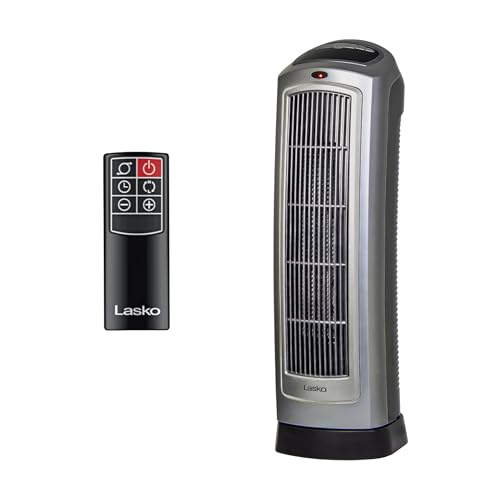
The Lasko tower heater emphasizes quiet operation and practical convenience. It offers two heat settings and an adjustable thermostat to maintain the room temperature, with optional oscillation to distribute warmth evenly. The included remote control simplifies operation from a distance, and remote storage on the back prevents loss. A built-in 1-8 hour auto-off timer helps manage energy use in basements where heat is needed for defined periods. The compact design and cord management are ideal for bedrooms or smaller basement sections that require easy placement.
While it is not a smart speaker-compatible unit, its straightforward controls and remote functionality make it a solid choice for users who want reliable heat without adding smart home complexity. The device prioritizes quiet performance and predictable heat output, which can be beneficial for basement spaces that double as living areas or home offices.
Dreo Smart Wall Heater With 24H Timer

Dreo’s wall heater is designed for flexible installation with 120° vertical oscillation to push warm air across rooms efficiently. Its thermostat supports precise temperature control within a broad range, and the unit is compatible with Alexa and Google Home for voice commands. A dedicated app allows scheduling and remote adjustments, enabling you to warm a basement room before you arrive. The 12-hour timer and ECO settings contribute to energy-conscious operation, while the 1500W heating capacity provides rapid warmth for larger spaces up to substantial square footage.
Users benefit from fast heat delivery, accurate temperature readings, and the option to mount on the wall for ceiling clearance in cramped basements. The model’s emphasis on wide coverage and smart integration makes it suitable for finished basements that function as living spaces or home gyms where consistent climate control matters.
GiveBest Smart Wall Heater With WiFi

This GiveBest wall heater blends remote and WiFi control with flexible mounting—wall-mounted or floor-ready with retractable feet. The thermostat supports precise temperature settings and ECO mode to optimize energy use. A dedicated app or on-device control allows you to schedule heat and adjust settings remotely, which is particularly useful for basements that require preheating before occupancy. The unit’s three heating modes provide a balance between rapid warmth and long-term efficiency, and the compact footprint helps maximize floor space in basement rooms used for living or working.
Key benefits include versatile placement, intuitive control interfaces, and a focus on energy efficiency. The model’s remote operation and wall-or-floor adaptability make it a strong option for mixed-use basement spaces, though those requiring advanced smart-home automations may want to pair it with broader home ecosystems for more complex routines.
Comfort Zone Ceiling Mount Garage Space Heater

This ceiling-mounted, hard-wired unit is designed for garages, workshops, and other large basement spaces. With up to 1250 sq. ft. coverage, it maximizes floor space while delivering consistent heat. The robust steel build is built for durability in challenging environments, and a digital thermostat supports precise temperature control. The design includes adjustable louvers to direct airflow and a timer for scheduled operation, which helps manage heating needs in spaces that may be unoccupied part of the day. Overheat protection adds a layer of safety for continuous operation in cooler basements or garages.
Pros include space-saving installation and powerful air distribution suitable for large rooms. Its hard-wired setup means it will require professional installation or careful electrical planning, especially in accessory spaces like finished basements that require integrated electrical work. For environments where floor space is at a premium and expansive warmth is necessary, this model offers strong performance paired with practical controls.
Buying Guide: Key Considerations For Basement Heaters With Thermostats
- Space and heat needs: Measure basement area to match heater capacity (BTU or watts) with your space. Larger rooms benefit from models with wide oscillation, multiple modes, or ceiling/wall mounting to maximize heat distribution.
- Thermostat precision: Look for units with accurate temperature control (ideally 1-2°F accuracy) and ECO modes that automatically reduce output to save energy after reaching setpoints.
- Control options: Decide between remote control, apps, and voice compatibility. Smart features can reduce energy waste but require reliable WiFi and setup time.
- Safety features: Prioritize tip-over and overheat protections, flame-retardant housing, and child locks when kids are present. Consider auto-off timers for unattended periods.
- Installation flexibility: Wall-mount, floor placement, and ceiling mounting affect space use. In basements with limited floor space, wall or ceiling-mounted solutions are often best.
- Noise and comfort: Quieter units (under 40 dB) are preferable for living areas or bedrooms. HEPA-friendly or low-noise fans help maintain a comfortable environment.
- Power source and compatibility: Check electrical requirements, whether the unit uses 110V or 240V, and ensure your wiring supports the heater’s load. Smart features may require 2.4 GHz WiFi for reliable connectivity.
- Maintenance: Safety filters, easy-to-clean surfaces, and durable materials extend the heater’s life in basements where dust and moisture can be factors.
When selecting a basement heater, balance heating capacity with installation flexibility and control features. A model with smart controls can simplify routine use, while a straightforward remote control may suit simpler needs. For garages or large basements, ceiling-mounted or wall-mounted options can optimize space without compromising warmth. Safety, energy efficiency, and ease of use remain the core criteria across all strong choices described above.