Looking for a reliable belt drive blower motor to replace an aging unit? This guide highlights five solid choices that fit common 48-frame, 115V, 1725 RPM configurations. Each product is suitable for residential and light commercial HVAC systems, with clear notes on who benefits most and potential limitations. Use the buying guide to compare specs and pick the best fit for your setup.
| Product | Frame | HP | RPM | Rotation | Best For |
|---|---|---|---|---|---|
| GF2034 Blower Motor – Zynovate | 48 | 1/3 | 1725 | Reversible | Smaller furnaces and compact air handlers |
| GF2026 Blower Motor – LEUNGOO | 48 | 1/4 | 1725 | Reversible | Budget-friendly, standard blower replacements |
| US Motors Belted Fan & Blower – 1/2 HP | Unknown (typical 48 frame) | 1/2 | 1725 | Not specified | Mid-range, robust applications |
| CHIOWO GF2034 Blower Motor | 48 | 1/3 | 1725 | Reversible | Direct replacement feel with modern design |
| GF2054 1/2 HP Belt Drive Motor – Pellethead | 48 | 1/2 | 1725 | Not specified | Higher horsepower needs with caution on loads |
GF2034 Blower Motor – Zynovate

1/3 HP, 115V, 60Hz, 1725 RPM, 48 Frame. Features reversible rotation, 1/2″ shaft diameter, Class B insulation, and thermal protection. This motor is designed as a versatile replacement for multiple brands, including Packard, AO Smith, Emerson, GE, and Carrier models. Best for compact residential HVAC units that require a direct-fit, belt-drive blower motor. Limitations include potential torque limits in high-load applications.
GF2026 Blower Motor – LEUNGOO
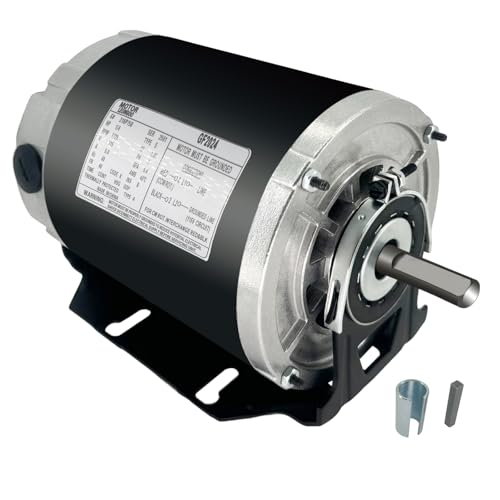
1/4 HP, 1725 RPM, 5.0A, 115V, 48 Frame with reversible rotation and a 1/2″ shaft. It replaces Packard 45014, AO Smith/Century models, Emerson 8000, GE BF4701, and others. Best for budget-conscious replacements in standard blowers and furnaces. Better for smaller loads; avoid if your system demands higher torque or nonstandard frames.
US Motors Belted Fan & Blower – 1/2 HP

This 1/2 HP, 1-phase motor operates at 1725 RPM, typically used in belt-driven blower assemblies. Best for mid-range loads in residential air handlers and furnaces. A notable limitation is the lack of rotation specification in available data—confirm rotation direction during purchase to ensure airflow aligns with your ductwork.
CHIOWO GF2034 Blower Motor – 1/3 HP

1/3 HP, 115V, 5.9A, 1725 RPM, 60 Hz with 48 frame and reversible rotation. Marketed as a direct compatibility replacement for common AO Smith and BF2034 systems. Best for users seeking an updated design with smooth operation. Limitations include potential variances in accessory components like capacitors in some packs.
GF2054 1/2 HP – Pellethead

2-year warranty note appears in product information for this 1/2 HP, 115V motor with 1725 RPM and 48 frame. It replaces several AO Smith, Packard, Emerson, GE, and Baldor models. Best for higher-demand residential HVAC setups that still use a standard 48-frame, belt-drive configuration. Use caution with high-torque or oversized fans as data warns against high-load applications.
Buying Guide
Choose a belt drive blower motor by confirming frame size, voltage, and horsepower match your existing unit. For most homes, a 48-frame, 115V, 1725 RPM design is common; ensure the shaft diameter (usually 1/2 inch) aligns with the pulley and coupling in your system.
- Frame and shaft compatibility: Most replacements use the 48 frame and 1/2″ shaft. Confirm these before purchasing.
- Rotation direction: Reversible rotation adds flexibility for airflow routing. Confirm your ducts and plenums require a specific rotation.
- Insulation and protection: Class B insulation with thermal protection supports safe operation in typical HVAC environments.
- Replacements and compatibility: Look for direct replacements for brand/model numbers to simplify installation and reduce downtime.
- Load considerations: Higher HP motors are not always better if your system cannot handle extra torque. Check fan and pulley sizes to avoid overload.
Installation considerations
Before installation, verify electrical compatibility, mounting alignment, and belt tension. Replace any worn pulleys or belts in the same service cycle for optimal performance. When in doubt, consult a technician to confirm that the motor’s torque, RPM, and frame align with the existing blower assembly.
FAQ
- What frame size should I look for in a replacement motor?
Most residential belt-drive blowers use a 48-frame motor with a 1/2″ shaft. Check your current motor label to confirm. - Is reversible rotation important?
Yes. Reversible rotation allows flexible airflow direction, which can be useful for duct configurations or future re-routing. - Can I use any 1/3 HP or 1/4 HP motor as a replacement?
Not always. Ensure matching HP, RPM, voltage, frame size, and shaft diameter to your blower housing and belt/pulley system. - What are common limits to consider with belt-drive motors?
Torque capacity, belt tension, and pulley alignment affect performance and longevity. Do not exceed the system’s designed load. - Do these motors come with capacitors?
Some listings include capacitors; verify whether a capacitor is included or required for your installation. - How do I know if a motor is a direct replacement?
Check the manufacturer’s compatibility list and the exact model numbers replaced (for example, GF2034, 45013, 8100, etc.).
All products above are selected for clear compatibility with common 48-frame, belt-drive HVAC blower assemblies. They provide straightforward paths to replacing aging blowers while maintaining system performance. If your system has nonstandard frame sizes or high-torque requirements, consider deeper measurements or professional inspection before purchasing.