When you manage boilers, pools, or firefighting water systems, accurate water level monitoring is essential. This guide highlights five reliable boiler water level indicators, selected for accuracy, visibility, and ease of installation. Each product is best for a specific setup—industrial systems, home boilers, or portable water tanks—so you can match the tool to your use case. Below is a quick summary table of the top five choices to help you compare at a glance.
| Product | Best For | Key Benefit |
|---|---|---|
| KALLORY Liquid Level Indicator | Industrial, firefighting pools, cisterns | High transparency acrylic for precise readings |
| IDEANATEGRATE Tank Water Level Monitor | Home and commercial tanks | Capacitive technology for exact measurements |
| RUNROTOO Tank Liquid Level Gauge | Buckets, RVs, small storage tanks | Right-angle gauge with easy integration |
| TOBBOMEY Water Level Indicator | Industrial tanks and boilers | Clear visual display with robust design |
| Redline High Pressure Gauge Glass (Boiler Sight Glass) | Boiler systems requiring durable sight glass | Excellent visibility under high pressure |
KALLORY Liquid Level Indicator For Boiler And Tank

The KALLORY liquid level indicator offers precise, real-time monitoring for boilers, firefighting pools, and cisterns. Its acrylic design provides high transparency for easy level reading, reducing the risk of overfill or shortage. It is built to endure high temperature and pressure, making it suitable for demanding industrial environments.
Who this is best for: facilities needing dependable, long-term level visibility in harsh conditions. Why selected: the combination of accurate measurements and a clear acrylic display supports quick, reliable decisions during operation. Limitation: it relies on a visual read, which can be challenging in very bright or dim workspaces without proper lighting.
IDEANATEGRATE Tank Water Level Monitor
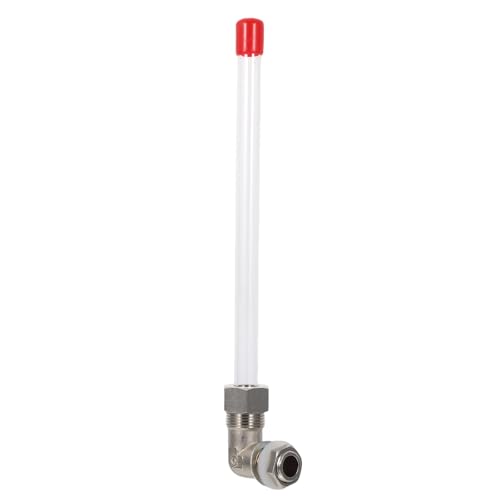
The IDEANATEGRATE system uses capacitive liquid level gauge technology to provide exact measurements of water height. Its transparent acrylic display offers vivid visibility, allowing operators to assess water quantity quickly and accurately. It is designed for straightforward mounting on tanks and heaters, enabling easy integration into existing setups.
Who this is best for: commercial properties or homes that require quick, accurate readings with simple installation. Why selected: capacitive technology delivers stable readings, even as temperature or density varies. Limitation: some users may need to ensure compatibility with existing mounting hardware on non-standard tanks.
RUNROTOO Tank Liquid Level Gauge

The RUNROTOO gauge provides continuous monitoring for boilers, storage tanks, buckets, and RV fresh water tanks. Its right-angle design supports easy installation in tight spaces, and the high-accuracy gauge minimizes measurement error for safe, reliable operation. It’s well suited for retrofit projects where space and tool access are limited.
Who this is best for: installers needing a versatile, space-conscious gauge. Why selected: strong readouts with straightforward mounting. Limitation: designed for smaller or mid-sized tanks; very large industrial vessels may require larger- or longer-capacity indicators.
TOBBOMEY Water Level Indicator

The TOBBOMEY indicator emphasizes a clear, reliable visual display for industrial environments. It aims to prevent overheating and equipment failure by providing consistent level checks for boilers and pools. The robust design supports everyday operation in demanding settings.
Who this is best for: industries needing robust, easy-to-read level indicators. Why selected: strong emphasis on safety and readability. Limitation: may not integrate with every tank type without adapters or extra fittings.
Redline High Pressure Gauge Glass (20″ Sight Glass)

This Redline sight glass is designed for high-pressure boiler systems, offering clear visibility of liquid levels. It emphasizes durability under extreme conditions and easy installation for quick upgrades or replacements in boiler operations.
Who this is best for: facilities needing a high-clarity, high-pressure sight glass. Why selected: the combination of reliable material quality and straightforward installation supports dependable readings under pressure. Limitation: longer sight glasses may require extra mounting length and support in tight spaces.
Buying Guide
What to consider when choosing a boiler water level indicator
- System compatibility: match the gauge type (visual tube, capacitive, or sight glass) to your boiler or tank design and mounting options.
- Reading visibility: choose acrylic or glass with high contrast markings and adequate size for fast, accurate readings in your environment.
- Pressure and temperature ratings: ensure the gauge’s ratings align with your operating conditions to prevent failures.
- Installation effort: assess whether you need right-angle fittings, adapters, or simple surface mounting for retrofit projects.
- Durability: for industrial use, prioritize corrosion-resistant materials and safety features like ball checks where applicable.
- Maintenance and accessibility: consider how easy it is to inspect, clean, and replace components as part of routine maintenance.
Frequently Asked Questions
- What is the main difference between a visual level gauge and a capacitive level monitor?
Answer: A visual gauge provides a direct readout of the liquid level through a transparent indicator, while a capacitive monitor uses electronic measurement to infer level and often requires wiring and sensors. - Which gauge is best for high-temperature boilers?
Answer: Gauges built with heat-resistant materials and high-temperature ratings perform best in high-temperature boiler environments. - Can these indicators be used for potable water systems?
Answer: Many are suitable for water systems, but verify material safety and compatibility with drinking water standards for your application. - Are right-angle gauges easier to install in tight spaces?
Answer: Yes, right-angle or compact designs typically simplify mounting in constrained environments. - Do all indicators require calibration?
Answer: Visual gauges generally do not require calibration, while electronic or capacitive systems may need periodic verification for accuracy. - What maintenance is typical for these devices?
Answer: Regular checks for cracks, leaks, and blockages; ensure seals and mounts stay secure; clean the viewing surface as needed.