Find the right brass 3-way valve for your system by comparing compact lever, L-Port, and hose-adapter models. This guide highlights five well-suited options, explains who they’re best for, and identifies practical limitations to consider. Ideal buyers include DIY homeowners, workshop professionals, and irrigation installers seeking durable brass fixtures with straightforward operation.
| Product | Key Use | Port Type | Material |
|---|---|---|---|
| QWORK Series 3-Way (L-Port) Ball Valve | General purpose plumbing and heater lines | L-Port | Forged brass |
| Metaland 3 Way Shut-Off Valve | Water, fuel, or air lines in small to mid systems | 3/8″ Hose barb | Solid brass |
| QWORK 1/4″ NPT Instrument Valve (2 Pack) | Instrumentation panels and control lines | Female NPT x Female NPT x Female NPT | Brass |
| Yayamz Garden Hose Splitter | Outdoor irrigation and multiple timers | 3-way manifold | Brass |
| ZaakWang Garden Hose Splitter 3 Way | Heavy-duty outdoor watering and spigot control | 3/4″ outlets with ball valve | Brass |
QWORK Series 3-Way (L-Port) Ball Valve

The QWORK L-Port 3-way ball valve is a compact, forged brass unit designed for durability in home plumbing and heating lines. It uses a chrome-plated ball and stainless-steel components for wear resistance and long life. The PTFE seats provide corrosion resistance and smooth operation. Best for DIY projects where a robust, easy-to-operate brass valve is needed in tight spaces.
Best for: homeowners and small tradespeople needing a reliable 3-way valve with a compact footprint. Why selected: forged brass body and long-lasting components support frequent switching and moderate pressure scenarios. Caution: verify compatibility with your thread and port layout to avoid fitment issues in retrofit projects.
Metaland 3 Way Shut-Off Valve

The Metaland 3-way shut-off valve features a solid brass construction with 3/8″ hose barb connections. It is suitable for high-temperature and high-pressure applications in water, fuel, or air lines. Best for small to mid-size irrigation or automotive projects that require reliable brass fittings and simple flow control.
- Best for: tasks needing a straightforward, durable 3-way switch in fluid lines with hose barb connections.
- Better for: applications where high temperature and pressure tolerance are important.
Caution: this model specifies hose barb sizing; ensure tubing ID matches 3/8″ connectors and consider clamp options for secure attachment.
QWORK 1/4″ NPT Brass Instrument 3 Way Ball Valve (2 Pack)
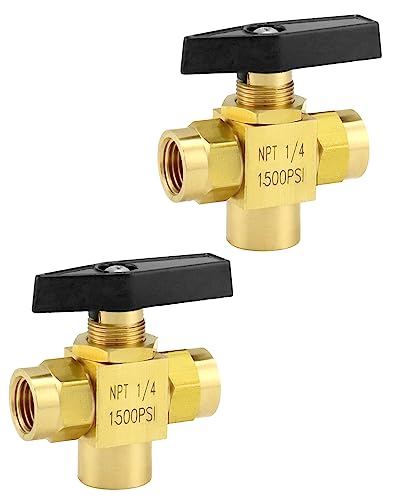
This 2-pack offers 1/4″ NPT connections in an L Port arrangement. The brass construction emphasizes durability and corrosion resistance for instrumentation panels and control circuits. Best for panel mounting or compact control lines where a reliable 3-way flow path is needed.
Best for: instrumentation and control lines requiring a compact, NPT-threaded 3-way valve. Why selected: robust brass body and secure NPT threading support leak-free connections in tight panels. Caution: verify NPT compatibility with your system’s threading standards to prevent cross-threading or leaks.
Yayamz Garden Hose Splitter

The Yayamz three-way hose splitter is built from brass and designed for outdoor irrigation with enhanced durability. It features extra-long metal handles for easier operation, a widened outlet spacing, and rugged construction intended for use with multiple timers and irrigation devices. Best for: garden setups that require flexible multi-timer control and reliable outdoor operation.
Limitation: while designed for robustness, ensure the shared manifold spacing aligns with your timers and hoses to avoid awkward fits. The unit’s size and weight may require mounting considerations in compact setups.
ZaakWang Garden Hose Splitter 3 Way

ZaakWang’s garden hose splitter provides 3/4″ outlets with a full-flow ball valve and heavy-duty brass construction. The design focuses on reliable outdoor watering and independent valve control for multiple hoses and spigots. Best for: outdoor setups where high-flow, durable brass valves are needed to sustain long watering sessions. Better for: installations with large hoses and multiple outlets that demand strong sealing and minimal leaks.
Limitation: some users may require adapters or fittings when connecting non-standard hoses or timers. Regular maintenance helps prevent gasket wear and leaks over time.
Buying Guide: Brass 3-Way Valves — Key Purchase Considerations
- Port configuration and size: determine whether you need L-Port, T-Port, or standard straight-through flow. Consider inlet/outlet thread type (NPT, Quick Connect, hose barb) and whether you require hose adapters or panel mounting.
- Material and corrosion resistance: brass provides durability in water, fuel, and outdoor environments. Verify seat material (PTFE is common for wear resistance) and any protective plating when exposed to aggressive chemicals.
- Valve actuation and control: lever handles offer quick manual control. Ensure handle length and clearance fit your installation space and glove use if needed.
- Pressure and temperature tolerance: check the valve’s rated operating range and your system’s maximum pressure to avoid leaks or failure under load.
- Installation considerations: threading vs. hose barb connections affect compatibility with existing lines. Confirm whether you need panel mounting, inline installation, or outdoor mounting clearance.
- Leak prevention and maintenance: PTFE seats and robust seals improve longevity. Plan for periodic inspection, clamp locking on hoses, and replacement seals when required.
- Cost vs. durability: brass valves tend to be more durable than plastic alternatives, but evaluate the total cost per application and expected service life in your setup.
- Application scope: choose a valve suited for water, air, fuel, or instrumentation lines, and match the port size to your tubing or piping to avoid flow restrictions.
Frequently Asked Questions
- What is an L-Port valve and when should I use it?
An L-Port valve routes flow from one inlet to two outlets while keeping the third port closed, offering simple split control suitable for irrigation and basic plumbing tasks.
- Can brass valves be used outdoors in cold weather?
Yes, brass handles outdoor conditions well, but ensure fittings are sealed and protected from prolonged freezing to prevent damage or leaks.
- Do I need adapters for hose barb connections?
Often yes. If your hose size differs from the valve outlet, use appropriate adapters or clamps to maintain a secure, leak-free connection.
- What should I check before purchasing a 3-way valve?
Check port type, thread standards, material compatibility with your fluid, and the valve’s pressure and temperature rating for your system.
- Is a 1/4″ NPT valve suitable for instrumentation panels?
Typically yes, when the panel design accommodates 1/4″ NPT threads, providing compact 3-way control for instrumentation lines.
- How important is seat material in brass valves?
Seat material (such as PTFE) affects wear resistance and sealing, especially under cycling and exposure to corrosive fluids.