When venturing into remote campsites, keeping your camper shell warm is essential. This guide highlights five top-rated heater options that excel in small, rugged spaces like boat cabins, RV underbellies, and camper storage bays. Each product blends safety, efficiency, and durability to help you stay comfortable during cold spells.
| Product | Brand | Weight/Size Notes |
|---|---|---|
| 2026 Boat Engine Compartment Heater 400W | Bestwooo | Aluminum shell; IPX7 waterproofing; automatic thermostat |
| Mr. Heater F232017 MH9BXRV Buddy | Mr. Heater | Portable, indoor/outdoor use; 4,000–9,000 BTU |
| Boat Engine Compartment Heater | 600w | Xtreme Heaters | Self-regulating PTC; waterproof fan |
| Boat Engine Compartment Heater | 400w | Xtreme Heaters | Self-regulating PTC; durable aluminum housing |
| VEVOR Diesel Air Heater, 5KW | VEVOR | All-in-one, remote control; LCD display |
Bestwooo 2026 Boat Engine Compartment Heater 400W

The 2026 Upgraded Boat Cabin Heater uses a PTC ceramic heating core paired with aluminum tubing to minimize thermal resistance and maximize heat exchange. An internal fan delivers up to 89 CFM, enabling faster warmth in boat cabins, RV compartments, or truck bays. A UL-listed 4.5-meter power cord supports safe, flexible installation. The exterior is reinforced with aluminum and a stainless steel base for durability, with fully waterproof internals to resist moisture and corrosion. An automatic thermostat activates heating below 41°F and stops at 59°F, with clear indicators for standby and heating modes.
Mr. Heater F232017 MH9BXRV Buddy Grey Indoor-Safe Portable RV Radiant Heater
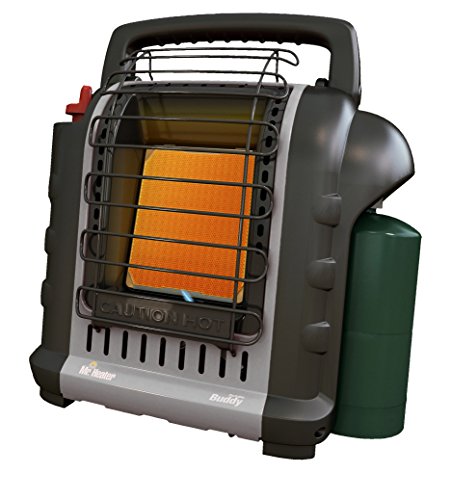
A compact radiant heater with 4,000 to 9,000 BTU coverage for spaces up to about 225 square feet. It supports indoor/outdoor use and offers clean-burning, near 100-percent efficiency. Safety features include auto shut-off if tipped, if the pilot light goes out, or if low oxygen is detected. It’s designed for portability and versatile use in RVs, cabins, or camping setups, with performance suitable for maintaining warmth in shell compartments when used with proper ventilation.
Xtreme Heaters Boat Engine Compartment Heater | 600w

This 600W marine-certified bilge heater is designed for winter storage, under RVs, campers, and boats. It features a self-regulating PTC element that turns on at 40°F and off at 55°F, keeping engine compartments consistently warmed. The anodized housing and sealed electronics provide durability, and the unit’s 58 CFM waterproof fan helps circulate warm air even in damp environments. It supports flexible mounting in multiple orientations, including upside down for tight spaces.
Xtreme Heaters Boat Engine Compartment Heater | 400w

This 400W model mirrors the 600W version with a compact footprint and self-regulating PTC technology. It delivers reliable warmth for smaller compartments, such as engine bays, boat cabins, or greenhouse nooks. Its anodized case and sealed electronics contribute to longevity in marine environments, and it can be mounted in various orientations. A robust 58 CFM fan supports steady air movement to avoid cold spots during winter operations.
VEVOR Diesel Air Heater, 5KW All-in-One
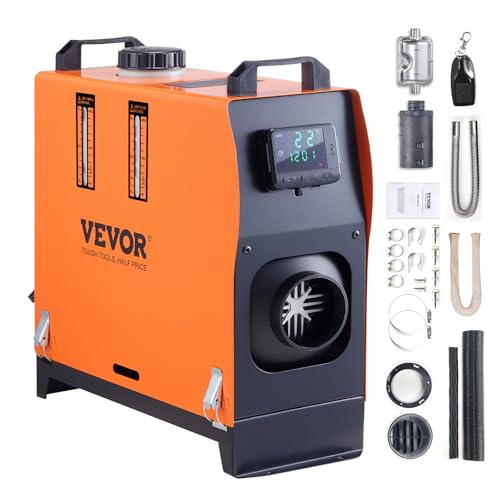
This diesel air heater provides high-output heating with a 5KW capacity, suitable for larger camper shells, RVs, and boats. It includes a remote control and LCD display for easy operation, a 5-liter fuel tank offering extended runtimes, and a sandblasted aluminum heat exchanger for rapid heat transfer. It suits high-altitude and cold-weather environments, with adjustable temperature settings and a long power cord for flexible installation. The system aims to balance fast warm-up times with fuel efficiency across moderate-to-large spaces.
Buying Guide: Key Purchase Considerations
- Heat source and size: Choose a heater rated for the space you need to heat. Smaller spaces benefit from 400–600W units, while larger campers or boat cabins may require 5KW diesel options or multi-kW configurations.
- Fuel type and availability: Propane/LP, electricity, and diesel are common. Propane heaters are portable but require venting; electric units rely on shore power or batteries with efficiency considerations; diesel heaters offer high output and longer runtimes but require fuel management.
- Safety features: Look for automatic shut-off, low-oxygen and tip-over protection, overheating guards, and clearly visible status indicators. Indoor-use compliance is crucial for enclosed spaces.
- Durability and environment: Marine-grade materials (aluminum housings, waterproof fans, rust resistance) extend life in damp or salty climates. A sealed electronics module reduces corrosion risk.
- Installation and flexibility: Consider mounting options, orientation (upright or inverted), and cord length. Heaters with adjustable airflow and remote control add convenience in tight shell compartments.
- Control and monitoring: Thermostat accuracy, remote-control range, and clear indicator lights help maintain comfortable temperatures without constant adjustment.
- Maintenance and servicing: Access to replacement parts, filters, and venting requirements influence long-term ease of use. Diesel heaters typically require more maintenance than electric or propane units.
- Altitude and climate: Some high-altitude or extremely cold settings may affect ignition and combustion efficiency; choose models with altitude compensation features when relevant.
- Energy efficiency: Self-regulating PTC heaters minimize waste by dialing back heat as needed. Compare BTU or wattage output against insulation quality to estimate running costs.
- Warranty and support: Review manufacturer warranties, availability of service centers, and replacement parts to avoid downtime in remote locations.
Across these options, selecting a heater for camper shells involves balancing space, power availability, and environmental exposure with safety and durability. The five products above cover a spectrum from compact electric options suitable for small compartments to high-output diesel units designed for larger or poorly insulated spaces. Use the buying guide to tailor your choice to your specific shell size, climate, and installation constraints.