The buyer’s intent is to find safe, effective refrigerants for R134a automotive AC systems. This guide highlights eco-friendly or high-purity replacements, plus essential accessories to simplify charging. It’s best for DIY enthusiasts, fleet managers, and car owners seeking sustainable or efficient recharge options while preserving cooling performance.
Summary table of selected products
| Product | Best For | Key Benefit |
|---|---|---|
| ZeroR AC Refrigerant R134a Replacement – 3 Cans | Eco-conscious users on a budget | Eco-friendly natural hydrocarbon gas; high efficiency per can |
| ZeroR AC Recharge Kit R134a Replacement – 4 Cans | Complete small repairs | Includes self-sealing cans; compatible with R134a systems |
| ZeroR AC Refrigerant R134a Replacement – 6 Cans | Medium-term maintenance | Same eco-friendly formula; larger pack |
| ZeroR High-Purity R134a Replacement – 1 Can | Premium replacement | 99.5% purity; high efficiency per ounce |
| TNAIYH R134A Car AC Charge Hose Kit | Direct charging and measurement | Gauge and hose with universal fit |
ZeroR AC Refrigerant R134a Replacement – 3 Cans

Best for eco-conscious DIYers who want a compact, affordable recharge option. This 3‑can pack uses a 100% natural hydrocarbon gas compatible with R134a systems, offering a greener alternative to traditional refrigerants. Each 6oz can delivers performance similar to 16oz of R134a, reducing overall product use.
Who it’s best for: car owners seeking an eco-friendly option with straightforward installation that fits standard R134a taps.
Why selected: It aligns with environmental goals while maintaining cooling performance, with R134a-ready installation features described in the product details.
Caution: Ensure proper tool compatibility; the product uses hydrocarbon gas and must be charged with compatible equipment.
ZeroR AC Recharge Kit R134a Replacement – 4 Cans

Better for filling multiple vehicles or seasonal maintenance, this kit uses an eco-friendly hydrocarbon blend compatible with R134a systems. Cans are self-sealing (SSV), reducing waste. The kit requires an SSV-compatible tool to avoid slow or incomplete gas release.
Who it’s best for: technicians or DIYers who prefer bulk but controlled delivery with storage convenience.
Why selected: Combines environmental benefits with practical packaging and storage features, plus explicit compatibility notes for R134a systems.
Caution: Use only with SSV tools; piercing-style tools may cause gas leakage or uneven filling.
ZeroR AC Refrigerant R134a Replacement – 6 Cans
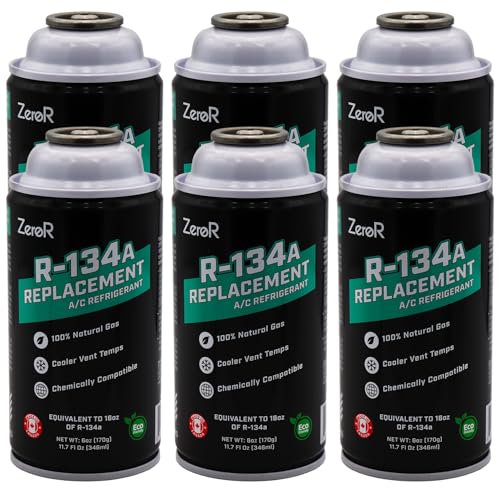
Best for regular maintenance or for users who want a larger supply with the same eco-friendly formulation. The 6‑can pack preserves the R134a compatibility and 6oz per can efficiency, achieving cooling performance with less product used.
Who it’s best for: households or fleets performing multiple recharge jobs across several vehicles.
Why selected: Provides a balance of eco-friendliness, performance per can, and quantity for ongoing use.
Caution: Verify system compatibility with hydrocarbon blends before charging; follow safe handling practices for pressurized cans.
ZeroR High-Purity R134a Replacement Refrigerant – 1 Can

Best for premium replacement needs, this single can emphasizes high purity (99.5%+) with a hydrocarbon-based formulation designed to substitute R134a. It is aimed at DIY users who prioritize precise formulation and minimized moisture contamination in the charge.
Who it’s best for: experienced DIYers or technicians seeking high-purity refrigerant with controlled composition.
Why selected: The purity standard provides a clearer expectation of performance and minimizes risk of additives or contaminants impacting the system.
Caution: Do not charge by R134a weight; hydrocarbon blends discharge differently and require careful charge planning.
TNAIYH R134A Car AC Refrigerant Charge Hose Kit
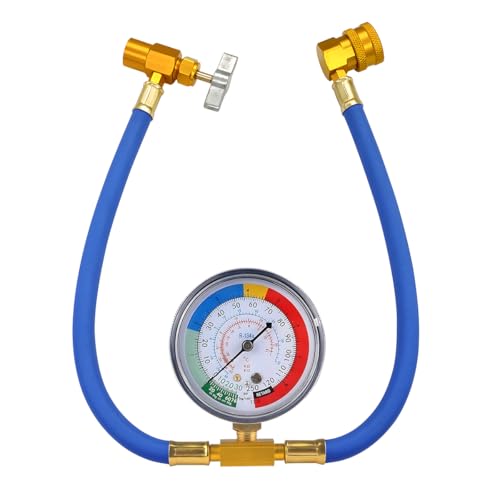
Best for precise charging with measurement, this hose kit includes a gauge and a 1/2‑inch dispensing valve. It helps balance pressure during charging and provides a universal fit for R134a systems. The kit is suitable for multiple vehicle types and is designed to improve filling accuracy.
Who it’s best for: DIYers who want better control and real-time pressure insights during recharge.
Why selected: The combination of a gauge and dispensing valve supports safer, more accurate charging, particularly for users new to the process.
Caution: Ensure compatibility with your refrigerant can and vehicle interface; improper connections can lead to leaks or under/overcharging.
Buying Guide: Key Considerations for Car AC Refrigerants
- Refrigerant type compatibility: Most modern vehicles with R134a systems require hydrocarbon-based or 134a-compatible blends. Verify that the product is labeled for R134a compatibility and that you follow local environmental guidelines.
- Eco-friendliness vs. performance: Natural hydrocarbon blends can offer efficiency advantages but require proper handling. Consider the balance between green credentials and consistent cooling.
- Charge method and tools: Some kits include full charging hoses and gauges, while others require separate tools. If you’re new to charging, a kit with a gauge helps prevent overcharging.
- Can design and storage: Self-sealing cans reduce leakage risk when stored. Ensure you have compatible cans or tools if you’re using multiple cans in one repair.
- Purity and additives: Higher purity reduces moisture and contaminants in the system. Be mindful of blends; avoid products with unclear formulations.
- Quantity vs. need: Larger packs offer savings for multiple vehicles but require longer storage and proper tool compatibility. Tailor pack size to your maintenance schedule.
Frequently Asked Questions
- Q: Are hydrocarbon refrigerants safe for my car? A: Hydrocarbon blends can be safe when charged correctly using compatible equipment and within vehicle system specifications. Always follow tool instructions and local guidelines.
- Q: Can I mix refrigerants? A: Do not mix refrigerants unless the product explicitly states compatibility. Mixing can cause improper pressure, reduced cooling, or compressor damage.
- Q: Do these products require special installation tools? A: Some packs include self-sealing cans and hoses; others require standard can taps or SSV tools. Check the product details for exact requirements.
- Q: Will these provide the same cooling as R134a? A: Hydrocarbon-based replacements are designed to match or exceed R134a cooling under proper charge conditions, but charging technique and system condition influence results.
- Q: How should I store leftover gas? A: Use self-sealing valves when available and store cans upright in a cool, dry place away from heat sources.
- Q: Is professional service recommended for complex systems? A: For complicated AC problems, or if you’re unsure about refrigerant handling, consult a qualified technician.