When choosing a catalytic heater that supports oil- or gas-based warmth, reliability, safety, and efficiency are essential. This guide highlights five top options, spanning oil-filled radiators for indoor use to gas infrared units designed for larger spaces. Each product is evaluated on heat settings, safety features, and energy performance to help you compare effectively. The selections emphasize durability, quiet operation, and safe use in living or work areas.
Summary of chosen products:
| Product | Brand | Type | Key Feature | Estimated Coverage |
|---|---|---|---|---|
| Oil Space Heater With Remote | Amazon Basics | Oil-filled radiator | Three heat settings, remote control | Up to 144 sq ft |
| Oil Radiator Heater, 7 Fins | Amazon Basics | Oil-filled radiator | Long-lasting heat, quiet operation | Up to 144 sq ft |
| Infrared Ceramic Heater | SunStar Heating | Gas infrared ceramic | Radiant efficiency, angle mounting | Large spaces |
| Oil Pan Heater | KAT’S | Engine oil heater | Seasonal oil warming for engines | Vehicle engine use |
| Gas Infrared Propane Heater | SunStar Heating | Gas infrared | High BTU, mounting options | Open spaces |
Amazon Basics Oil Space Heater With Remote

The Amazon Basics oil space heater offers adjustable warmth through three heat settings: High (1500W), Medium (900W), and Low (600W). An adjustable thermostat helps tailor comfort, while seven oil-filled fins promote efficient heat dispersion. A remote control adds convenience, and the unit includes tip-over protection and safety certification. This model emphasizes long-lasting heat due to oil-filled fins that retain warmth even after the unit is off, enhancing energy efficiency for indoor spaces like bedrooms and living rooms.
Amazon Basics Portable Oil Radiator Heater

This portable oil radiator uses seven oil-filled fins to deliver long-lasting warmth. It provides three heat settings—High (1500W), Medium (1000W), and Low (600W)—to match room size and comfort levels. The heater is designed for quiet operation, making it suitable for bedrooms, living rooms, and offices. Its compact profile and rounded footprint make it easy to move between spaces, while the radiator design helps maintain warmth after power-off for energy-conscious users.
SunStar Heating Infrared Ceramic Heater

SunStar’s infrared ceramic heater combines corrosion-resistant construction with aluminum reflectors to maximize radiant efficiency. The unit is designed for easy mounting, with the capability to angle up to 30 degrees. This setup supports quick heat delivery across larger spaces, making it suitable for garages or outdoor-adjacent indoor areas where gas infrared heat can complement or replace electric options. The infrared approach focuses on warming occupied surfaces and objects rather than relying solely on ambient air temperature.
SunStar SG10-L Gas Infrared Propane Heater

The SG10-L is a gas infrared heater designed for propane use, with a design that emphasizes radiant efficiency. Its dimpled tile assembly enhances heat distribution, delivering strong warmth across extended areas. The unit is certified for mounting at angles up to 30 degrees, which helps distribute heat in varied room layouts. This model suits garages, workshops, or larger living spaces where gas-fired infrared heat is advantageous for rapid warm-up and sustained comfort.
Dura Heat Radiant Kerosene Heater
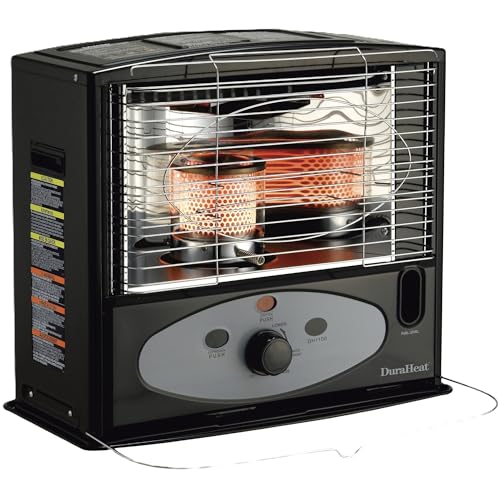
The Dura Heat radiant kerosene heater offers 10,000 BTUs, capable of heating up to 450 square feet. It provides portable, electricity-free operation with a battery-powered ignition, making it suitable for emergencies or off-grid spaces. This model emphasizes radiant heat output for larger areas, offering a reliable option when access to electricity is limited. Its compact design and ease of use are well-suited for home basements, workshops, or cabins needing resilient heat during power outages.
Buying Guide: Key Purchase Considerations
- Heat type and target space: Oil-filled radiators excel for steady, ambient warmth in smaller rooms; gas infrared units deliver rapid radiant heat for larger spaces. Choose based on room size, insulation, and desired warmth profile.
- Power and efficiency: Look at wattage or BTU ratings to determine heating capacity. Oil-filled models typically retain heat longer; gas infrared models rely on continuous fuel supply for sustained operation.
- Safety features: Prioritize tip-over protection, overheat protection, and certified safety standards. For gas models, ensure proper ventilation and secure mounting options where appropriate.
- Portability vs. permanence: Portable oil radiators are ideal for small to medium rooms or temporary setup. Larger gas infrared units may require installation considerations in workshops or garages.
- Noise and comfort: Oil-filled heaters tend to be quiet; gas infrared units produce radiant heat without fan noise but may be bulkier. Consider occupancy patterns and noise sensitivity when selecting.
- Fuel availability and costs: Electric oil heaters rely on electricity; gas infrared and kerosene heaters require fuel accessibility and storage considerations in your area.
- Maintenance and longevity: Oil-filled radiators require minimal maintenance beyond periodic cleaning. Gas and kerosene heaters may require regular venting, filters, or wick maintenance depending on model.
- Safety certifications: Verify ETL or equivalent certifications for indoor use. For gas units, ensure compliance with local codes and ventilation guidelines to prevent buildup of fumes.